avatarPenny Grubb

Free AI web copilot to create summaries, insights and extended knowledge, download it at here

3111

Abstract

delayed the formal adoption of Greenwich Mean Time until 1890. In the USA, the problems with varying local times were more acute because of the greater distances, with railway timetables struggling to reconcile local times along their routes.</p><p id="bf0a">By the 1880s, despite opposing views, the clamour for a uniform standard of time was becoming overwhelming. President Arthur was authorised to convene an <a href="http://International Meridian Conference - Wikipedia">international conference</a> with the aim of establishing a global prime meridian for longitude and time.</p><p id="9c09">Pushed by the North American railway companies — no doubt fed up with timetables catering for as many as 100 variations in local times — the conference agreed on a standard based on the Greenwich meridian.</p><p id="505c">Greenwich opponents did not go down without a fight, and things weren’t entirely settled until after World War I.</p><h1 id="7cba">The Path of the Meridian Trail Through England was Set</h1><p id="af8f">By the 20th century, the prime meridian was established as the line that joined the North and South Poles via the <a href="https://www.rmg.co.uk/royal-observatory">Royal Observatory</a> in Greenwich, London. This meridian line leaves the Arctic Circle, and next hits land in northeast England, on <a href="https://www.thebeachguide.co.uk/north-east-england/yorkshire/tunstall.htm">Tunstall beach</a>, this being the northernmost point of the Meridian Trail.</p><p id="89cb">The southernmost end of the Trail is where the line leaves British shores and dives into the <a href="https://en.wikipedia.org/wiki/English_Channel">English Channel</a> from Peacehaven in East Sussex on the south coast.</p><p id="1a64">If you follow this link to the <a href="https://www.greenwichmeridiantrail.co.uk/">Greenwich Meridian Trail</a>, you will see a walker standing at the Peacehaven end, looking up at what is termed a “splendid monument” that stands maybe four times her height. If you go to <a href="https://www.thebeachguide.co.uk/north-east-england/yorkshire/tunstall.htm">Tunstall beach</a>, you will find sand, pebbles and a crumbling cliff.</p><p id="ea1f">At the northern end, the point where the prime meridian made landfall remained unacknowledged until 1999, when it was decided to mark it in deference to the new millennium. There was no money for a “splendid monument”. However, a <a href="https://en.wikipedia.org/wiki/Triangulation_station">triangulation station</a> further down the coast was about to fall into the sea. It was rescued and repurposed as a meridian marker. A scant four years later, it fell from the cliff, broke on the beach, and has never been replaced.</p><div id="90c6" class="link-block"> <a href="http://www.thegreenwichmeridian.org/tgm/show_marker.php?image_path=images%2F53.760301N%2C+Tunstall%2F2007_06_07%2F01_IMG_6084.JPG&amp;img_alt_tag=Greenwich%20Meridian%20Marker;%20England;%20East%20Yorkshire;%20Tunstall"> <div> <div> <h2>The Greenwich Meridian</h2> <div><h3>Broken meridian marke

Options

r on Tunstall beach</h3></div> <div><p>www.thegreenwichmeridian.org</p></div> </div> <div> <div style="background-image: url(https://miro.readmedium.com/v2/resize:fit:320/0*zbqoKyoRIZ-UxLWk)"></div> </div> </div> </a> </div><h1 id="dd1d">Surely We Have the Trail the Wrong Way Round</h1><p id="c0fb">It is customary to order things from left to right and top to bottom. Even the official website of <a href="https://www.peacehaventowncouncil.gov.uk/meridian-monument-cliff-top-walk-peacehaven/">Peacehaven Town Council</a>, showcasing its “splendid monument,” refers to the meridian line as running <b>from </b>the North Pole <b>to </b>the South Pole.</p><p id="d81c">Consider this: from the north (top) to the south (bottom), the meridian line does not travel laser-like from the North Pole only to circumnavigate the British coastline in order to make landfall from the English Channel, reverse direction to swoop north to East Yorkshire, then loop back to continue its journey to the South Pole.</p><p id="60a6">It’s clear to me that Tunstall beach marks the start of the Meridian Trail, not the end.</p><p id="aef1">In the grand scheme of things, is this important? Well no, not in itself — I’m not planning a campaign — but it is a symptom of a wider problem: the <a href="https://geographical.co.uk/uk/item/3906-a-country-divided-why-england-s-north-south-divide-is-getting-worse">north-south divide</a> that provides better resources — particularly transport, education and health — for the south of the country, at the expense of the north.</p><p id="ce25">We’re pleased that President Arthur’s convention drove the prime meridian through our country, and we’re happy to forego a “splendid monument” on our fast-eroding East Yorkshire coast, but we get seriously irked at <a href="https://www.ons.gov.uk/peoplepopulationandcommunity/birthsdeathsandmarriages/lifeexpectancies/bulletins/lifeexpectancyatbirthandatage65bylocalareasinenglandandwales/2015-11-04#regional-life-expectancy-at-birth">discrepancies in life expectancy</a>, <a href="https://www.independent.co.uk/voices/north-south-divide-school-education-real-inequality-a8434261.html">lack of resources for schools</a>, and the fact that anyone coming to visit our end of the Meridian Trail still <a href="https://www.hulldailymail.co.uk/news/hull-east-yorkshire-news/fears-hull-selby-rail-line-5909221">can’t do so via an electrified train line</a>.</p><p id="877c">So maybe rewriting the mechanics of the Meridian Trail would make people sit up and take notice of the absurd assumptions that turned the prime meridian upside down and deemed only one end of it worthy of splendour. And if that were to challenge some equally absurd preconceptions about the allocation of resources, then maybe it would be something worth campaigning about.</p><p id="bba3">You can access more stories like this and support me and thousands of other writers on Medium via <a href="https://pennygrubb.medium.com/membership">this link</a>.</p></article></body>

Why Is One End Of The Meridian Trail A Poor Relation To The Other?

And what does it say about a growing divide?
Urbanrambler1, CC BY-SA 3.0 via Wikimedia Commons

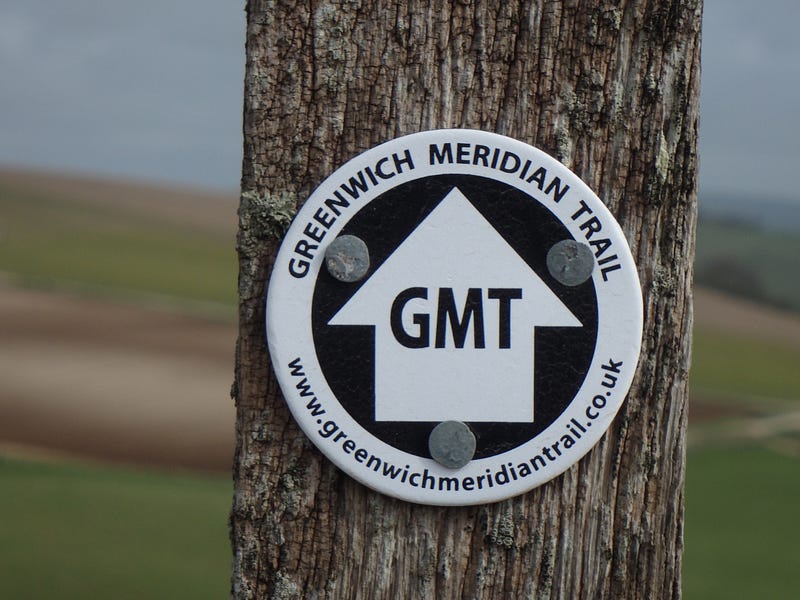
We live in the UK at the unfashionable end of the Meridian Trail. I use the word “end” advisedly. The Meridian Trail has a fashionable extremity where it “starts” and an unfashionable one where it “ends”. There is nothing to prevent a dedicated walker from starting at our end and trekking 273 miles south, but the guides make clear which end is which. The Greenwich Meridian Trail website says:

The walk begins at … Peacehaven in East Sussex and ends on the coast … in East Yorkshire. [my emphasis]

I believe there’s a simple but compelling bit of logic to turn this on its head, and there might be a good reason for doing so. But first — and bear with me, this is relevant — let me pay tribute to the USA’s 21st president, the rarely celebrated Chester Alan Arthur. He might not be prominent in the Hall of Fame of US presidents, but he played a key role in putting an obscure beach in northeast England on a particular map.

A Man Of Surprises

Chester Alan Arthur did not expect to be president. He was Vice President to James Garfield and took over the presidency in 1881 following Garfield’s assassination only a few months into his term of office. Contemporary politician and newspaper editor, Alexander McClure, said of Arthur:

No man ever entered the Presidency so profoundly and widely distrusted as Chester Alan Arthur, and no one ever retired … more generally respected, alike by political friend and foe.

At the time Arthur was inaugurated president, maps and navigation had long been struggling over the issue of where to locate the meridian, zero degrees longitude. There were several different locations in use. It was President Arthur who convened an International Meridian Conference in 1884 to establish an internationally agreed location for the prime meridian.

What Time Is It Where?

The battle over time differences had been raging since the advent of the railways brought it to attention. Local times varied enormously, but that caused no problems until it became possible to do a journey that used to take days, in just a few hours. Although Great Britain was standardising time using the Greenwich meridian in the 1840s, legal disputes delayed the formal adoption of Greenwich Mean Time until 1890. In the USA, the problems with varying local times were more acute because of the greater distances, with railway timetables struggling to reconcile local times along their routes.

By the 1880s, despite opposing views, the clamour for a uniform standard of time was becoming overwhelming. President Arthur was authorised to convene an international conference with the aim of establishing a global prime meridian for longitude and time.

Pushed by the North American railway companies — no doubt fed up with timetables catering for as many as 100 variations in local times — the conference agreed on a standard based on the Greenwich meridian.

Greenwich opponents did not go down without a fight, and things weren’t entirely settled until after World War I.

The Path of the Meridian Trail Through England was Set

By the 20th century, the prime meridian was established as the line that joined the North and South Poles via the Royal Observatory in Greenwich, London. This meridian line leaves the Arctic Circle, and next hits land in northeast England, on Tunstall beach, this being the northernmost point of the Meridian Trail.

The southernmost end of the Trail is where the line leaves British shores and dives into the English Channel from Peacehaven in East Sussex on the south coast.

If you follow this link to the Greenwich Meridian Trail, you will see a walker standing at the Peacehaven end, looking up at what is termed a “splendid monument” that stands maybe four times her height. If you go to Tunstall beach, you will find sand, pebbles and a crumbling cliff.

At the northern end, the point where the prime meridian made landfall remained unacknowledged until 1999, when it was decided to mark it in deference to the new millennium. There was no money for a “splendid monument”. However, a triangulation station further down the coast was about to fall into the sea. It was rescued and repurposed as a meridian marker. A scant four years later, it fell from the cliff, broke on the beach, and has never been replaced.

Surely We Have the Trail the Wrong Way Round

It is customary to order things from left to right and top to bottom. Even the official website of Peacehaven Town Council, showcasing its “splendid monument,” refers to the meridian line as running from the North Pole to the South Pole.

Consider this: from the north (top) to the south (bottom), the meridian line does not travel laser-like from the North Pole only to circumnavigate the British coastline in order to make landfall from the English Channel, reverse direction to swoop north to East Yorkshire, then loop back to continue its journey to the South Pole.

It’s clear to me that Tunstall beach marks the start of the Meridian Trail, not the end.

In the grand scheme of things, is this important? Well no, not in itself — I’m not planning a campaign — but it is a symptom of a wider problem: the north-south divide that provides better resources — particularly transport, education and health — for the south of the country, at the expense of the north.

We’re pleased that President Arthur’s convention drove the prime meridian through our country, and we’re happy to forego a “splendid monument” on our fast-eroding East Yorkshire coast, but we get seriously irked at discrepancies in life expectancy, lack of resources for schools, and the fact that anyone coming to visit our end of the Meridian Trail still can’t do so via an electrified train line.

So maybe rewriting the mechanics of the Meridian Trail would make people sit up and take notice of the absurd assumptions that turned the prime meridian upside down and deemed only one end of it worthy of splendour. And if that were to challenge some equally absurd preconceptions about the allocation of resources, then maybe it would be something worth campaigning about.

You can access more stories like this and support me and thousands of other writers on Medium via this link.

Equality
Economy
Politics
Meridian Trail
Potus21
Recommended from ReadMedium