
Expat Life / Moving Abroad
You Can Check Out of Your Country Anytime You Like
But leaving it is (a) privilege.
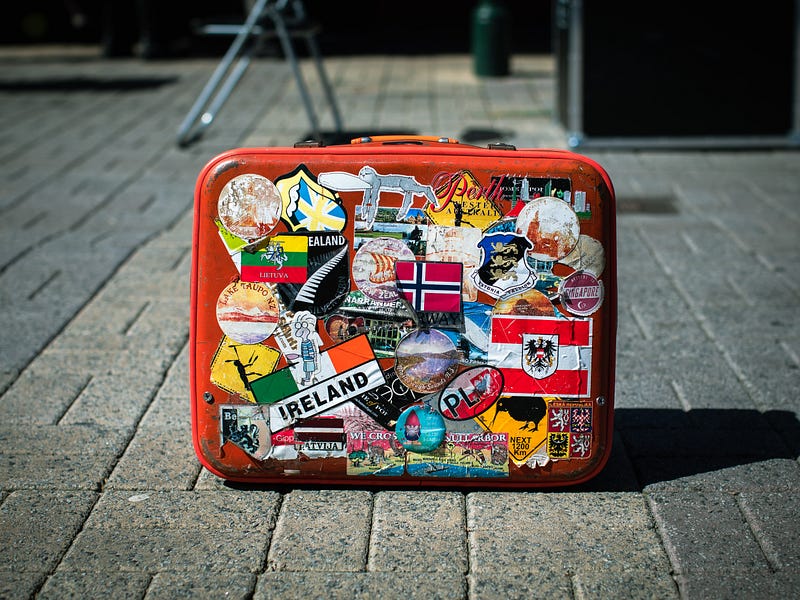
People around the world are on the move. Americans suddenly too, it seems.
I can’t say that I blame them. Their country has been buffeted by shock after shock. Endless gun violence, a political system in disarray, the shock of Congressional hearings about an attempted coup and eye watering prices for just about everything these days without a simultaneous increase in wages to pay for it.
Added to this, in the past two weeks, is what could be seen as a judicial coup has taken place as the Supreme Court has struck down legislation on gun control, environmental protections and most significantly of all, a woman’s right to have dominion over her own reproductive system.
I wrote about it earlier in the week in more detail.
The mind boggles that anyone would seriously call this a democracy anymore. Foreigners like me wonder how it is possible that the non-governing party can, through its instalment of like minded judges on the Court, make policy and law. They’ve won one popular vote in the last three decades, they’re the minority, and it’s not supposed to work like that. Meanwhile, the governing party — you know, the one that more Americans voted for — can and will do little to address this madness.
So, as the country lurches from one disaster to another with no end on the horizon, what are individual Americans supposed to do to deal with all of this? Leonardo Del Toro wrote an excellent article about this very thing:
If you read it (and you should), he suggests three possibilities as to the decision that every American will have to make. These are:
1) The “I’m Getting the Hell out of Here” Road. Packing up, leaving and never looking back
2) The “Do Nothing” Road. Happy or unhappy acceptance of the descent into Autocracy
3) The “I’m Not Going to Take This Shit Without a Fight” Road. America is worth fighting for and will only be saved by those people willing to stay and take Fascism on head on.
All of these have their reasons for and against. It’s the first one that interests me most for our purposes here.
Again, I cannot blame a single person for wanting to get out and who takes the steps to make it happen, nevermind actually follows through and takes action. They are just doing what people have been doing for centuries to escape violence, social unrest, religious oppression, political instability and dire economic situations: they leave and go somewhere else where these things are either not as big of an issue, or have been dealt with altogether.
In the past people who did this were called immigrants, migrants or refugees and their traffic was largely from south to north. Poverty was in the southern hemisphere, a better life was in the northern. That human traffic still exists. But now, as the flow starts to head in the other direction, we apply labels like expats and digital nomads to people who follow this course.
Here are some deeper thoughts on the distinction, from a few months ago. Here would also be a good place to make clear that I am myself part of the migration of people moving from a developed country (Canada) to a less developed one (Colombia, Tanzania and now Jamaica).
You’re an Immigrant, I’m an Expat
There are differences in our lives that can’t be unseen
medium.com
The distinction is important. It’s about privilege. We are freely making the choice to leave while we still can, and again, anyone who is in search of a better life should be able to mobilise themselves to find it.
But let’s be clear: The United States will shortly find itself in the position (if it’s not there already) of experiencing a brain drain if this keeps up. People who can, will leave in search of a better life than the one the USA can provide for them.
The ability to do that, however, will not be available to everyone. To start with, you need to have some understanding of the world and where your possibilities exist. You need to have some imagination, some creativity, some vision for a different way of life. You have to be able to walk away which is not easy if you have family or career aspirations and responsibilities. And you have to have money.
Flights to anywhere aren’t cheap these days and setting yourself up from scratch in a new place where you know no one is not either. And if you are going to do it legally, there is a raft of expensive bureaucracy that most countries require non-citizen residents to go through.
None of this is to say that it can’t or shouldn’t be done.
However, it has to be said that the idea that Americans (or anyone from a Western country for that matter), can just show up and find a soft place to land that will welcome them and their dollars with open arms is already the height of what it means to have privilege.
From what I read, the main destinations seem to be Latin American countries like Panama, Ecuador and Mexico or European ones like Portugal or Spain. Do we realise what our presence in these places means for the people that live there? Do we care? It pushes prices up, because we can spend more money. It lowers the available housing stock as owners realise they can make more money as an Airbnb than on a rental property. It disrupts the social fabric of the place, especially if we insist on staying in our Expat bubbles and not immersing ourselves in the local culture or at least doing it the basic respect of learning the language and customs.
Araci Almeida, from Portugal wrote an excellent article on this very thing:
The fact is, we have privilege, we have options. The world is still our oyster and we can still go where we want. Our biggest issue in undertaking this right now is airline and airport chaos getting in our way. We have a completely different experience from the Guatemalan man when he arrives at the US-Mexico border. We arrive on a plane, with a passport, with an Airbnb booked and if we are really good at it, a driver already waiting for you with a sign with your name on it. It’s likely you will not be considering doing backbreaking menial work to get by either. How different is the expat experience to the immigrant one?
The decision to leave one’s home country is not an easy one, no matter where on the privilege hierarchy one finds oneself. The idea that because we can make us of privilege and that this opens doors in countries that the local people don’t even have should make each of us who do it take a long look in the mirror before, during and after.
I really do hope that you like what you have just read. If you want unlimited access to thousands of writers, consider a subscription to Medium. It will set you back $5 a month and if you use this link, then I get a slice of that and will continue to remind Expats to get out of their bubble!


