
The truth about living abroad
You’re an Immigrant, I’m an Expat
There are differences in our lives that can’t be unseen
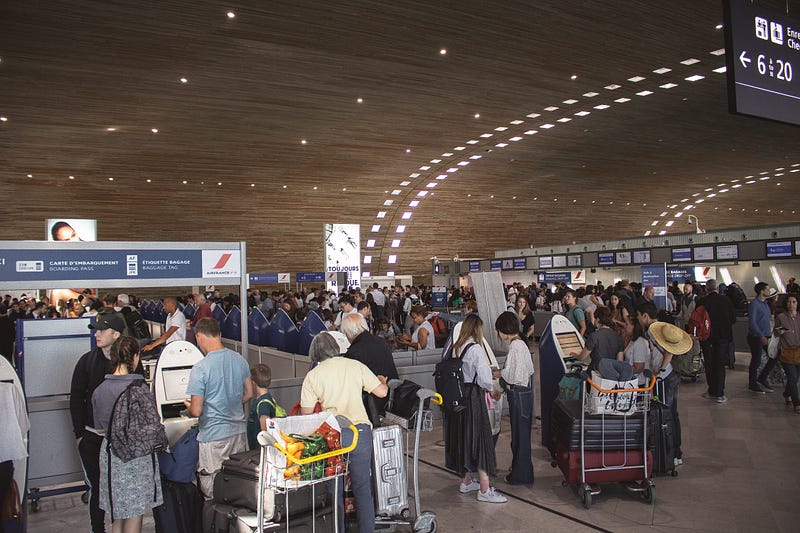
There I am, on an overnight flight directly east from Vancouver to Toronto. Getting to my seat required a left turn at the entry door, if you know what I mean. It is wide and it is comfortable and they’ve served me an equally wide and comfortable meal at midnight, even though I don’t need it or want it, really. I guess I could have said no thank you, but I didn’t. In the morning I will arrive at Pearson Airport and after two hours in the airline lounge, helping myself to breakfast, I will get on another plane, again sitting in the front of it.
I am going to fly due south and by noon I will have arrived on an always sunny island in the Caribbean. An hour or two after that, I will have returned to my home on it. Yes, I live there and I mention the directions of my flights because they are just the first of the differences between you and I. You are an immigrant and I am an expat, you see.
As it happens, while I, as an expat, have moved by choice in a southwards direction, you, an immigrant, on the other hand, have moved north. You haven’t done that because you wanted to, you did it because you had to. I don’t know you, but I feel certain that you’d have been happier if you could have stayed right where you were. But for many reasons probably beyond your control, you couldn’t. We are both a part of the global system of human migration, but the motivations and experiences of our respective groups are vastly different.
By now, most people won’t need reminding that the term EXPAT means expatriate, or anyone who left their country of origin and is living in another country. You answer to that description, but while it sounds good, it’s not entirely accurate. There is a piece missing. What it really means is that in my case, I left one place that provided everything that life possibly could and I went to another where a similar circumstance is not the reality for the majority of the people that live there. The fact that many people live in difficult circumstances in my new, chosen country makes it that much easier for me to live the good life — perhaps even better than the one I already lived in my home country.
Exactly because I am from a country that gave me everything I need, I can live like a king in a country that can’t or won’t do the same for its own people. But as it turns out, this new country does indeed provide those things; to those who can afford it. People like me, for instance. That’s luxury.
And that’s that privilege — you know, that thing that is making many people take a good look at themselves these days. You don’t have those things, neither in your home country and certainly not in your new country. You are an immigrant and I am an expat.
The more I think about it, the more I realize that the ability to call oneself an expat is a right that is really reserved for people from a relatively select list of countries of origin. I’m convinced it was derived by wealthy, (mostly) white Northerners to make sure that everyone, themselves included, would not think they were part of the poor, huddled, unwashed masses the world over that are just looking for a bit of security in their lives.
I know that I will never have to be an immigrant. Much less a migrant, much less a refugee, much less an illegal alien. I’m led to believe that I’m better than that, but the reality is all that I am is just more privileged. My passport says so.
I have chosen where and when to go and where and when to leave a particular place when I have tired of it and it no longer suits me. Moving on seems arduous, but really, it’s easy. In the meantime, while I’m here or traveling to other nearby sunny islands, I can rest assured that I can use just about any pool of any hotel I am not staying in and no one will ask me what I am doing there….because there is no reason I shouldn’t be there. Even if I shouldn’t be there. You won’t be able to do that because you’re an immigrant and I’m an expat.
The fridge at home is always full (of the kind of food 90% of the population will never eat and much of it won’t be produced locally), the water is always running (from a private source), the electricity is always on (from a private generator), the house is cleaned (by a local woman getting paid what I’m told is “fair”) and the other expats’ kids are well schooled (in a green, manicured place with high walls and security guards) that their embassy, NGO, company or UN organization pays the tuition for.
And what happens if things go sideways in this place? It’s a developing country, so it can happen and things in my tropical paradise can change quickly. If that’s the case, I can leave just as I arrived — easily. After all, what do I really (need to) know about the politics, the economic realities, the social conditions, the religious and ethnic tensions of this place? I never really needed to immerse myself here that deeply, much less learn the language and even though political instability, coups, conflicts, natural disasters, climate change impacts can all quickly spin out of control….these don’t need to affect me, much less frighten me, and I can always leave and there’s not much that can stop me. After all, I have the right passport and the right credit card. These things are bits of warm insulation.
I am 7 years into this kind of life and in applying the expat label to myself, I’ve started to come to some not so nice conclusions about it. There is no doubt that it has given me a lot, but with no small amount of reflecting and introspection and perhaps a touch of self loathing, the question is begged: So now what?
I’m here. And I will be for a while. Life is good, I give thanks for my good fortune.
Is that it? Surely not. If it is, then I am part of the problem. You’re reading this, you might find yourself in a similar situation. How do you mitigate the impacts of your expat privilege?