
You are not my mirror- But I can still be yours
An Art Journey to Alchemize the Lies of Racism- Part 2
I noticed I wanted to finish this project quickly.
I’m already getting a lot of insights and seeing that
my wounds from racism aren’t really about racism.
I wanted to say a few more things about the racism piece,
show how that’s connected to the deeper universal wound of separation,
and then be finished.
I was worried that if i didn’t write it soon,
I would never get back to it.
Because the victim story already feels old.
So, I began writing.
As I did, it became longer and longer.
And I knew this couldn’t be the last post on the topic.
A voice in my head said
“No one wants to keep hearing about all this negative, racism stuff.
Just skip to the end.”
Then, I realized that this kind of impatience with myself
and the assumptions that :
- Others don’t care and
- If it bothers others, I shouldn’t speak
is at the very crux of the matter.
The reason I haven’t faced my feelings around racism before is because every time there was an opportunity to talk about it, I felt overwhelmed.
I’d held in so much over the years…it felt like if I opened my mouth, a dam would break that would destroy everyone in the room.
And I knew a part of me would like nothing better than to do that.
That is why communicating in this way-
through writing, over time- is so helpful.
It forces me to slow down and reflect on what I’m saying before I share it.
This is also what makes the process so challenging.
It feels easier to keep holding back-
or let it all out in a satisfyingly unconscious, violent way.
Over the past few years,
the issue of race has come up more and more
in the spiritual circles I’m in.
White people are always the ones talking.
I’m always the only Asian -
and often the only person of color- in the room.
As soon as I’d hear a white person speak about racism,
I would immediately feel tense and irritated.
And inevitably, as the conversation continued,
I’d feel anger and resentment boil up inside.
At people who do not really understand the matter at hand-
acting like they’re the experts.
Speaking words of humility with the same old
attitude of arrogance and assumption.
I knew they actually wanted me to speak.
I knew I had to speak if I wanted what I was internally
complaining about to change.
But I didn’t want to add my unprocessed emotions
to a conversation that was meant to be “healing.”
And I didn’t want to exhaust myself trying to have a conversation that would leave me feeling worse and others more disconnected.
Because the few times I had tried talking about my feelings about race with white friends, I was always left feeling invalidated. And exhausted.
They would either find what I was saying hard to believe because they never noticed racism.
Or they would try to commiserate by bringing up their own suffering.
One friend said she was teased
as a girl for her large eyes.
And when I sort of laughed,
she said it hurt her just as much as
it hurt me to be teased.
At that time, I didn’t know how to explain how it’s different.
I just knew that I felt annoyed and
unseen and at a loss to convey what seemed obvious to me.
Or friends would try to be “kind” by saying something like:
“But you’re so lucky.
I wish I was Korean.
You have such beautiful dark hair and skin.”
No, you don’t actually wish you were Korean-
and if you do it’s because you have no idea
what it actually feels like to be in an Asian body
in a white world.
And I’m not beautiful because I’m Korean.
Many Koreans do not have “nice” skin
and look very different from me.
Saying I’m beautiful (or smart or anything else)
because I’m Korean only exacerbates the feeling of otherness.
I am unique.
I am not a representative of an entire ethnicity or race.
The fact that this even needed to be stated- and to a friend- was incredibly disheartening.
And she still didn’t get it.
(“But I’m giving you a compliment!”)
I’ve always been introspective and analytic.
My educational background is in psychology and philosophy.
I’ve devoted the last decade to going deep within -
both myself and others- to uncover what is in the shadows.
So, why had I never processed these emotions?
Why wasn’t I able to speak more eloquently about this topic I have so much direct experience in?
How could I not have dealt with this glaring wound for all this time?
— — — — — — — — — — — — — — — — — — — — — — — — — — — — —
I’d been focused entirely on waking up from the
cultural and ancestral conditioning around
being a woman- that told me I wasn’t enough.
That my feelings and desires weren’t as important
as outer success, physical beauty or satisfying others.
That to be safe meant you must control, manipulate and dominate.
That my mind was more important than my body
and that what I did for others was more important
than how I felt inside.
Basically the split we all feel
as members of modern culture.
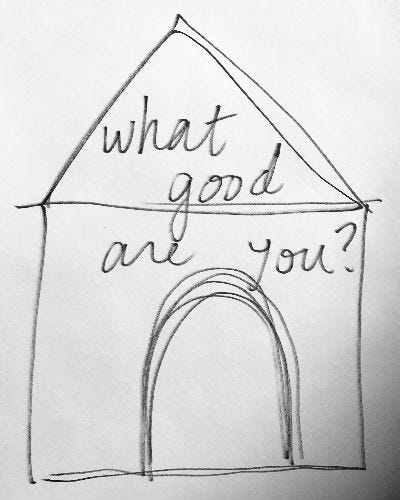
Because it’s not actually about womanhood.
It’s about the split from the divine feminine-
from our hearts, our bodies, our earth.
from Life itself.
This drive to do more, to prove ourselves,
to get more, so our future is safe.
This idea that we’re alone
so we have to control everything
and make sure we get it all right…
or else.
I thought I’d awoken from that trance.
I’d been shown the perfection of life.
I saw how even what I’d judged as the worst tragedies,
were actually in perfect harmony with the
greater unfolding of life.
So, looking back on my childhood-
I understood how being ostracized and alone so much
helped me connect more deeply to my creativity
and my inner world.
I saw how it awakened a passion for justice
and deepened my compassion for others’ suffering.
I didn’t (consciously) spend time feeling bad about the past.
And when I noticed feelings come up as I mentioned above,
I didn’t really know what to do with them
and oddly, I didn’t delve deeper.
Until now.
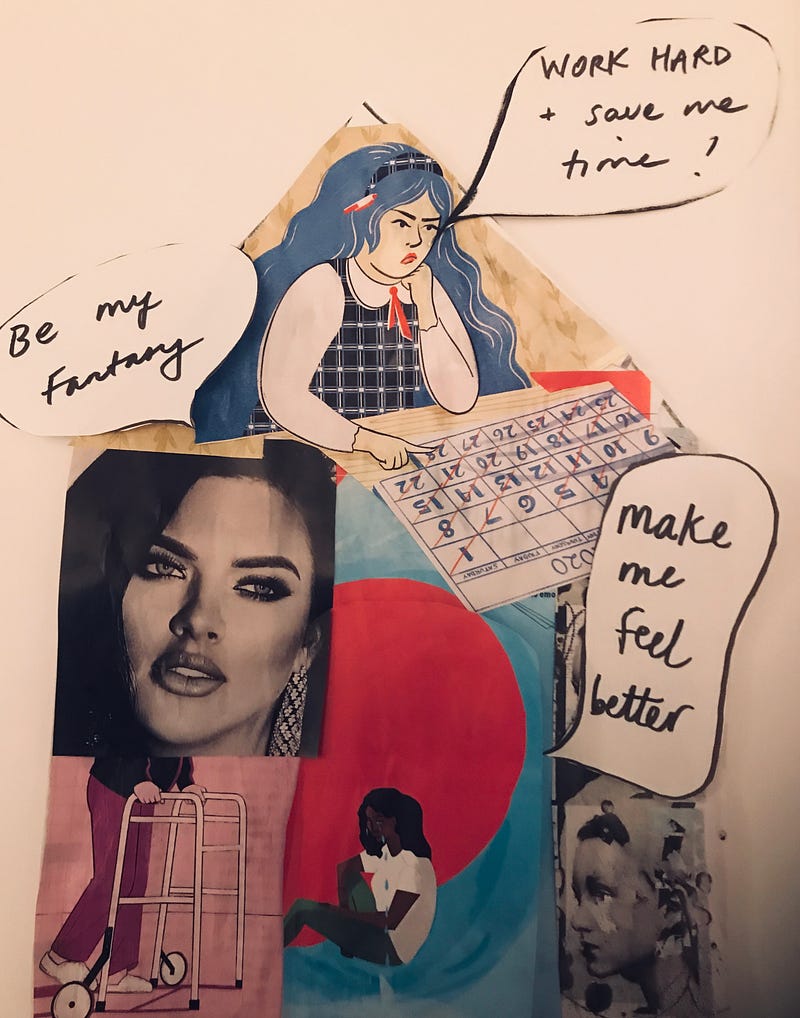
A disturbing recent event woke me up to the fact that I was still hurting.
It made me see how this wound was still running my life.
And that I had to transform this through art,
without quite knowing how.
__________________________
I have a close female friend-
we even call each other “best friend”-
a term I hadn’t used previously since high school.
She is one of the first people in my life that I felt I could be totally myself with.
In the past, I’d often felt like a bad friend because
I’d disappoint people.
I’m sensitive and can be easily drained or influenced by others.
I need time alone to process and connect with how I really feel.
I also need solitude to create.
This can all come off as distant or inconsistent.
It was also common to feel competition energy
between myself and other women.
When I’d sense that I was triggering insecurity
or jealousy in a friend, I’d pull away.
I noticed these patterns and pathologized myself:
I have an avoidant personality. I can’t really do intimacy.
I disappoint people unless I pretend I’m someone I’m not.
I don’t know how to have healthy boundaries.
But with this friend, I felt loved and loving, without any pressure.
The friendship met my needs for both freedom and intimacy.
We’ve never had an argument.
I don’t remember having any serious
“negative” feelings come up between us at all.
So when I started feeling resentment and disappointment towards her,
it took me by surprise.
I was triggered and knew immediately it wasn’t really about her.
I held a belief that she was moving ahead in her life and that I was “falling behind.”
And I had unconsciously made a decision from the space of “trying to keep up.”
My intuition led me to a decision I’d made from that same level of consciousness 25 years ago: The first time I’d had sex.
I didn’t make the decision out of curiosity or love.
or even lust (which is what I thought it was at the time).
I had sex because I was afraid.
I believed all my friends already had or would soon be having sex
and I didn’t want to be left behind.
Usually when I get to the root of an emotional trigger, I feel open again.
But, I still felt disconnected from my friend.
I was guided to go deeper.
The first person I had sex with was my best friend’s boyfriend.
I knew this was wrong, yet I didn’t feel as bad about it as you might expect.
At the time, I felt she had everything.
She was popular and spoiled by her parents.
She was sweet and all the boys I liked, liked her.
Maybe it was just because she had a better personality.
But at the time, I believed it was because she was white.
She was blonde, green-eyed, big-boobed.
I loved her, but I also deeply resented her
because I knew she wasn’t inherently better than me,
yet she was being treated like she was.
Her boyfriend seemed to enjoy being with me more than her-
we had more in common and deeper conversations,
and I knew he was more sexually attracted to me.
But when it came to who he chose to be seen with,
it was her.
I have jealous and possessive tendencies,
but this was something deeper.
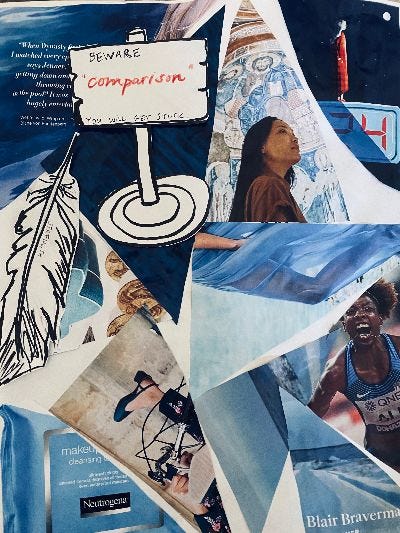
I was guided to when I was 7 years old.
The age I first moved to the school where I experienced overt racism.
This was when that particular form of jealousy started.
All my “best friends” from that time on were white.
I was jealous of them all.
Jealous of their seemingly easy lives. Jealous that they fit in.
(Some of them were actually considered “freaks.”
In that case, I was jealous that they had a choice.
For them, it was rebellious or cool to be different. I didn’t feel I had a choice.)
And I became afraid of being left behind.
Left out of the group.
Left out of life.
Ironically, it was this fear that disconnected me from others and myself.
I couldn’t fully take in the love
that some of my friends did have for me.
I couldn’t fully take in life.
Because I believed I was missing something.
And that I had to somehow work or manipulate things
just to catch up to “normal” (white).
Life wasn’t on my side the way it was for others.
I saw myself the way racists saw me- as less than-
and began to believe that life itself saw me this way.
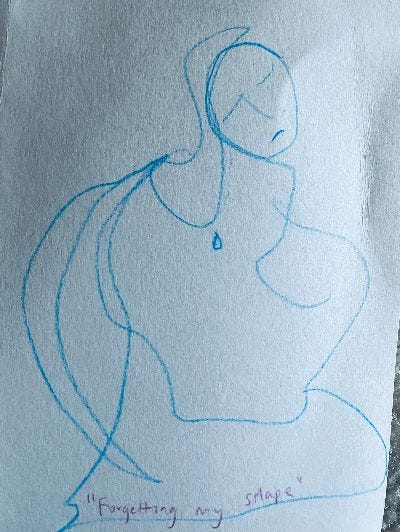
Around the same time I began to learn to be
a “good girl” to gain praise at home (instead of being called bad for my emotional outbursts),
I learned to hide my feelings at school
and acted like the teasing didn’t bother me.
I built walls around my heart.
It was the only way I could withstand
the constant loneliness and emotional pain.
And i’m just beginning to realize that
it’s taken me this long to penetrate my own walls.
I’d understood conceptually, spiritually
why my soul had chosen my childhood experiences,
but this didn’t change the fact that the child
inside me was still hurting from them.
Every unfulfilling conversation I had about those experiences
made her feel worse and I never did anything to comfort her.
And, this goes back to that separation that we all suffer from-
the false division that has us
* value conceptual understanding over feeling
(I thought I was healed because I understood the past).
* want things to be tidy and linear
(shouldn’t I be over this by now?)
* pretend we’re OK when we’re not so we can belong
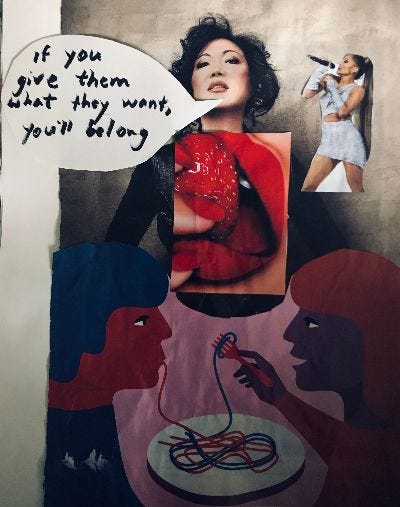
So, for that little girl inside who still hurts and doesn’t know how long it’s going to last.
Who had to pretend she was OK.
Who doesn’t know quite what to say,
but knows how she feels.
This conversation is for you.
And for all of us.
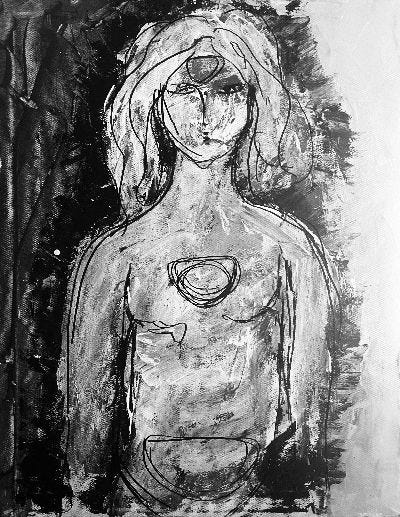
Racism, colonialism, consumerism, patriarchy -
they all separate us from our feelings.
our innate knowing.
Objectifying others
requires us to be distant-
not just from what/ who we are labeling,
but from ourselves.
They require us to not see.
To not feel the truth.
Because if we did, we would not be able to survive.
In facing the truth,
the self that allowed such blindness.
such injustice, would die.
And this is true not only for those who are oppressed,
but, perhaps even more so, for the oppressors.
Because suffering cracks our hearts open…
we may try to keep it at bay for awhile-
but eventually, the feelings will spill over.
But the oppressors…
who don’t even know their hearts are broken…
Who would they have to become
to face the truth
they’ve hidden so deeply
from themselves?
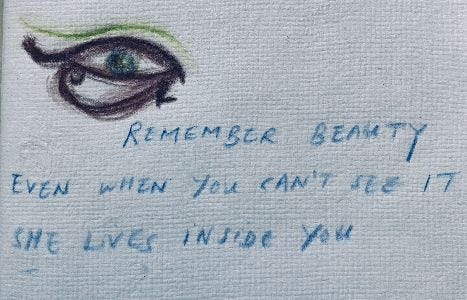
Who would we have to become
to be a mirror — not for that which they reveal-
but for the light that they are hiding?