
PRIVILEGE
Yes, Brown Privilege Can Be A Thing
Light-skinned Black is still not white but can afford you certain instances of tolerance; not acceptance.
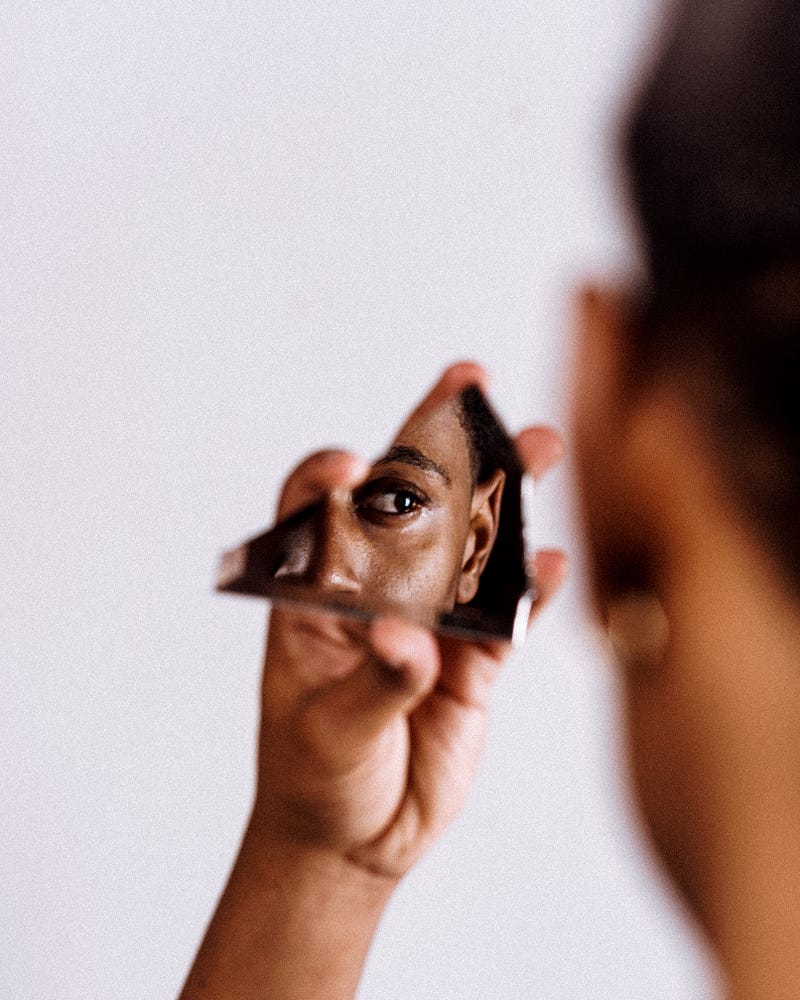
I first learned about Brown Privilege when years ago someone said to me: “You’re not Black right… so you’re good.” As if, in their mind, being Black was an affront to humankind. The worst thing that someone could be, or at the very least, perceived.
Though those words left an air of WTF hovering above, I knew exactly what they meant. Because I wasn’t fully Black (or Blackish), it meant I was okay, passable — tolerated. This faux acceptance, mostly by the white community, I have come across throughout my life.
Being a biracial person in a predominately white space somehow gives me a pass in certain limited situations — sometimes.
What has been embedded into the subconscious American mind for centuries is that skin color is on a sliding scale of acceptability and tolerance. Black skin; considered worthless, unacceptable, and disgusting is at one end of the spectrum whereas the extreme opposite end (or at the top) is reserved for the untainted purity of white skin.
The classic good vs. evil trope.
Any shade in between, however, could either catch you a case or cause you to be the recipient of privilege, depending on how you are perceived by the majority — the only opinion that matters apparently.
Ideally, in a country that functions on systemic racism (such as America), any color other than white is considered disgraceful and thus viewed as a threat to the Caucasian majority. Isn’t this the root philosophy by which white supremacists live their lives?
The browning of America
When discussing privilege what comes to mind is that only white people benefit from such a special right. Though this is true for the most part, a side salad to the privilege conversation is how it can benefit those from the human color spectrum having a lighter shade of Blackness.
The perceived threat level does go down slightly as skin color gets lighter.
Light-skinned Black people are seen to be closer to white people. The allegiance to lighter-skinned people has operated in a very destructive way that we have internalized ourselves inside Black communities. You look at many of the prominent Black people in this society who have been able to do well. Many have been lighter-skinned. — Michael Eric Dyson
Sure, brown people don’t experience the same privilege as white people but on occasion, the tolerance of light-skinned Black people by the white community can happen. Somehow the historical nightmare of dark skin isn’t fully realized when it comes to lighter shades; though overall, those who do not share the pigment of fairer skin folk will undoubtedly be treated the same way as their darker brothers and sisters… that is, dehumanized.
Light-skinned Black people (like myself) experience a certain level of calculated tolerance (I wouldn’t go so far as to say, acceptance), which makes navigating a world of white supremacy “slightly” less difficult.
Perhaps it’s the visual default of not being the “dark villain” so many in this country have grown to fear — the subhuman thug that is out to destroy the white way of life. Any color other than this could be viewed as less threatening, certainly more tolerable, and possibly more controllable. Even within a group of darker folks, my treatment by others is noticeable; fewer suspicious looks, more superficial attention, and less dismissive behavior.
Maybe a few less clutched handbags or hurried walks across the street as well.
If that’s privilege then, no thanks, I’m good.
Brown privilege to no privilege
On the flip side of the less than threatening light-skinned Black person stereotype is that it can be a thorn in the side for many in the Black community.
A disappointing reality of being brown in America (besides the obvious) is the clear ostracism and treatment one might experience from both the white and Black worlds. This experience is akin to walking a racial tightrope. Who will have your back? Shadeism (or Colorism), which is not a new concept, has also contributed to widening the divisions between people within their own communities.
Never trust anyone who says they do not see color. This means to them, you are invisible.― Nayyirah Waheed
The dichotomy of being biracial in a white space is the treatment one experiences and how this can determine one’s place in society. White people get a pass of course (by default) — Black people do not. Somewhere in between those of us who look like we stepped out of a caramel spill will be handed out selective discrimination based on the tone of a racist encounter (or agenda).
My entire past has been littered with playing defense against disingenuous minds who seek to satisfy their curiosity through ill-informed inquiries about my identity. You must be Sicilian. Latino? Indian? Wait, I know… Samoan? Never Black (or white), which is what my genetic makeup proudly claims as its origin. Many seem to be satisfied with their assumptions and stereotypes, not so much with genuineness.
Over the years I might have unwittingly been afforded a pass by some in the white environment in which I live, though I have never voluntarily used the brown card to my advantage. For the simple fact, I don’t have an advantage — certainly not in the eyes of the majority. I am still considered Black even if a lighter shade, but this I’m completely fine with.
Brown privilege isn’t being afforded a job over a person with darker skin, or receiving a discount at a store, or being let off by the po-po after being pulled over. Brown privilege is being provided a subconscious (or deliberate) pass on being frequently racially harassed, or targeted.
After all, you can’t be “that bad.”
A little cream in my coffee
Do I still get the side-eye and suspicious looks when I walk into a room full of white people? A resounding YES. Am I considered suspect in a room of mostly Black people, at times yes, unfortunately? When it comes right down to it, being brown can be a difficult position to be in, especially in America.
Think running naked in the middle of a battlefield between two warring factions. You never know who will be in your foxhole or to which ethnicity meeting you’ll be invited, if at all.
Society sees me as Black. If broken down to the actual identity of my being, I am brown because of my white and Black ancestors. I am proud of my skin color no matter the hue as I hope you are of yours.
In the end, does a person’s skin tone make them more or less acceptable? I guess this depends on whom you ask. I always found it interesting that for some people, the level of a person’s melanin can determine how they treat them, certainly how they perceive them. Not whether or not said person is an asshole. But that’s classic racism for you.
I think we can all agree on this. Well, I hope we can ALL agree.
Thank you for reading!
Follow me on Twitter: @gcorreiawrites


