
Yabby
Whether it ends in a “y” or an “i”, this is (or was) a valid word
Today’s New York Times Spelling Bee letters:
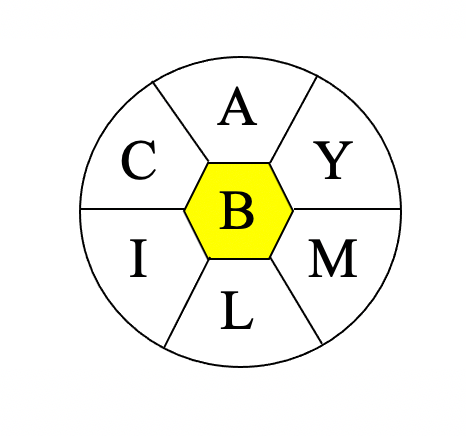
A, C, I, L, M, Y, and center B (all words must include B).
Merriam-Webster says…
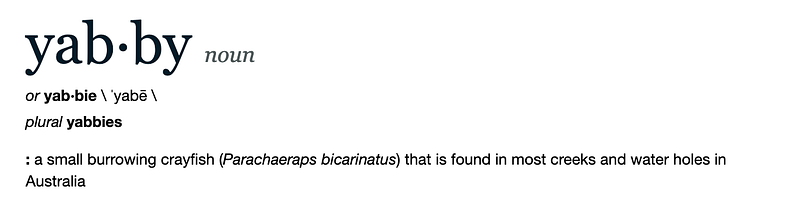
Silly little dictionary! Don’t you know that yabby can’t possibly be a word if the New York Times says it ain’t?
For further fascinating facts, check out the Spelling Bee Master.
What’s your favorite dord* from today’s puzzle?
My Two Cents
Today the Spelling Bee editors killed three animals with one stone. (Note: I do not advocate throwing stones at any animals, especially if you live in a glass menagerie.)
They are quite different animals. The first one is a bluish crustacean that lives in lakes, rivers, and streams of the Southern Hemisphere. The second one is an orange-y mud shrimp that lives near estuaries. The third one is a chimera-ish creature that, well, no longer lives at all. Anywhere.
Yabby & Yabby, partners in crime
Merriam-Webster explains that yabby with a “y” refers to the Cherax genus of crayfish. So that appears to be the most common use. But the Trypaea australiensis is also sometimes called a yabby. And it’s also known as the Australian ghost shrimp, ghost nipper and the one-arm bandit. Because one of its arms sometimes bulks up more than the other.
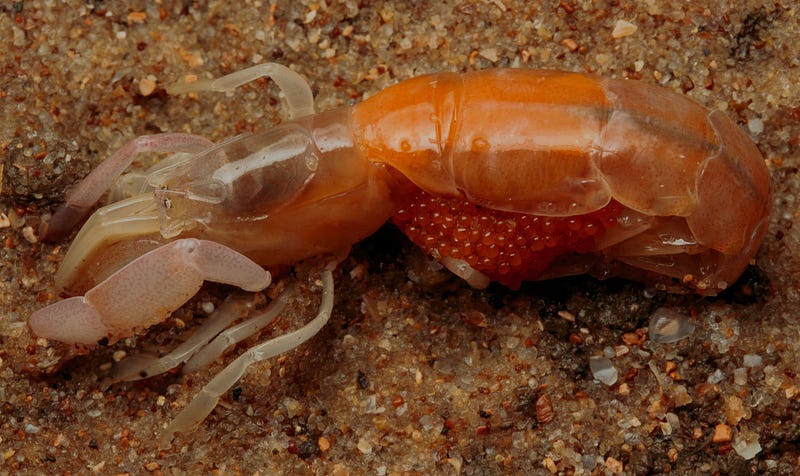
This guy clearly curls weights with his left arm only. Now, someone needs to tell him that if you’re going to be a “ghost shrimp”, it’s probably better to wear transparent clothing instead of a bright orange suit.
In keeping with the eternal joke that all Australian animals can and will kill you, I present an appropriately-named crayfish species as an example of the dictionary definition of yabby:
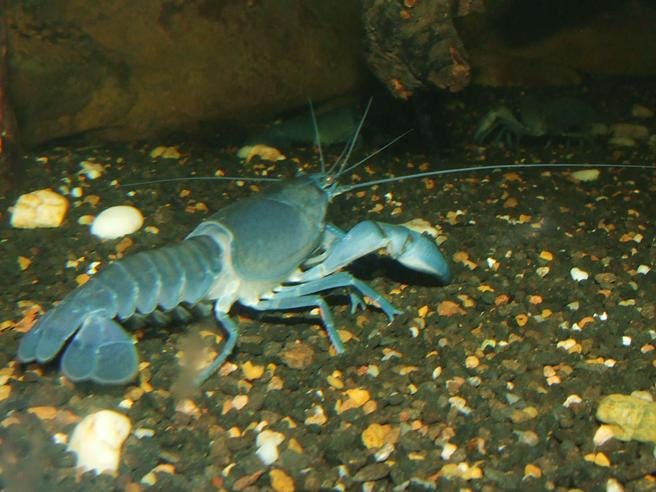
Behold the Cherax (the) destructor. Also known as the common yabby. (By the way, the word yabby comes from the aboriginal Wemba-Wemba word yabij.)
Why is this one called the “destructor”? Possibly because its burrowing habits can and have destroyed dams. And I’m sure at some point it’s killed a tourist or two. Or two dozen.
Not the Taz you’re thinking of
Besides Paul Hogan, the most popular Australian animal is usually considered to be either the kangaroo or the koala. Lately, however, the cute quokkas are giving both marsupials a run for their money by posing and smiling in selfies with tourists.
I’m not kidding.
But in the 1960s and again in the 1990s, kids were probably favoring the Tasmanian devil thanks to the Looney Tunes character known as “Taz”. He was so popular that Warner Bros. registered the name “Tasmanian devil”. Reportedly, the Australian government had to enter into negotiations with the media conglomerate in order to be able to use the image of the cartoon character.
Again, I’m not kidding. Except this time I don’t have a link to prove it.
If the Australian government got into trouble, I certainly am not going to risk any lawsuit from Warner or any of his/her siblings. So instead, I’ll show you a drawing made by George Harris:
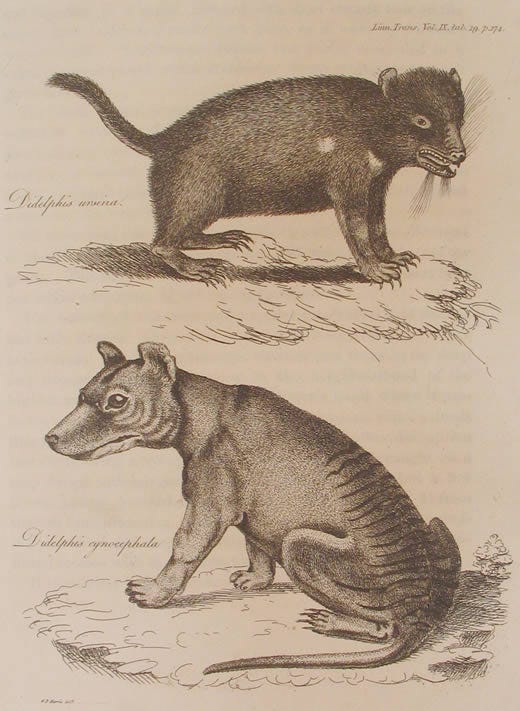
The animal on top is the Tasmanian devil. The one on the bottom is the…
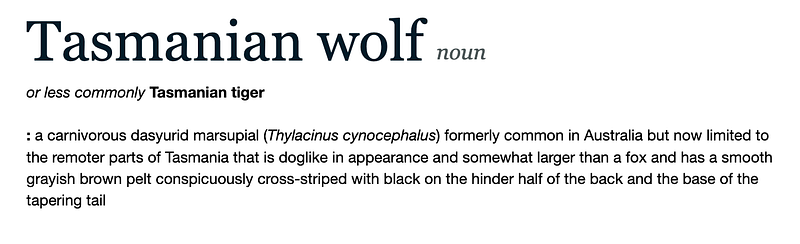
I had to read that definition twice. You may have noticed that Merriam-Webster’s Unabridged Dictionary makes it sound as though the Tasmanian wolf is roaming around Australia. As I type this.
Well, sorry to burst your bubble… but it’s extinct.
Now, why am I discussing the Tasmanian wolf/tiger today? Because apparently one of its AKAs is yabbi. Here:
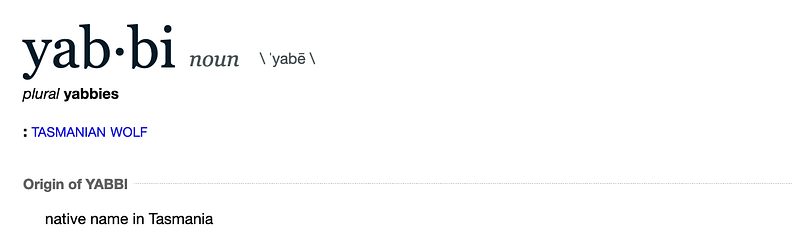
To make things even more interesting, Merriam-Webster’s Collegiate Dictionary gets it right about the animal no longer existing (while favoring “tiger” over “wolf”).
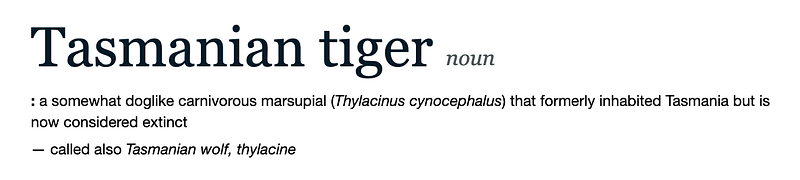
The Thylacinus cynocephalus was technically called a thylacine, but no one bothered to use that name and instead referred to it as the Tasmanian tiger (because of its striped skin) or Tasmanian wolf (because of its lupine-like appearance).
This animal belonged to the order Dasyuromorphia, which includes carnivorous marsupials like the numbat, the quoll, and the Tasmanian devil. The thylacine was the largest one of them all.
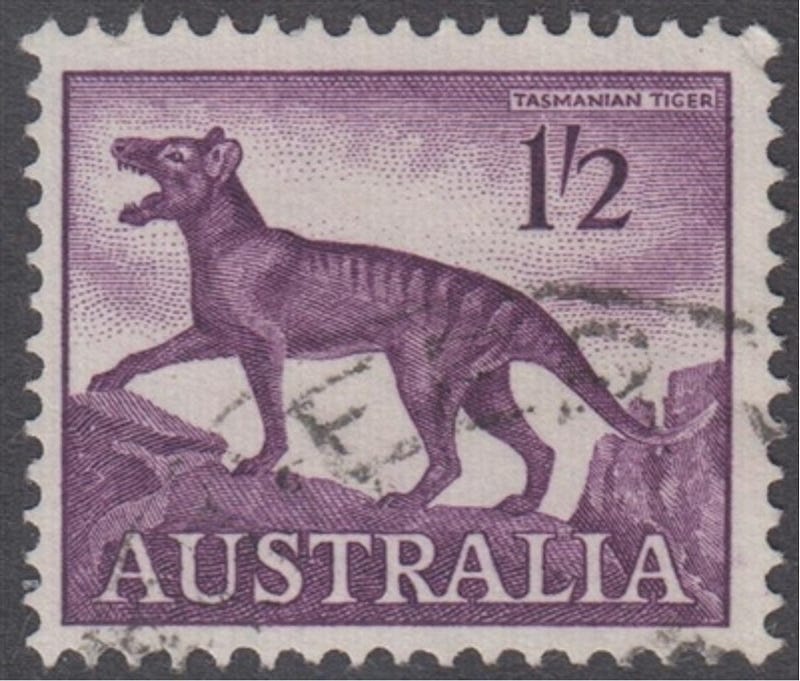
The Tasmanian tiger looked like someone had cross-bred a dingo, a tiger, and a kangaroo. The result was actually pretty awesome:
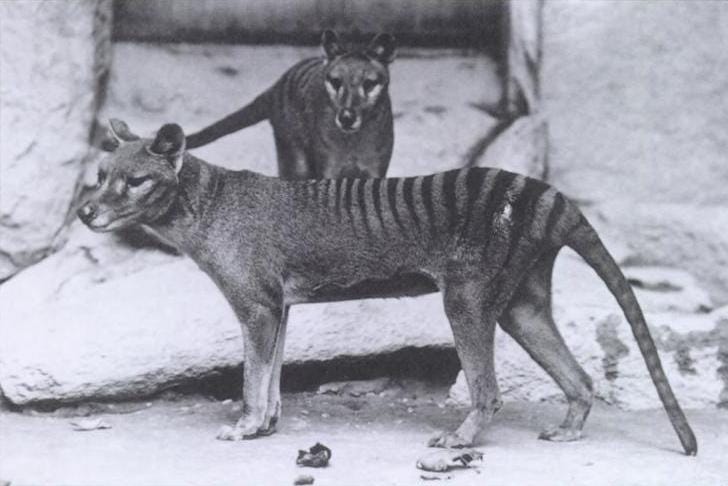
The above photo is the one I remember from childhood. As I recall, I first read about it in the Guinness Book of World Records… but I could be wrong.
I also remember feeling very sad as a kid when I found out this animal had become extinct just a few decades before I had been born. I mean, everyone had known the population was dwindling and nothing had been done about it. At least that’s what I thought.
The reality is far more complex. There were attempts to breed Tasmanian tigers in captivity, but did not give the expected results. A reserve was recommended for them in 1928, but it was too little too late. By then there were few specimens left in zoos and a small population remained in the Tasmanian island wild.
During the 19th century a land company offered a bounty for the thylacine because of its attacks on sheep. This is mentioned as the main cause of the extinction of the species circa 1936. However, competition with dingoes, habitat erosion, and an important yet under accounted for disease seem to have been important factors, too.
In any case, it’s really depressing that this exotic and interesting animal wasn’t saved. The last documented shooting of a thylacine in the wild happened in 1930. The last captive animal, named Benjamin, died on September 6, 1936 at the Hobart Zoo in Tasmania.
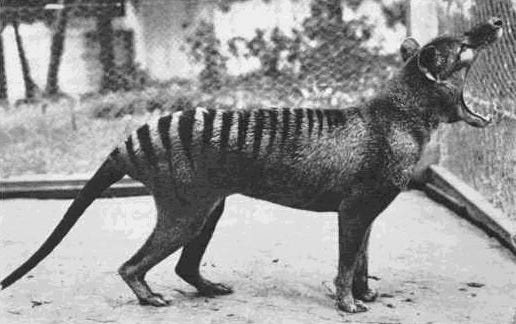
Actually, Benjamin is yawning as a threat; it was one of the thylacine’s reactions when threatened, usually preceded by a growl and a hiss.
Since 1936, however, there have been multiple reports of Tasmanian tiger sightings. Most, if not all, have been unconfirmed. The last one occurred around three years ago. Some people have even provided photos, but the authenticity of the images has not been verified. In 2017 James Cook University set up more than 500 cameras in North Queensland in the hopes of capturing pictures of any remaining thylacines, but came up empty.
Some experts think the animal did not truly become extinct until the late 1980s or 1990s. There have been rewards offered for proof of its existence (Ted Turner put up 100 grand in 1983) and some attempts at recreating or cloning the species. Clearly unsuccessful, or we would have heard of them by now. Unless that cloning is part of a conspiracy related to Bill Gates and 5G networks. Then maybe we’ll never truly know if the Tasmanian tiger still roams the planet.
Below is a link that shows the last-known footage of a thylacine at the Beaumaris Zoo. I found it very very very heartbreaking to watch.
In any case, whether we are discussing a an extinct yabbi or two still-existing yabbies, we should avoid using the word yabby. And that’s because the editors of the Spelling Bee puzzle decided that the word yabby is a dord.*
You can check out my previous entry on another dord* here:
*What the heck is a dord, you ask? Here’s the answer: