
Writing My Memoir Taught Me to Love Myself
I started over, and it’s changed my life.
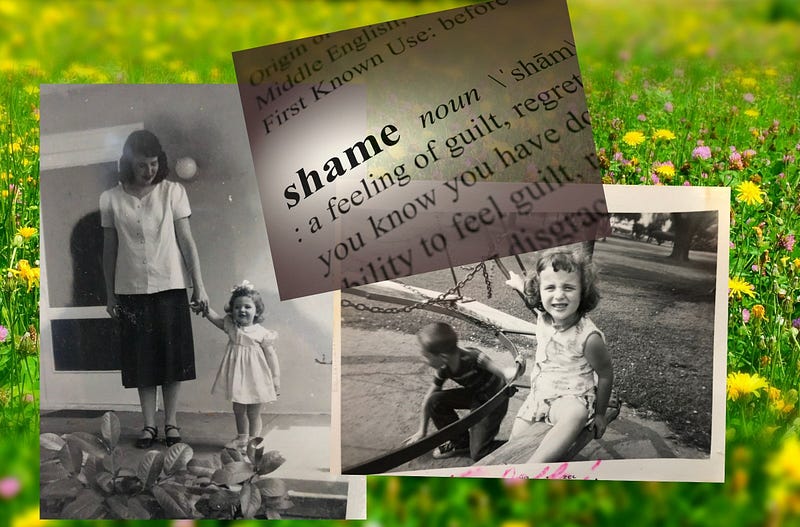
For most of my life, I functioned in a steady state of shame. Even as an adult, I had a vague sense of not living up to impossible expectations. No matter what I did, a feeling that I was never safe stalked me like a shadow.
Not until I began the process of pulling the scabs off my inner wounds to write a memoir did I know how deep the scars were.
Mom had a psychotic break during the birth of her second child and blamed that child, my older sister, for every misfortune that occurred after her birth.
By the time I was four, my childhood mind had started struggling to make sense of my unpredictable life.
I believed it was only my constant efforts to be good and help others that prevented my mother from hating and abusing me like she did my older sister. It was an exhausting, hamster-wheel of the never-ending struggle of people-pleasing.
Finally, at 17, I left home and became engulfed in the Jesus People movement.
I spent the next 25 years in fundamentalist Christian churches with their rigid views of women as only wives and mothers.
The Proverbs 31 woman became my role model.
She sets about her work vigorously; her arms are strong for her tasks. She watches over the affairs of her household and does not eat the bread of idleness. Her children arise and call her blessed; her husband also, and he praises her: Many women do noble things, but you surpass them all.—The Bible, Proverbs 31

For years, I believed this was work I could do; I’d earn the praise of my husband. The years went by. Five beautiful children, homeschooling, canning, cooking, farming, being that ever-read helper to all I met.
Don’t get me wrong, I loved my family, but I felt hollowed out inside, no matter how hard I worked. So finally, leaving marriage and church behind, I began to find myself.
My survivor guilt for not protecting my sister weighed me down.
No matter how hard I tried to forget, I was sure I could have saved her. Instead, my sister survived with lifelong damage to her soul. Only now do I realize how damaged I was, too.
Worse yet, I’d been favored while I knew I was no better than my five siblings. I could never escape the knowledge I was a fraud. Feelings of guilt for a crime I never committed chased me like a wolf pack through the years.
Early in life, individuals develop an internalized view of themselves as adequate or inadequate within the world. Children who are continually criticized, severely punished, neglected, abandoned, or in other ways abused or mistreated get the message that they do not ‘fit’ in the world — that they are inadequate, inferior, or unworthy.—Marilyn J. Sorensen, Ph.D., author of Breaking the Chain of Low Self-Esteem
Shame — is one of the most painful emotions humans experience. Unlike guilt, which is based on actually doing something wrong, shame is self-inflicted and destructive. It can lead to an unreasonable fear that we’ll be banished or rejected from our family, friends, or even humanity. For a social creature, that could be deadly, our evolutionary memory insists.
Most of us have heard the frequently quoted Freudian hypothesis that depression is anger turned inward, which is often true. But shame is often at the root of anger. Some therapists suggest that men are more likely to react to shame with anger while women turn it into self-hate.
All depressions, whether triggered initially by shame or other causes, can create further shame and distress that interact in a negatively spiraling cycle. As a result, the motivation to accomplish things and have fun becomes increasingly difficult.—Mary C. Lamia Ph.D.
Therapists often miss the signs of shame.
I first started therapy while trying to become divorced. At first, I said it was hard to leave, to hurt and disappoint my husband and my family. Now, I know it was the shame of failure as a wife that kept me married for so long.
But never did anybody suggest I was carrying a backpack loaded with 40 years of shame.
When I first began my recovery from codependence, I laughed at the idea of re-parenting my inner child. Pick up imaginary little girl Cindy and hold her on my lap? Tell her I loved her just as she was? That I would keep her safe forever? What kind of joke was that? I could not even imagine saying those words.
My parents didn’t talk like that.
Most of us have heard of the many responses to danger—flight, fight, freeze, or fawn. But, especially when we are children, we realize our inability to fight our abusers, and we know the odds of a successful flight are not good.
So we can fawn, appease, or freeze to escape attention. A depressed person doesn’t want to do much, and depression is now thought by some professionals to be a necessary survival tool. Depression can be a valuable response to overwhelming stress.
My method of coping was to fawn, though I would not have described it that way. Placate my mother, yes. Be so strong and capable; I needed no one? Absolutely. I became what I envisioned as an essential worker, the one person everyone could depend on to save the day. I’d be needed, damn it!
Oh, man, it’s been tough.
Writing a memoir is like pulling off layers of bandages which I’ve spent a lifetime carefully wrapping around myself.
Children quickly learn what brings them praise, safety, and even a perverted sense of love. My coping mechanism, my bandage of choice, was pretending not to hurt.
Then, when the wound started seeping through, I’d pull off the bandaid and look at the scab. As the months and years went by, I got better at wrapping wounds with so much gauze and sticky tape, so nobody saw my pain.
My mother’s mental illness was never diagnosed or treated.
In the 1950s, ignorance about mental health meant that extreme stigma and fear surrounded it. Women had quiet nervous breakdowns, but people with mental health problems were considered crazy. On the other hand, the obstetrician gave my mother amphetamines for weight loss when she was pregnant.
There were no mental health or child abuse hotlines to call as her depression worsened. She spent days in bed sobbing, and her increasingly psychotic episodes threatened our safety, and nobody knew.
I gave up trying to please my mom when I was twelve, but my mother’s obsessions had lodged deeply in my heart. Although, to be fair, it wasn’t all her.
As Brené Brown says, shame is different for men and women. Men feel shame for being weak. Too many women have accepted the societal myth that we must be perfect in every way. Worldwide, women have historically been the global caretakers and believe we are responsible for far too much.
My family doesn’t need me anymore; I’m happy to say.
We love each other, spend time whenever we can, but we are not responsible for each other’s wellbeing and happiness. Acknowledging this reality took some readjusting.
After all, I was pregnant with my oldest son just about fifty years ago, and I’ve been a mom, grandmother, and even a great-grandma for a long, long time.
I’m no longer compelled by guilt and shame to reenact an endless cycle of trauma. Let me assure you, old habits die hard and take practice to overcome, but I’m learning.

I’m planning a significant move for the first time just because I want to because it’s good for me.
And you know what? I pick up darling chubby, curly-haired Cindy, and I tell her you are loved.
And it feels good. And writing is helping to heal my soul.
Cindy is writing a memoir of her adventures growing up on a homestead in Alaska, farming in the southwest, owning bookstores, and more. Access exclusive family photos here.