
Dear Writers: Visceral Reaction Progressions: the secret to perfect pacing and deep POV

When you need to deepen the reader’s connection to the characters, you want to find just the right details. But there’s more to the character than their backstory. The most important aspect the reader needs to connect to is THE CHARACTER’S LIVED EXPERIENCE.
And when it comes to the lived experience, we’re not talking about a simple description. It’s the difference in telling someone you had a bad day versus making them cry with you just from hearing about it. It’s the difference in information versus emotion.
As storytellers, we need to make the reader feel what our characters feel. One of the most effective tools to do so is a Visceral Reaction Progression (VRP).
But to tell you what a VRP is, first just a refresher on Visceral Reactions.
WTF IS A VISCERAL REACTION?
Visceral reactions are the embodied sensations manifested from the character’s lived experience.
A visceral reaction is like when your heart freezes, your stomach hits the floor, your face flushes. It’s an intense physical reaction to evoke an intense emotion.
But we don’t just want the reader to feel something. We want to subtly direct their intuition and imagination so that they connect with the characters on a level like a best friend they’ve known for years.
To do this, we need deep POV. Or at least as deep as your story calls for. And there’s one neat trick to manifesting Deep POV: VISCERAL REACTION PROGRESSIONS
HOW DO YOU SHOW A VISCERAL REACTION PROGRESSION?
FIRST! A visceral reaction.
THEN! Your character makes sense of the embodied sensation.
FINALLY! Your character comes to a conclusion and/or takes action
Whatever happens next provokes a new Visceral Reaction Progression.
The more visceral reaction progressions you stack together, the deeper and more immersive the POV will be.
Now you can focus simply on the pacing. Yes, pacing affects the speed at which the reader turns the pages. It’s also the speed at which they experience the story.
PACING
That’s right, you can write DEEP POV with a nail-biting pace. People can turn those pages faster than their heart beats and yet feel completely lost in that world. What’s the trick?
If you want to slow down the pacing, you just linger a little longer in the “WTF JUST HAPPENED” phase.
Refresher: that’s when the character makes sense of their visceral reaction
The questions (and answers) your character must face depends on the heart of your story.
The fewer questions your character faces, the lighter and faster the pacing. A character being TOO decisive can actually make the POV feel shallow, but that’s perfect for some stories and storytelling styles.
But sometimes you do want to slow down the pacing. Reflection — even obsessive reflection — can give the reader a chance to breathe after an overwhelming chapter or story beat.
Let’s see what this looks like!
ECHOES
BY ALICE REEDS
First the who and what (then the excerpt):
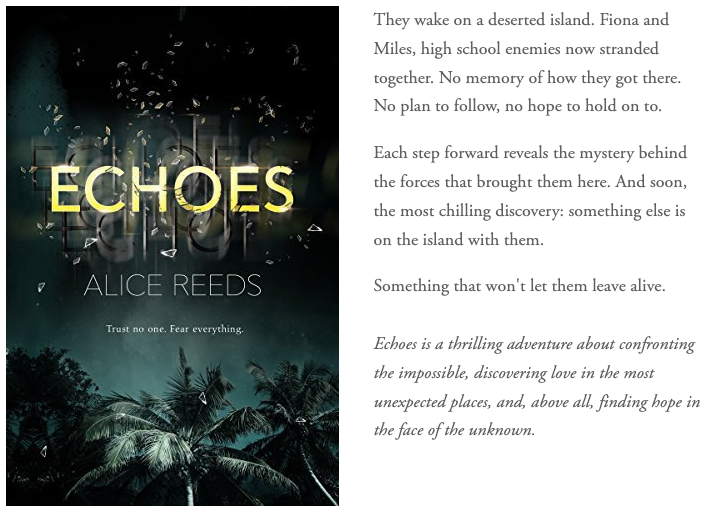
I can’t wait to show you this excerpt from the first chapter of ECHOES. If you don’t have your own copy, you *should* be able to read the first chapter in the digital preview pages. Or better yet…buy your own copy (offsite to Amazon).
Alice comes up with premises so powerful that the concepts alone take over your imagination. She’s able to tap into the visceral experience not just of a situation, but of an idea.
ECHOES follows in the same “slightly sci-fi stranded group of survivors” genre as LOST, THE WILDS, and the more recent YELLOWJACKETS. I’m biased, but out of the four? Hers is still the best.
Working with her was a true pleasure, and her story continues to inspire me to this day.
THE WORKSHOP EXCERPT
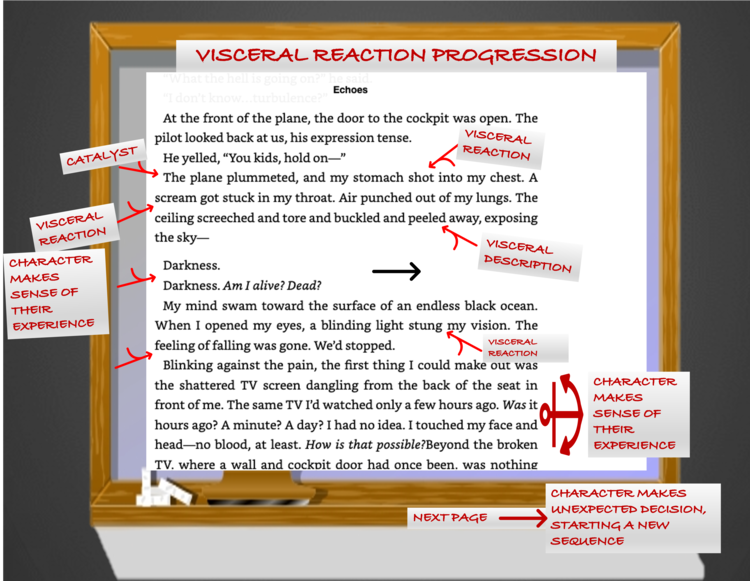
We’ve got all of the basic ingredients. And Alice here shows us that the formula is more like a guideline than a scientific principle. It’s okay to get artful with how you stack these things together.
In this excerpt from ECHOES, an already tense situation suddenly gets worse. The plane plummets — starting our visceral reaction progression.
The progression follows an easy sequence: catalyst, visceral reaction, character makes sense of the experience, repeat.
And then at the end, Alice shows us how to keep the reader on the edge of their seat while also secretly giving the reader a chance to catch their breath. Instead of one brief sentence making sense of their visceral reaction, the character spends an entire paragraph.
That moment is like in a hit radio song before the BIG chorus. The momentary lull in the chaos — just enough time to start to think, but never enough time to think it all the way through — subconsciously signals the reader that the shit is about to hit the fan.
THE END (DAMN GIRL, THAT’S DARK)
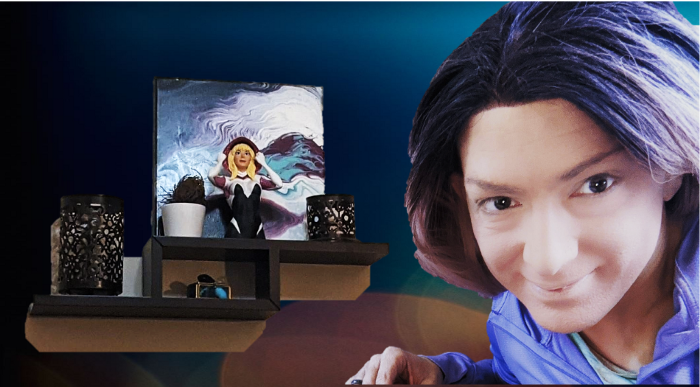
Stephenie Magister is a transgender author, teacher, writing coach, business owner, and mother of one daughter in college (with three fur babies at home). Her work has been featured in Writer’s Digest, Script Magazine, and ScreenRant (offsite links). She uses her ten plus years of experience to empower diversity throughout media. She has served as a managing editor for magazines, an acquiring and developmental editor for USA Today best-selling and award-winning authors, and as a general media consultant helping storytellers in all formats find their voice and monetize their brand. She continues to run Stephenie Edits, serves as an editor for Impacting Millions and Inkers Con, and manages her Medium columns for Transgender Soapbox, Dear Cisters, and random quizzes to tell you what your favorite Mario Power Up says about your personality type.


