[World Spotlight] The Impact of Russia-NATO Strategy & Global Energy Markets on World Affairs
Follow Areas & Producers for content about World Affairs

Energy is coming back into focus. It’s always been relevant to war and conflict, but today’s wars are laser-focused on energy market disruptions.
The Red Sea is re-routing crude oil tankers and gas supplies around the Cape of Hope which is expanding the time and resources needed to get commodities to their port destinations on the Atlantic Ocean. While this is good news for international ports in South Africa and Spain, the consequences of this maritime shift have yet to be materialized.
Companies continue to halt shipping in fear of being attacked by Houthi rebels near the Red Sea. That’s why the Indian Ocean has become somewhat of a buzzword in shipping news. Oh, and by the way, OPEC+ just announced today that it would be extending voluntary oil output cuts into Q2!
Aside from these macro-economic dynamics, the international oil companies (IOCs) ExxonMobil and Shell both made the headlines this week. I published two of those news stories in the publication Areas & Producers this week.
In response to my story about ExxonMobil CEO Darren Woods Rips Into Climate Change & Renewable Energy Future, another Medium writer gave me a piece of his mind about how ExxonMobil — including CEO Darren Woods — is causing the future generations to suffer under a warming planet.
Look at what Ray Katz said about my story below:
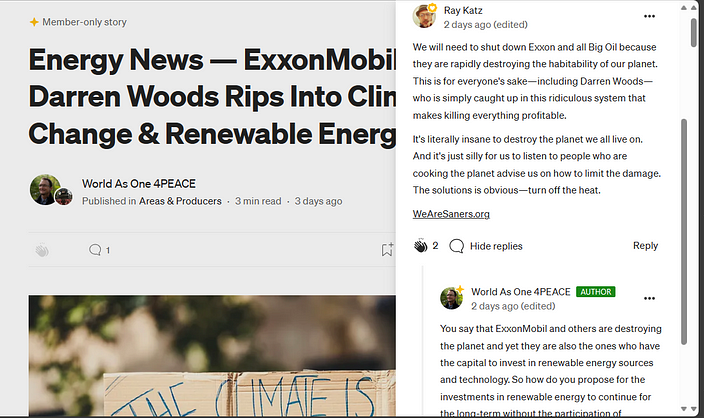
I can’t imagine how the planet will change for future generations — though I certainly agree that it will change significantly — while myself and others will have to be leaders in the problem-solving venture to save the planet from global warming.
Here is my full response to the writer’s comments:
“You say that ExxonMobil and others are destroying the planet and yet they are also the ones who have the capital to invest in renewable energy sources and technology. So how do you propose for the investments in renewable energy to continue for the long-term without the participation of ExxonMobil and others?”
Go to the story in the link above to read more about it. Explore more content about the impact of the Russia-NATO Strategy & Global Energy Markets on World Affairs in the publication Areas & Producers below.

George Friedman is founder of Geopolitical Futures and author of many books on geopolitics. This latest writing by Friedman about Russia’s invasion of Ukraine and the fate of Europe’s strategic dilemma is insightful and a little controversial. Have a look at it here.
Now, here are my thoughts about the article.
“In my opinion, America’s intentions were not to launch an eventual invasion of Russia, though it did have a small interest in limiting Russian influence. Russian intelligence is competent, and it is unlikely that the Kremlin received reports of American invasion plans ahead of the war in Ukraine. But in statecraft, intention is simply the quacking of ducks. Intentions can change in minutes.”
The quacking of ducks — as in “quack-quack” in the game of duck-duck-goose. Who is quacking at whom? For which purpose? I have no idea what this means, but I understand that Russia’s intentions have not been underestimated by the US military. Just because American interests are prioritized on the Middle East and China’s rise in the global economy does not mean that they are overlooking Russia’s strategy in the global context.
In military parlance, Russia’s main advantage is that it controls any fog-of-war scenario over Ukraine, or any other country in the former Soviet Union. This scenario allows Russia to wait and see how the US reacts to each step taken by them against Ukraine, while fearful countries like Georgia look on with contempt at the growing Russian influence in Abkhazia and South Ossetia. Georgia missed out on the opportunity to be in the Eurasian Economic Union but isn’t in NATO. Does that sound familiar?
“Russia also failed to begin the war with the advantage of surprise. No doubt it was motivated by the assumption that the threat of a Russian invasion would cause fear and unrest in Ukraine. That propaganda campaign went on for months and convinced the U.S., through intelligence on Russia’s capabilities, that Russia was going to attack. This caused Washington to undertake an emergency surge in armaments and joint planning with Kyiv.”
I don’t think Russia was ever going for the surprise attack; they already accomplished that with the annexation of Crimea in 2014. That annexation was strategically critical to the maritime domain of the Black Sea. Imagine what would have happened — or not happened — if Ukraine still had full territorial control of the Crimean Peninsula. No-one has to be a military strategist to draw conclusions from a world map.
Go to the Black Sea on the world map, look for the Crimean Peninsula, and now tell me which country is likely to have control over the Black Sea when all things are said-and-done. Wait, were you also able to see Abkhazia and Ajaria on the Black Sea? Russia enjoys de-facto control over those territories, too, except that, when Russia invaded Georgia in 2008, there wasn’t an international outcry for Georgia as countries like Israel have to endure in the Middle East. The public perception has already shifted to the Middle East Conflict, and I’m afraid that military planners are going to have figure out how to outmaneuver Russia in the Black Sea for the long-term.
“If Russia takes the whole of Ukraine, the question that is fundamental to the war is what Russia’s next move will be. Putin has made it clear that he believes Ukraine is part of Russia, as are other nations in the region in his mind. Intentions are irrelevant, but if Russia occupies Ukraine and then seeks to drive back NATO, the intentions might be matched by capability.”
Russia’s intentions are to keep NATO out of its traditional sphere of influence. The question remains: Is Russia willing to go to war with NATO forces for this purpose? I argue that Russia has the highest risk of losing its strategic capability in a possible war with NATO forces. NATO will outnumber them; and NATO will be able to amass weapons systems that Russia has not seen in its war with Ukraine. Even the weapons used by Ukraine have caught the Russian Federation off-guard, causing them to retreat and rebuild on many occasions, and then only to come back with a fierce retaliation against Ukraine in response for the miscalculations of persistent US and NATO military support.
Russia has another strategic capability in this war: time. Time gives them more negotiating power to achieve a peace deal. Of course, peace between Russia and Ukraine could have been achieved through the Black Sea Grain Initiative — which was sponsored by Turkey and the United Nations — but Russia’s demands for decision-making over the so-called “Black Sea Grain Deal” were not met by its original terms.
Most people were not able to realize that this Black Sea Grain Initiative was a token of peace offered by Russia to allow Ukraine’s grain exports and gas transit revenues to resume. Instead, the US and EU upped the ante on their sanctions regimes, effectively putting a price cap on Russia’s oil and gas exports, making Russia’s incentive for the grain deal completely irrelevant to its purpose. That’s why I don’t agree with Friedman that “intentions are irrelevant”. The Black Sea Grain Initiative was the one that got away.

One of Australia’s biggest energy companies is Woodside Energy. This company has gone under the radar, and I don’t know why. Because they landed one of the biggest deals in the energy sector during a time when all of the attention has been focused on energy demand and security.
Here are some of the key highlights about the company’s energy portfolio:
- In November 2021, the Perth-based Woodside Energy announced its FID on the Scarborough offshore gas project in Western Australia. This deal was finalized after the company successfully acquired BHP Group’s petroleum division of the project through a binding share sale agreement to merge with BHP’s oil and gas venture in the Scarborough gas field. According to a report by Energy Flux, this merger will create the largest company in Australia in terms of market capitalization at A$41 billion.
- Australia was the world’s largest LNG exporter in 2021 when revenues hit $35.3 billion in 2021. This was due to China’s rise as the world’s largest importer, of which 31.6 million tonnes of the country’s LNG imports came from Australia.
- According to The Sydney Morning Herald, Woodside made more than $1 million an hour in profits due to the rising demand for natural gas. It also reported that Woodside made $6.50 billion in net profits for the year of 2022, since the BHP merger was taken into account.
This company should be on everyone’s radar, as they are one of the true indicators for global energy supply and demand in the near-term. Don’t just take it from me. Woodside Energy CEO Meg O’Neill also spoke on these global market trends in an interview with Bloomberg this week.
Here’s what she said about the oil and gas markets:
“So 2022 was an unprecedented year. With Russia’s invasion of Ukraine that triggered ripples throughout the global oil and gas markets. We saw oil trade flows be re-routed; we saw significant disruption in gas-trade flows, particularly, with lots of LNG flowing into Europe. 2023 was a year of normalization, so the market was still very nervous. This year I think we will continue to see things settle out a bit…a more stable a predictable year.”
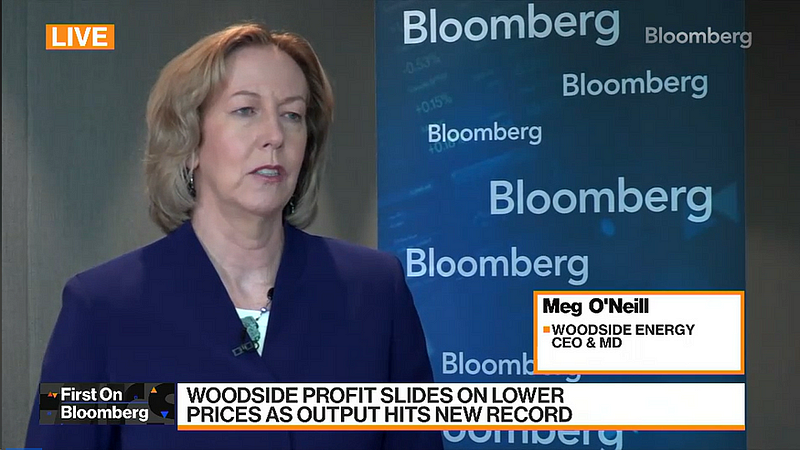
Over the last two years there’s been a lot of fears surrounding energy security. Even while prices were going up, OPEC+ decided to start voluntarily cutting oil output among its members. Meanwhile, LNG as a energy transition fuel is getting a lot of attention of global energy markets.
The biggest story for LNG in 2022 was the China-Qatar supply deal — touted as the world’s largest-ever LNG supply deal at $60 billion over a total of 27 years. This is probably why global energy producers are pointing to China’s mad rush for LNG as a key indicator of global energy market demand.
For example, CEO O’Neill discussed the LNG demand in Asian markets with the Bloomberg reporter. Here’s what she said about China’s and other Asian nations’ LNG demand going forward:
“China, despite the kind of rumors of their economic flattening, if you look at the LNG contracts they signed last year, they signed a number of significant 20-year offtake deals. So they are preparing for a future that is going to require LNG in their energy mix…So I think we will start to see more of those emerging Asian nations and the Southeast Asian nations continue to buy [LNG]. And again, China is still a very significant LNG importer.”
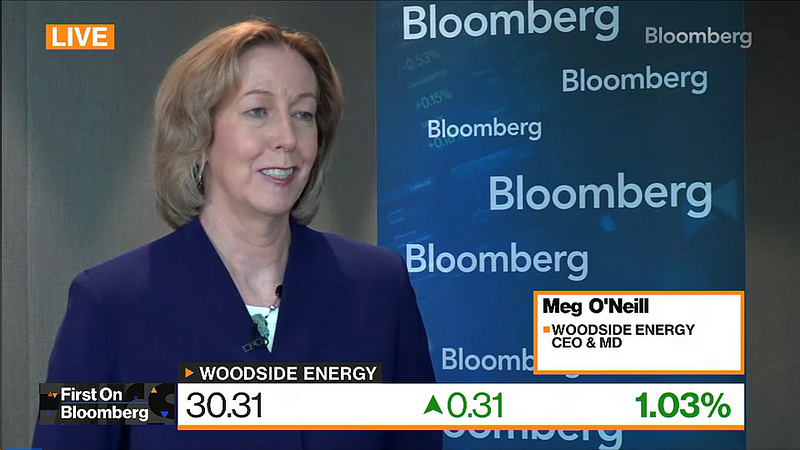
In other words, China’s carbon reduction strategy relies on importing more LNG supplies for the near- and long-term market scenarios. Bloomberg previously reported that because 15% of new long-term LNG contracts belonged to China, that this would allow the country to gain a significant market share over other LNG import competitors.
Energy demand is the main link between infrastructure investments and industrial production. This trend is picking up with speed due to the United States’ Inflation Reduction Act (IRA), not to mention China’s Belt and Road Initiative (BRI), which is all about providing for the developing world’s infrastructure needs to facilitate new pathways for global trade.
Follow Areas & Producers for content about World Affairs.