
Women Over 35 Are Choosing to Become Mothers Without Marriage
Is having a baby before marriage the right choice for you?
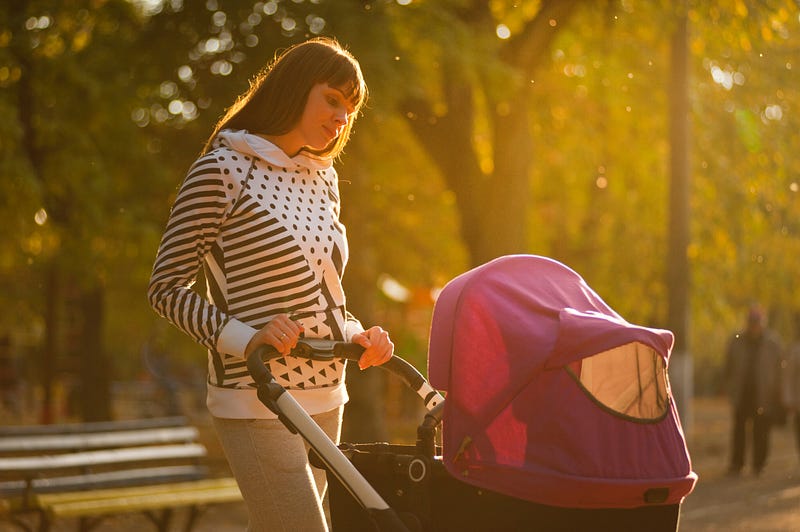
I had lunch recently with my friend Sarah* when the conversation went off the rails. Or at least to a third rail. Sarah informed me that she plans to get pregnant with the next guy she dates. Because my sarcasm is a feral beast, I couldn't help but ask the obvious question.
"Do you plan to tell him on the first or second date that he is auditioning for possible baby daddy?"
Sarah laughed, took a big sip of her beer, and then slammed it down like a judge's gavel before responding, "I am serious. I am ready to have a baby."
And I believed her.
Sarah's story is a familiar one. In her early 30s, she got her graduate degree and nailed her career goals. At 39, she is a director and commands a comfy six-figure salary with a robust stock portfolio. But by prioritizing career over marriage, she also failed to meet a suitable partner.
Like many women, Sarah had always planned to follow the traditional arc of marriage and then children. Unfortunately, not everyone's arc bends toward tradition, and for many, following the expected route can stifle growth.
Tradition is a word that often leaves a lump in my throat. Maybe because traditions are often at odds with individualistic pursuits of happiness. Even the Latin root of the word tradition — traditionem means "a delivering up, surrender, a handing down, a giving up." Traditions can cause us to surrender our freedoms to placate society's expectations. But only if we let them.
Traditions are like a warm blanket. Sure, they can offer comfort, but not when the heat comes on. For Sarah, the heat is on. She knows her biological clock is ticking, so she is taking charge of her happiness.
And Sarah is not alone in her decision.
First Comes Love, Then Comes…The Baby Carriage?
More and more women are choosing to enter motherhood without the trappings of wedded bliss. According to Eli Finkle, author of The All or Nothing Marriage, the birth rate has increased in older unwed women. For example, between 2002 and 2012, birth rates for unwed mothers between fifteen and twenty-four years of age dropped. In contrast, birth rates for unwed mothers between twenty-five and forty-four years of age rose.
Education is the keystone in this trend. A more recent study by Johns Hopkins University sociologist Andrew Cherlin found birth rates in unwed mothers overall have risen, but the sharpest increase was seen in educated women. In 1996, only 4% of college-educated women in their 30s had babies out of wedlock. Today, that percentage has skyrocketed to 24.5%.
And these educated women are thriving as mothers. Of course, men still outearn women, but the wage gap is often misunderstood. Child-free mothers make roughly the same salary as their male counterparts. In other words, it is not gender that causes a wage gap but motherhood. Economists have termed this wage gap the "motherhood penalty."
Unfortunately, this motherhood penalty hurts married women the most. Working married mothers earn 39% less than working fathers. Even more alarming, a woman's income is hamstrung after becoming a mother, while a man's income increases after having children.
This begs the question —If motherhood stymies women’s earning potential, why not choose motherhood after building wealth? Why not reach your career goals and then spend that hard-earned money at your local sperm bank?
Men being reduced to sperm donors will probably hit a dystopian nerve with many. As it probably should. The education gap reached its highest level yet this year, with women accounting for 59.5% of college degrees. Step into a college university, and there are now six women for every four men. Simply put, educated men are becoming the minority. And experts are predicting it will get worse.
Many will argue that blue-collar jobs can be highly lucrative, but higher education still equates with higher earning potential. As more women increase their earnings, they no longer are choosing a partner by the size of his bank account.
Successful women today want a partner, not a provider. And definitely not a project. Unfortunately, the surest way to increase your household drudgery is to get married. A recent study found that married women with children do far more housework than single women with children. Single moms also reported having more leisure time. And so the Cinderella plot thickens.
But if waiting for marriage to have kids hurts a woman's earning potential, increases her household chores, and makes her reliant on finding a suitable partner, it's no wonder why many women are opting out of matrimony.
Gone are the days when women had to choose a husband by his ability to provide. Now, many women can provide for themselves. Unfortunately, money is only one piece of a highly complex decision.
Here are a few more questions to ask yourself before going solo into motherhood.
Is unwed motherhood the right choice for you?
A few questions to ask yourself.
Play the "in ten years" game.
No one knows who they will become in ten years, but many of us have a game plan. Or at least we know what the lesser of two evils is. So, which life outcome is worse? — being single or childless? Plenty of women who choose the childless route are happy with their unencumbered lifestyle. And plenty of women meet their spouses after having kids.
I see singlehood as a swinging door. Anyone can come into your life and irrevocably change it. You can meet the love of your life at age eighteen or eighty.
But even with advancements in fertility treatments, motherhood is still a closing window.
Do you have a village?
Having children is a job that requires a village. Or at least two to three people you can depend on. Do you have at least one family or friend who will drop everything if your child is sick or in danger?
A good husband is a teammate who is always on your side. And having that kind of support is hard to find in a friend or grandparent.
Your resolve should be harder than diamonds.
What parent hasn't experienced those moments when they don't want to get out of bed? But often, new parents suffer from depression not because they are exhausted but because they are alone.
The link between loneliness and depression is clear. Research shows lonely people suffer higher rates of depression. And it's not hard to see why. Humans are a pair-bonding species built for social interactions. Somewhere in our lizard brains lies a lesson from our oldest ancestors — when a member of the tribe was abandoned, that member died.
It's why loneliness leads to anxiety and a feeling of powerlessness. No one wants to die alone.
Ask yourself if you are prepared to sit comfortably in solitude. Parenting solo will have many lonely moments.
The only wild oats you will sow come in a baby food jar.
Parenting can mature some people overnight. There will be many times when your child's needs will supersede your own. There is no late-night clubbing, last-minute trips to Paris, or extravagant purchases when you have a baby. You must be prepared to make sacrifices.
Do you have the economic means?
Ah yes, the practicalities of parenting. Children are damn expensive. The most recent data found the cost of raising a child born in 2015 was $233,610.
Not to mention, if you choose fertility treatments, expect to pay through the nose. The average cost of just one IVF cycle is $12,000.
My Grandma Ella used to say that life hangs on silk threads. One wrong pull can unravel your world. And having a child is a pretty big tug.
But many women do not have to wait for the pieces to fall into place before becoming mothers. Many women become mothers first and wives second. In the arc of life, what you become first matters less than what you become last.
Mother. Spouse. Pet owner. Favorite Aunt. A well-ordered life never follows one trajectory.
*Names changed to protect future sperm donors.


