
Window to Heaven
III
The Golden Egg
Hardin spoke to no one of his find. To learn what he had found, he cultivated the acquaintanceship of a young doctoral candidate in geology. Professing interest, he let the student give him a tour of the university’s geology lab and burble on about the wonders of their equipment. A contrived question presented to appear almost as a stray afterthought elicited a demonstration of the lab’s spectrometer.
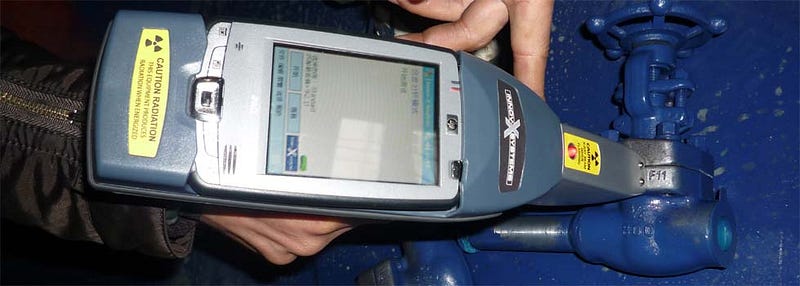
When a professor called the kid out of the lab for a few minutes, Hardin slipped a small sample from his pocket and put it under the spectrometer, which identified his sample as rhodium. He’d never heard of it, but a quick computer search told him it was a rare noble element used in the aerospace industry and known only from one mine in South Africa.
He learned as well that nothing was ever entirely pure — could be he’d always known that as a philosophical proposition — but as it applied to rhodium, or virtually any other raw mineral taken from the ground, it meant that every source had its own characteristic impurities, which meant that as soon as a potential buyer put his sample under their own spectrometer they’d know it didn’t come from the South African mine, information that if circulated in the industry would be sure to cause a furor.
For their own protection, his buyer wouldn’t want to incur the expense of expanding production of their circuitry based on raw materials from an unknown source that could disappear as easily as it appeared. The temptation to devote the resources necessary to track it down to where it came out of the ground would be overwhelming. If they ever discovered the location of his strike, they’d use their enormous influence to gain control of his find, and his rights would disappear as if they’d never existed.
His conversation with the industry contact he had chosen came back with clarity. He’d approached his man, a scientist turned CEO, away from his office, and on vacation with his family, where he caught him sitting alone near a potted palm on a veranda in a large hotel in Atlanta.
The man read his Wall Street Journal and drank his morning coffee, blending with dozens of moderately well-to-do tourists and business travelers. For some reason the image of the potted palm kept coming back to him and seemed to say something he couldn’t quite put into words, the tameness of that kind of environment perhaps, the kind of life, the kind of place, he usually went to some pains to avoid.
When the man, soft and well-fed, a man of family, of fenced-in resorts, and gated communities, ghettos for the rich, and high rise offices, glanced up to see Hardin looming over him, the implied threat lay heavy between them. The message was clear, intentionally upending this man’s world, and his assumption that one no outside his own tiny circle would understand who or what he was.
I can find you.
If Hardin Rolf had a threatening appearance, knew it, and used it, his words were soft, respectful.
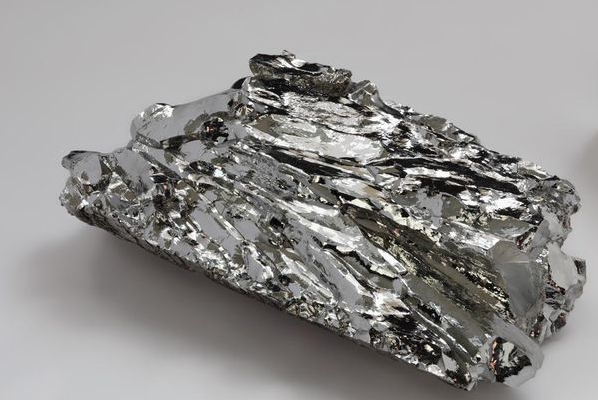
He said the man’s name, which elicited a jolt, almost electric in response, and without speaking a word, placed the hefty, sharp-cornered chunk of rhodium on the low metal table in front of the scientist.
The man’s expression and demeanor showed everything.
This CEO wouldn’t have made a good poker player.
The man said, “I’ll have this analyzed, but I know what it is.” Something of the soft family man disappeared when he turned his eyes up to lock onto Hardin’s. “But let’s have this understanding up front: if this is from the one known source in South Africa, I won’t touch it.”
“It isn’t.”
“You have more?”
“Much more.”
Hardin never left his name and said only that delivery could never be done on a schedule.
The chief executive did find a way to communicate with him, leaving short, sealed notes with his deposits in the Swiss numbered accounts he used. Swiss banks didn’t normally act as mail-carriers, but, for those few customers who reached a certain level, they were there to serve. When Hardin accessed his account, the notes were available to him.
Before he left that Atlanta hotel, he was already a little ashamed of how he had treated the man, if the shame didn’t touch the necessity. The man was one more decent family man who had never lived with fear as a constant backdrop to his life. His shame was such that he felt a twinge when he ignored the man’s notes, pleading for continuity of source. He actually believed the man when he said the rhodium had an important role in the advancement of knowledge and humanity.
Price didn’t have to be negotiated. Spot market prices were published and updated daily. If a delivery wasn’t paid for, it would be the last delivery. Other players existed in the market, but of the ones his research had led him to so far, he had a bad feeling.
Hardin quoted Aesop’s parable, warning him not to kill the goose that laid the golden egg. He asked of this engineer a restraint absolutely contrary to the dictates of human nature. It was only a matter of time before the contradiction upended both of their lives.
The quantity in that first backpack had been enough to change his life, whether he ever went back for more or not. Since his initial discovery, every year, he’d made several trips, if never more than three, back up into those mountains of the Mackenzie Divide, bringing back much larger quantities. He was worth millions. No, he had millions. What he was worth was an entirely different and lesser measure.
It didn’t take much research to confirm his suspicions, that a mineral strike by a foreigner on Canadian Crown Land would be immediately confiscated. Under technical law, there were ways to claim his strike. Under practical circumstances, to publicize his find would be to lose it.
He bought mountain land no one big wanted and stayed in the shadows. The idea of a tree no one could cut in his lifetime, or a field, forever in alfalfa, clover, timothy, or orchard grass, meant everything to him. Men, much like him, had turned the soil, gaining their strength, and their identity from it. To be one more in this long line was all he asked.
He would go back. It’d be a few months, though. This early in the season the waters that far North were still frozen.