
Will the Next Dalai Lama be a Woman?
From a Buddhist perspective, the answer is not as straightforward as you might think.
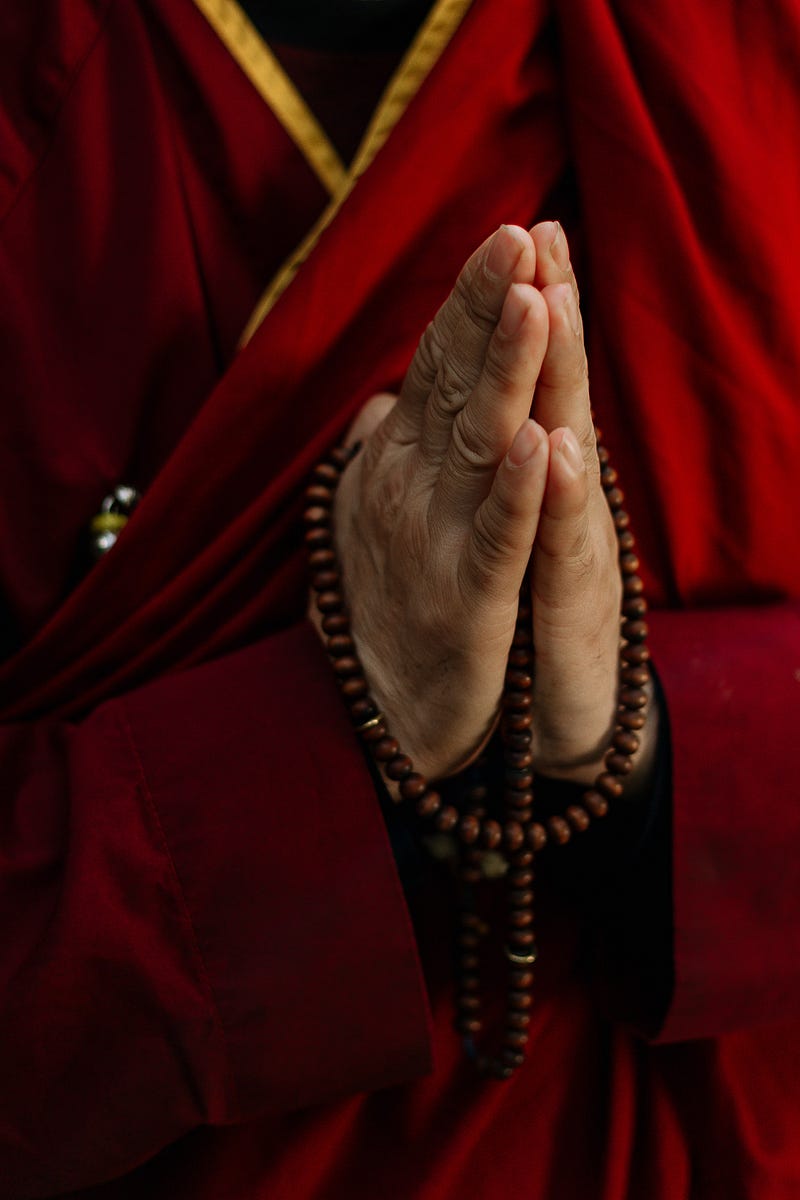
The Dalai Lama said during a visit to Australia in 2013 that his next reincarnation could very well be a woman.
In speaking to reporters about how the world needs more compassionate leaders today, he said that “biologically, females have more potential…females have more sensitivity about others’ well being.” As a result, he said, “if the circumstances are such that a female Dalai Lama is more useful, then automatically a female Dalai Lama will come.” (Washington Post)
People are often quick to dismiss concepts of reincarnation as hogwash.
For some reason, we can’t get our heads around the idea that we can be born more than once.
Voltaire said,
It is no more surprising to be born twice than to be born once.
When you think about it, it isn’t any more surprising. Birth itself is a ridiculous miracle. For it to happen again, it’s like — been there done that.

In the Buddhist tradition, there are two different concepts to consider.
- Rebirth is when a being is reborn unconsciously based on its habitual momentum. This is what happens to most of us.
- Reincarnation is when someone has conscious control over the manner of their birth. This is the experience of someone with degree of realization.
But when the Dalai Lama speaks about being reborn as a woman, it’s not simply a matter of his choice.
In Buddhism, Nirmanakaya is the aspect of an awakened Buddha that manifests for the benefit of others.
We have this idea that the Dalai Lama is going to fly through some mystical space, take off his robes, and divebomb into the womb of his carefully selected mother. But it’s not really like that.
Nirmanakaya is spontaneous. It is more like a wisdom manifestation that responds to the delusions of beings.
In other words, a nirmanakaya will appear as the mirror opposite of our complex delusion shape in order to guide us back through our delusion toward authenticity (Buddha).
From the Vajrayana perspective, the Dalai Lama isn’t even a being.
He is a nirmanakaya, a manifestation of the Buddha of Compassion —Chenrezig or Avalokiteshvara.
So the Dalai Lama, if you believe the concept, does not even choose his own rebirth. It is selected by the beings that need to be benefited.
This is why in the quote at the beginning he uses the word automatically.
- In the same way that the sun does not select who it shines upon, it shines on anyone without discrimination.
- In the same way that the moon can be reflected in multiple bodies of water around the world, not one of them is the actual moon.
The nirmanakaya manifestations of Chenrezig, we are told, are endless, and our Dalai Lama is seen as just one of these reflections appearing in our world at this time for our benefit.
What the Dalai Lama is saying is not I might choose to be a woman. He is saying, if the circumstances require a female, then a female will manifest.

We have become used to seeing Dalai Lama as a man, but Chenrezig, the Buddha of compassion, is genderless.
While Chenrezig is represented as male, the Chinese ‘version’ of Chenrezig is Quan Yin, who is represented as a female.
Like any organized religion, Buddhism is rampant with male chauvinism. But that’s not down to religion, it’s down to the creepy dominating figures that bend and shape the teachings for their own needs.
At its core, Buddhism teaches that gender, like most things, is actually make-believe.
The result of enlightenment is said to be utterly beyond any form of gender, and great Masters like Padmasambhava have said things like:
The awakened mind that is a self-existing knowing is not formed in the past, present, or future; also, it is neither male nor female nor neuter and has no difference in quality (Padmasambhava)
and
The basis for realising enlightenment is a human body. Male or female–there is no significant difference. But if she develops the mind bent on enlightenment, to be a woman is better.” (Padmasambhava)
Isn’t it terribly outrageous to suggest that women are better suited to attaining enlightenment than men? Yet, Padmasambhava is the most revered of all masters in Tibetan Buddhism to the degree that he is referred to as ‘The Second Buddha.’
Despite this, many male figures have tried to imply that the female state is inferior.
This chauvinism has been a great plague in Buddhism, resulting in the oppression of many women. Thankfully, change is already being led by teachers like Tenzin Palmo and Elizabeth Mattis Namgyal.
So we needn’t think that the Dalai Lama has some other agenda because he is a man. The compassion of the awakened mind is choiceless, and genderless and is there to respond to whatever is needed in a particular place, at a particular time.
We needn’t ask, ‘Will the Dalai lama decide to be reborn as a woman’. Instead, we should ask ‘Do our circumstances here on earth require a female Dalai Lama manifestation next?’
And from where I am sitting, the answer is an unequivocal yes.
If ya think this was alright, sign up for my free newsletter. That’s where I put all the really good shit.
Also, do you like books, kind Sir/Madam/Other? How about bald, penis rocket spacemen who sell books? If so, visit my author page at the cracked head gasket of the economy AKA cockrocket.com.
More from Frank T Bird (That’s me):


