

Will My Daughters Ever Drive a Car?
My daughters will grow as Autonomous Passengers in a new kind of mobility but will they need a driver's license?
I am the father of three amazing daughters: Stella, a beautiful and smart 13 years old teenager, Sofia, an incredibly smart 3 years old and last but definitely not least… Emily, just one 1 old but already able to show all her strong and curious character.
These girls do their best to keep me busy with all those kinds of stuff that fathers must deal with every day and maybe it is too early to get worried about it.. but recently after a pleasant conversation with a friend that works like me in the transportation industry, I’ve started to hear in my mind an almost philosophical question:
My daughters are digital natives, but they still use a very analogic and traditional piece of paper to draw their amazing and fantastic animals and flowers at home and a lot of paper notebooks while learning at school… so the question is: will they need a driver’s license in 2038?
Well, considering how things are developing today, probably not… Let me tell you why…

The dream of a new mobility
Imagine waking up early for work, getting ready, reading some news online on your tablet while having breakfast, without worrying about traffic and the chance of being late for having been in the traffic jam for forty minutes.
You access an application on your cell phone and request a car to take you to work, and in a few minutes, it arrives. A mechanical voice says a polite “good morning, welcome”, confirms that the destination is the one entered in the application. The vehicle starts the journey by driving automatically.
The AI algorithm will calculate the shortest route considering the variables of traffic, traffic lights, number of vehicles, accidents, and works on the way. Whatever else may affect the trip. Comfort will be a priority: air temperature, water if you feel thirsty, and various playlists to choose from will be available.
This scenario seems to be the future of mobility.
My daughters will grow in this reality and considering that, as they are deemed Native Digital today… they will grow as Autonomous Native Passengers in a new kind of mobility, ruled by Autonomous Vehicles.

Safety as a horizon for new mobility.
I love to imagine this autonomous scenario for the future, which may not happen anytime soon, considering that full automation faces “very complex” problems. It could end up reducing these vehicles to some very restricted applications.
But I am a dreamer, and I believe that Autonomous Vehicles’ technology is an indispensable tool for zero accidents on roads worldwide. This will be the leading driver (pun intended) for massive adoption.
I was born in Brazil at the end of the ’70s and had the not desirable fortune to grow in a country where traffic incidents used to count more deaths than some military conflicts.
Over the years, I’ve had lost an unacceptable number of friends due to traffic incidents.
Recent studies show some improvements, but the situation is still dramatic, even with some increase in the number of fatal incidents.
According to the World Health Organization, in 2018, car accidents were the leading cause of young people’s death up to 29 years old. To give you an example, in the USA, 94% of accidents, which caused 1.35 million deaths, had their causes related to human errors.
It is argued that, by 2025, autonomous cars will represent 4% of the total vehicles sold in the world and 75% in 2035, within 15 years. This could drastically reduce the number of incidents across the globe. I will tell you why…
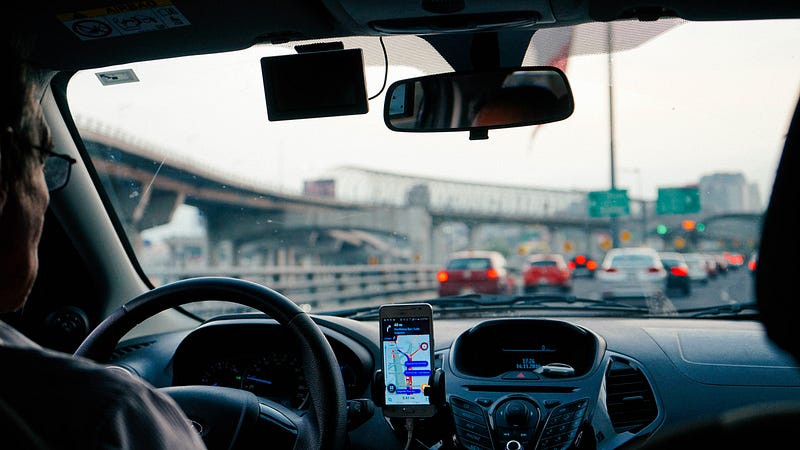
Autonomous Vehicles will drive better than you do.
Autonomous vehicles will not get tired, distracted, or intoxicated while driving.
They will be controlled by AI systems connected to redundant sensors and other top-level electronic equipment.
They go from one place to another, as the user instructed, and while on the way, they will collect all the necessary environmental information, such as signals, pedestrians, and other vehicles, while being directed by satellite systems to make a safe and optimized trip.
This technology has been developed globally, in universities and research centers, and in the automotive industry itself.
Many brilliant minds are putting a tremendous amount of money and effort into making it happen safely and efficiently.

Rethinking our cities
If this technology succeeds, and I really believe it will, not only will my daughters’ driving experiences will change, but the whole metropolitan model wherever they will decide to live in the next 20 years will change, too.
According to a study carried out in the United Kingdom, shared VAs will increase the urban space by 15 to 20%, mainly by eliminating parking areas.
Research is being published on the international scene with optimistic projections of the autonomous transport application in different instances.
In the next 20 years, I see that it will be much more comfortable and pleasant to live in cities once they start adapting to Autonomous Vehicles.
This transformation is already taking place and it will allow no accidents on the road in the next 20 years, but this will depend on a process of profound change based on three pillars where shared and connected mobility, autonomous and electrical will rely on technology in vehicles also outside of them.
My daughters will grow in a complex metropolitan ecosystem formed by drones that take people or feed agriculture, robots, and various vehicles of different sizes that can take many people and just one (the so-called micro-mobility), wireless electrical charges, and other technologies we already start to see today.
But even with all this available automation, will they be able to or required to drive? The question is still open.. and maybe to help us to answer that, we should look through the next point:

What are the advantages of AVs?
As we can see today, the main advantages of Autonomous vehicles are safety enhancements but also time savings.
For example, those who today drive for an hour to get to work could dedicate themselves to work and do video conferences in their vehicles…
Hopefully, my daughters in 2038 will use their commuting time to study, watch some programming language on youtube or simply chat with their friends and colleagues, thanks to the increased comfort and security delivered by the AVs.
But probably, they will not have a long commuting time since AVs are expected to reduce traffic and reduce accidents due to the remarkable optimization that AI algorithms will apply to our mobility.
For sure, their health will have a great benefit from less pollution in our cities, because 100% of AVs in the future will be electric.

And what about the driver’s license?
But what happens if, instead of all these features and improvements provided by full automation, my daughters will decide to put themselves behind the steering wheel, considering that still, a steering wheel will be available in AVs vehicles?
Well… I really don’t see this as an alternative in 2038 when Emily, my younger daughter, will be 18 years. According to research carried out in the UK in 2019, drivers of self-driving automobiles will need certification to adapt to new vehicles.
According to the survey, the driver’s license will continue to be indispensable in the future since vehicles will require human intervention in certain circumstances.
This kind of study is beneficial to put some light on the limitation of technology today. However, I still believe that in the next 20 years, many of the open questions still represent a roadblock to the full adoption of AVs will find their reliable answers. We will reach a level of standardization and safety requirements in our roads that will be unacceptable to allow humans to drive.
Probably we will move the ownership of the driver’s license from humans to the algorithms directly. But this is another story that I will cover in a future article.
Conclusion
Self-driving vehicles will become part of our lives. When controlled by algorithms instead of humans, vehicles will lose their current value as a fetish or status symbol and finally become a tool.
AVs’ benefits are numerous and significant, and their adoption will represent a great challenge to many business models as we know today.
Maybe it is too early to imagine VAs on a large scale on the streets, but it is time to put some questions and start to prepare the ground for them in all spheres.
Autonomous Vehicles will be a reality very soon. In 1908, Henry Ford revolutionized the way we see cars, making them a symbol of utilitarianism, comfort, and status. Now, after just over a hundred years, AI will reinvent mobility and start a new era.
Read more about it
If you want you can read more about Autonomous Vehicles in these articles: