
Will I Like Being a Mother?
The personal and political implications of considering motherhood
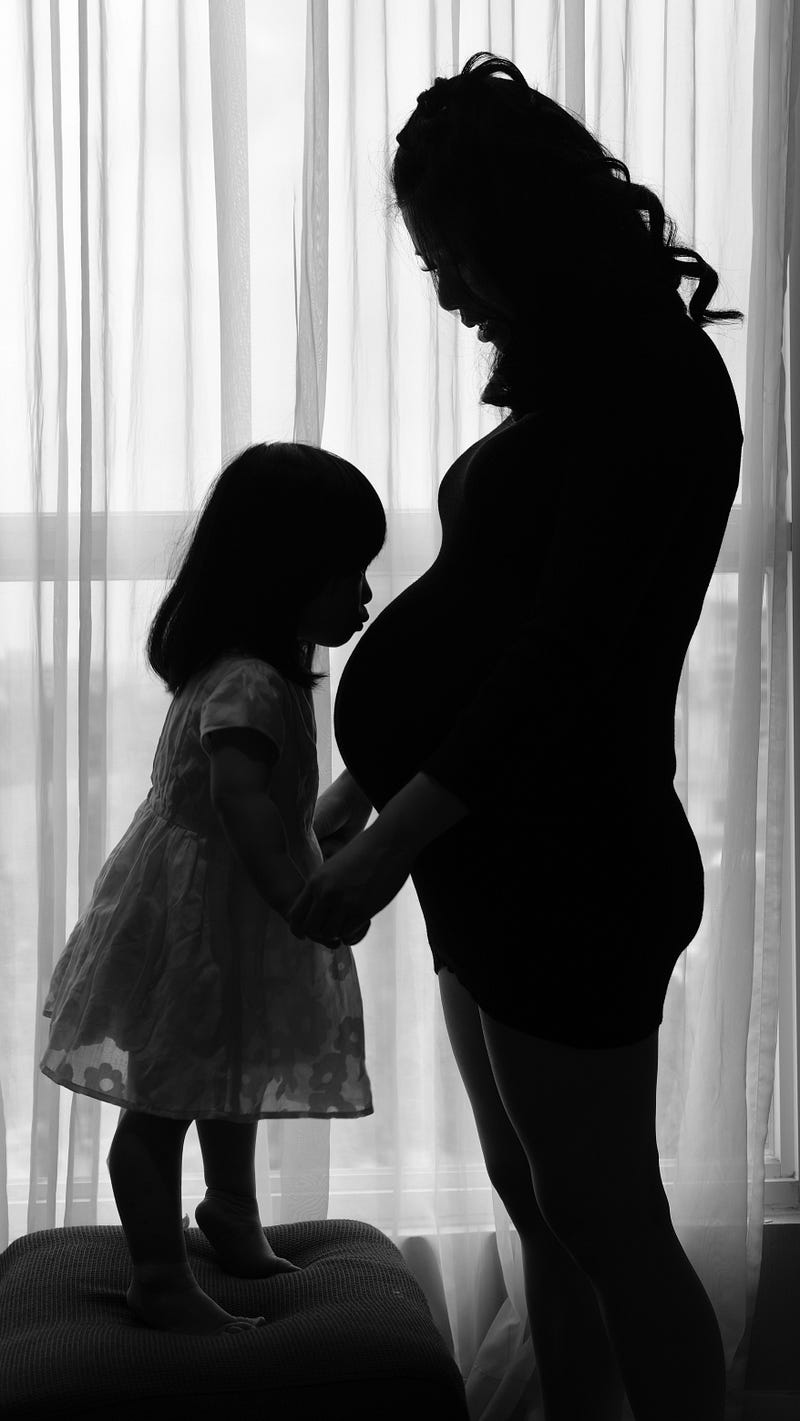
Embedded in the question “Will I like being a mother?” is vanity and doubt, insecurity and perfectionism, awareness of societal expectations, economic uncertainty, dreams pursued and dreams on hold. The question holds the fight you had with your partner about how to train your dog and the relationship you have (or don’t have) with your mother. It holds the fear of what it might look like to raise a child on your own: is it possible?
Inside the question is fertility itself: will your body be able to make another human and how much can you financially and emotionally commit if the answer is not an easy “yes”?
Your fear for the global future is nestled in too: climate change, pandemics, world wars, dictators: is the planet stable enough to usher in another human? Do you need to worry about over population or the problem of low birth rates?
Inside the question is a kind of longing, a memory of what it’s like to be held and what it might feel like, for the first time in your life, to surrender to the needs of another human.
Do you have the temerity to submit yourself to the unknown, wild future and pledge yourself to a small being that has not yet been imagined? You know that it will be hard; do you have chops to handle it? Maybe you’ll screw up, but hopefully not as much as your parents.
The timing of the question is important too: whether you’re 15-years-old or 39-years-old or 48-years-old. There’s actually a very slim window of time when your body will cooperate with the whole enterprise, and that window may or may not align with your other life missions.
The conditions you find yourself in matter a lot: whether you are planning to have a child, or whether through accident or violence the word “mother” is foisted on you. The decision to have a child is never frivolous; it can be full of pain, grief, and rage.
Can you envision saying the words out loud: “I am having a baby”?
Inside the question “will I like being a mom?” are the numerous myths about motherhood that you don’t yet know dwell in your bones. You will discover them later, in the ways you think you’ve failed your children by not giving them the mother you hoped to be. Once you get over your shortcomings, you’ll realize the kids only ever needed the real you in the first place.
Inside the question is the self-awareness that you are fickle and have never liked anything, all the time, except say, for ice cream. But you’re pretty certain you can’t turn your back on motherhood. Once started, you can’t really change your mind or ask for a different flavor.
It’s not enough to tell you: I like being a mom. I’m glad I did it.
It’s your own risk.
I feel like I won the lottery with my kids, and yet sometimes I still buckle under the weight of the incessant responsibility. I have yelled and nagged and cuddled and tickled and played games. I have given my kids stability, even when I felt unstable myself. I have educated and listened and bathed and read books and made homemade bread and gone to parenting class and summoned my sisterhood: and still at times I have failed them.
This is not a good feeling.
But “good” is useless anyways. It’s a judgement. And judgements do not feed babies or find solutions or tuck kids in at night.
There’s a lot to consider. Don’t be rash.
But also: having a child is inherently irrational.There is never a perfect time or perfect parents. There is a beautiful audacity in our drive to keep the human race going, when there are so many reasons to not.
So I’ll leave you with an anecdote:
I’m writing this essay and my daughter rushes in to announce she has harnessed her pet duck and is taking it on a walk in the driveway. Then her sister wants to join the fun and so I help catch the second duck and secure a ribbon on it too. Sheer lunacy: walking the ducks down the driveway on a Sunday morning. Liberated from their coop after a cold, wet winter. The harnesses, which I bought as a joke a year ago, have in fact found their usefulness.
The whole scene is delivered out of my kids imaginations into action. We spend nearly an hour walking the ducks in circles and laughing.
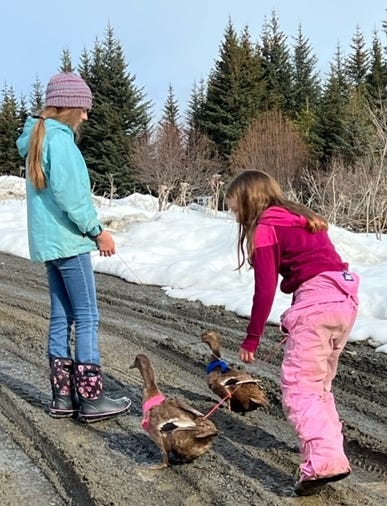
Kids are absurd and delightful and unpredictable. We have kids as an act of faith that there is more to life than the confines of our own flesh; we have kids to see the future and our hearts walking around outside of our bodies. Mothering is almost always harder than the ways we anticipate.
It’s often better too in ways we couldn’t have anticipated.
Editing this 5/5/2022 to affirm that motherhood is a choice. It was my choice, but every woman deserves the right to make her own decision. Check out this link to donate to the ACLU for fighting to protect reproductive freedom:
Want to get an email from me every time I publish? Join my email list by clicking here.
Writing and reading on Medium is fun. It’s like being part of a worldwide writing community. If you want to give it a try, use my referral link and I’ll get a little kickback.
Thanks for reading! Here are some links to some more of my stories:


