
40 Doesn’t Scare Me Because I’ve Already Done The Hard Stuff
Finally doing things on my own terms.
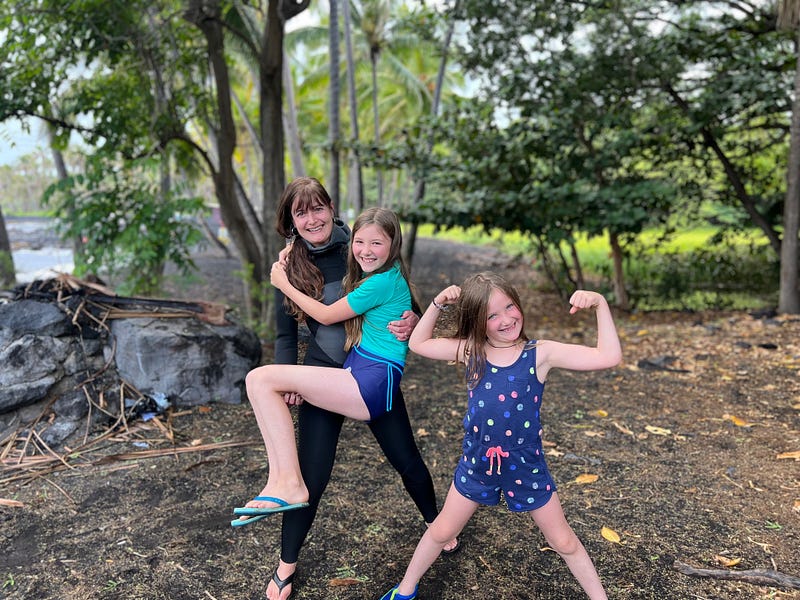
On the morning of my 40th birthday, I rolled on to my side, let out a sigh, and thought “Thank god that’s over.”
I was thinking of the preceding two decades of adulthood.
Generally speaking, I was thinking of the doubt, anxiety, fear, and grief that plagued my twenties and thirties.
At 40, I finally don’t feel like I owe an explanation to anyone about anything: like why I don’t like beer, or why I dye my hair, or what I’m going to do with my life.
Finally, I get to own who I am.
I did things in reverse.
My mom died when I was 17, and I moved to Alaska to be with my dad. I bought my first house when I was 20 — it was an owner-financed cabin without running water and came with an outhouse. I worked three jobs to pay for college out of pocket, and got married at 23. Everything in those days was about survival.
I worked a job with benefits and went to grad school while my husband built us a “real” log home (as opposed to the tiny cabin we were still living in.) When the financial aid office gave me a check for $10K that was supposed to be used for living expenses, my eyes lit up because we were running out of money, and I knew this was how we would pay for the roof.
Meanwhile, our friends were doing amazing things like traveling the world and graduating from Harvard. Or hell, spending weekends like weekends, instead of cramming for grad school or plumbing a toilet.
My first baby was born when I was 28.
She was fussy and serious and wouldn’t sleep. I went through the mental files of what my mother had told me about babies. It wasn’t much and didn’t match my situation. I cried a lot that first year. I loved my baby intensely, and also felt doomed to fail her.
At one point I asked my midwife if she was sure every baby was matched to the right mom, to which she looked at me gently and said simply “Of course they are.”
In retrospect, that question should have triggered a longer, more comprehensive evaluation. I needed more professional and family support. I reached out to a counselor who basically said I needed to learn to ask for more help, but otherwise I was fine. “There is nothing wrong with you,” she said.
My mother-loss to the outside world was old news, but that first year of parenting it was raw and loaded, and full of contradictions:
I would not let myself become like my mother.
BUT I would never be able to love a child as much as she loved me.
She said I was an easy baby, what was wrong with me/my baby that nothing seemed easy?
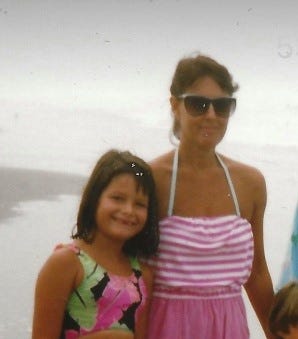
Life keeps pushing on, so does death…
My thirties brought another daughter, blue-eyed and twinkly. Her older sister continued to have strong opinions about how the world should be, but mostly we managed. I took them on a week long camping trip by myself, my two-year old and five-year old, and I felt proud of pulling off something my mother would never have done.
I started my best adult job and I looked forward to my oldest beginning kindergarten and the release that season promised to bring.
Then my dad died. I was 34.
And his “dutiful daughter,” as he would lovingly called me, closed up the chapter on his life.
With the help of friends and extended family who flew to Alaska, I packed up his house, convinced the mortgage company my dad had died (it only took faxing his death certificate to twenty different places), and stored his strange and beautiful collection of oriental art.
I remember standing at a cocktail party and talking with a white-haired, eighty-year old woman about what it was like to be the only living member of the family that raised you. “It’s lonely,” she said.
Other people would say:
“But you’re so young. Don’t you have siblings at least?”
Nope. It also didn’t help that all of my extended relatives were thousands of miles away too.
Deep grief, the process of unlearning an intimate relationship from you everyday life, takes years. It’s not the same as PTSD and it’s not a mental illness, and yet it physically changes your brain.
And though grief is a universal experience, I have rarely met someone under 60 who has lost all of their immediate family.
My losses are both significant and not significant.
Our parents are supposed to die; we sense that from the day we’re born. My kids, who have witnessed my grief, have a deeper knowing of that.
Sometimes at bedtime my youngest will hug me tightly and whisper “I don’t want you to die.” I hug her tight, kiss her sweet, messy hair, and say:
“Me either. My plan is to be around for as long as I possibly can. I want to watch you grow up and I want you to tell me about all of your adventures.
I want to be there when you get married and have kids — if that’s what you want to do. My plan is to watch you become the person you want to be.”
My smarty-pants kid doesn’t miss a beat and says, “But plans change.”
I’m honest, and say “Yes they do. But I am healthy and my biggest goal in life is to be around for a long long long time so I can be there for you.”
So yeah, 40.
While a lot of newly minted 40-year-olds are coping with the prospects of old age and death, both their own and their parents, I have two decades of reckoning with mortality.
I look forward to the privilege of getting old, even as I recognize it also comes with wrinkles and aches and the loss of youth.
I anticipate turning 45 will be way harder because that’s the age my mother was when she died. It’s hard not to measure my life against hers.
The only thing that matters to me these days (besides my beloved family) is to keep showing up to the blank page and follow the trail of ink to wherever it leads.
I’m not saying 40 isn’t hard.
I watch friends cope with infertility, complicated health issues, dead husbands, dead-beat partners, developmental delays with their kiddos, busted cars, overdue rent, depression, alcoholism, single parenthood…
This is the decade where everything we did and didn’t do, along with the zingers life throws at us, becomes crystallized.
The loss doesn’t stop coming, does it?
It’s just that, for a moment, I have breathing room. And I’m able to show up for others.
I’m grateful to be able to do that.
I’m grateful that somehow I made it: that I wasn’t destroyed by loss, that I’m relatively happy, and that I have more freedom to be myself at 40 than I ever did at 20.
Interested in reading more of my stories? Check them out here:


