
Will I Ever Have Another Job?
And other things I wonder about these days
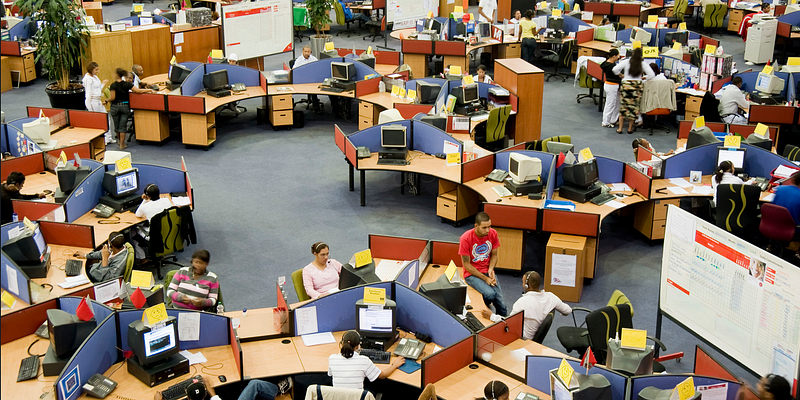
Here I am still unemployed. 18 months without work and still collecting unemployment benefits — courtesy of our friend, the virus — and I’ve gone almost completely feral. It hasn’t quite gotten to the point of eating with my hands but close. I eat when I’m hungry, sleep when I feel like it, and write for hours on end. What am I going to do if someone actually hires me? Can I ever adjust to wearing pants again? Updated: 4/16/21
Here’s a shocker. I didn’t get the position for which I did the online video interview last Friday.
Can you believe I’m still getting pinged multiple times a day by LinkedIn and Indeed and Monster and CBS/Simon and Schuster and CareerBliss and about ten other job websites? Will you people give it rest already? No one is actually hiring right now. No one!
Between wondering if that tickle in my throat with the recurring little cough is something to worry about and worrying about what the local stores will run out of first, I also think about the future of work. Mine, micro, and everyone’s, macro. What will the work world look like after three, four, six months of people either scraping by on government benefits or working from home for a shrinking pool of employers?
Working people
My stepfather was a worker. Jason Remington worked himself to death but he kept a good, solid roof over his family’s head and plenty of food on the table.
Jason worked as a mechanic at the local Ford dealership but also went out after supper on summer nights to paint houses. He was a second shift dispatcher for a trucking company for a while there as well.
I started my working life as a babysitter and then moved on to earning a dollar an hour cleaning Persian show cats’ cages for a lady who lived outside of town and had over forty of the dumbest damned cats you’ve ever seen. My first “real” job was working the concession stand at the Idol Theater about three blocks from where we lived. I started work there the week “Blazing Saddles” started and I heard it probably fifty times before I actually saw it. I also ate about a hundred pounds of popcorn and learned how to make cotton candy.
I’ve always worked but I haven’t always been a good worker
My relationship with working for a living has always been complicated. Growing up with an example like Jason I was always going to fall short especially since I am an inherently lazy person.
That’s just how it is.
Probably the most physically challenging work I’ve ever done was right out of high school when the only marketable skill I had was the ability to clean (thanks, Mom!). I worked as a maid or housekeeper in fancy four-star hotels, nursing homes, cheap airport motels, and office buildings. And while I did work hard when I had to I also stole bedding, towels, cleaning supplies, a lamp (that I still have), and booze. Conventions would bring cases of the stuff for their hospitality suites and who would miss a fifth of Canadian Club? I mean, right?
A chance conversation led to me working in a kiosk selling poster art long enough to survive two Black Fridays and to know I had to go to college or I’d be trapped in retail hell for the rest of my life.
That put my backside in an office cubicle for the first time when I was selected for a writing internship at a non-profit in downtown Cleveland Ohio back towards the end of the last century. That’s where I made a solemn vow to myself to never ever work a nine-to-five prison sentence again. Christ, I hated sitting in that cubicle counting down the hours until I could escape for my ten o’clock coffee break and go feed muffin crumbs to the little sparrows out on the street.
College and beyond
For most of the years I was completing my BA in literature writing in New York City, I worked as an editorial assistant on a peer-reviewed, scientific journal on a per diem basis. Once I graduated and was ready to take the world of fiction-writing by storm I asked for and got more hours at that job.
I worked 22 hours a week in the office at the hospital and picked up a string of remote jobs I’d do from home. For a minute there I even had health care insurance.
You won’t be surprised to learn that the world of fiction-writing may confer great prestige from time to time on its deluded denizens but seldom does it provide a living wage. I kept the wolves from the door with my hodgepodge of part-time and remote jobs for years, congratulating myself on having outsmarted the Overlords of Work.
That didn’t last and in the end, I capitulated.
In April 2018 I showed up for orientation for my new full-time position as Editorial Coordinator on, you know it’s coming, a peer-reviewed, scientific journal. I had my own office with a door that closed and really top-notch benefits. My boss, the editor in chief, was also a surgeon with a busy practice so I had a lot of responsibility. Looking back I suspect that A) I’d have never been hired in the first place and B) they’d have kicked me to the curb after my fourth or fifth time of not catching duplicates on the monthly to-publication spreadsheet if it hadn’t been for the fact that the editor in chief had already decided to step down from his position with the journal. They clued me in to that fact six months after I started working there.
But for 18 months, baby I showed up for the job. Monday through Friday, 9 to 5. I ate a not-insignificant learning curve and settled into the routine. And it wasn’t all that bad. It wasn’t a dream job but it was a dream paycheck and having decent health care insurance and other benefits made the ground under my feet seem solid.
I knew the position was slated to be eliminated at the end of September 2019 but kept hoping they’d come to their senses (they did not) or that with my connections I’d land another position within the organization (I did not).
Submitting resumes, going for interviews, getting my hopes up for nothing
Since July 2019 I have applied for about 18 million jobs and gone on around ten thousand interviews. A number of times I’ve made it to a second-round interview and once to a third round. I’m still unemployed. It’s gotten to the point that I skim all those helpful emails from the job websites and see that I’ve already applied for everything I’m qualified to do.
Now what?
Which brings us to our current situation. Unless we’re working in a grocery store, gas station, drugstore or bank, we’re all sitting here in our socially distant homes. Many of us are working from home and the rest of us are wondering what the hell will happen. Ok, all of us are wondering what the hell will happen.
I’m not tremendously freaked out yet even though I’ve read that nearly half of the confirmed cases of COVID-19 in the United States are in my state (although every cough is reason to panic just a bit).
But what will the work world look like after four, six, ten months of possible shutdown? What will survive? And who will they want to hire? Will this boomer with an iffy resume and a not-great work ethic make the cut? I’m thinking not. But there’s no way of knowing because no one knows how many of us will be picked off by the virus itself or how long the waves of infection will last.
My plan now is to write my face off and publish like a speed freak here on Medium, hope that my unemployment benefits get extended, continue to send out resumes (what the hell, who knows?), and be ready to apply for early Social Security if everything else goes south. And that’s assuming Social Security doesn’t go south as well.
It’s not a great plan. Neil doesn’t approve but then his long-ago negotiated severance package is about to kick in and he’s got to come up with a plan as well (with dual U.S/Canadian citizenship, he has a few more options).
I’m not spending a lot of time pondering the future. This is the time to keep things really tight. One day at a time. Stay in touch with my network, make sure those who can’t get out to buy food are taken care of, keep the apartment clean, try to adhere to some semblance of a schedule, keep writing, shower and dress and make the bed every day, cook good food, count myself extremely lucky to live two blocks from Central Park where we’re still allowed to walk if we maintain six feet of separation with others.
We always knew we couldn’t predict the future but we operated on the assumption that things would probably bump along in more or less the same trajectory that they had been.
That’s all out the window now. What’s your plan?
© Remington Write 2020. All Rights Reserved.


