
Hard Work
For God’s sake, tip the maid
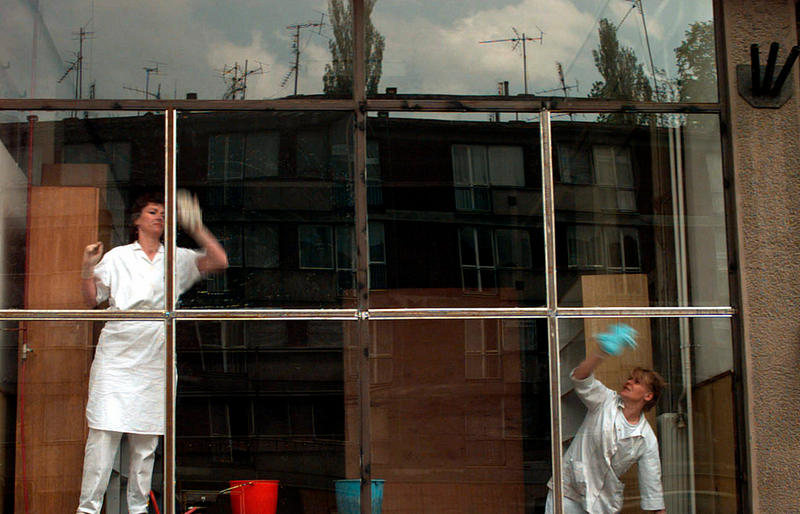
Where I come from, we don’t go to college. “Bettering” yourself meant trying to get a union job and those were already going away back in the last century. I came out of high school with two skill sets: drawing compulsively and being able to clean a house.
Guess what I did to pay the rent?
For well over a decade I was a maid. Ok, a housekeeper as we were called in our gray uniforms, pushing those gigantic carts loaded with toxic cleaning supplies and neatly folded sheets.
I cleaned nursing homes, hotels, motels, assisted living facilities, and offices. My first job after I got to the big city of Cleveland, Ohio, was in the housekeeping department of St. Augustine’s nursing home on Detroit Avenue. Two of my favorite people growing up were my great grandpa, Nick, from Italy and, on the other side of the family, great grandma, Lu, who married her sister’s widower and raised her kids. They both lived 104 years. I grok old people so the nursing home gig was great.
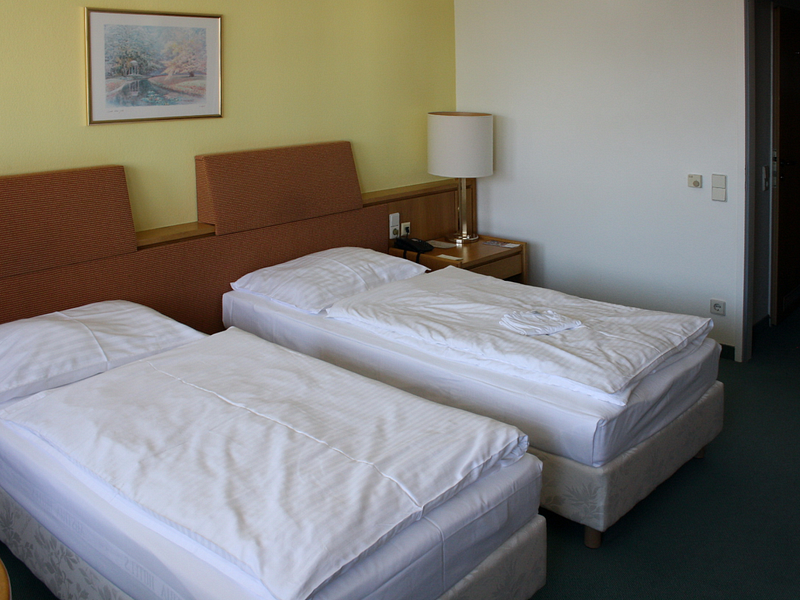
After that there were years of motels out by the airport. Those were pretty grim places. Ramada Inns, Marriotts, Motel 6, they all smelled the same. Bad. Caustic. Dreary.
My section at the Marriott was split between two floors. That meant I spent the day running up and down stairs to determine which guests had finally checked out and then backtracking to lug my cart up or down the elevator. Here is a plea from every housekeeper in every hotel and motel in the world: please check out early. We have a lot to do and would like to get the work done in time for supper. My sections were typically 15 to 17 rooms a day.
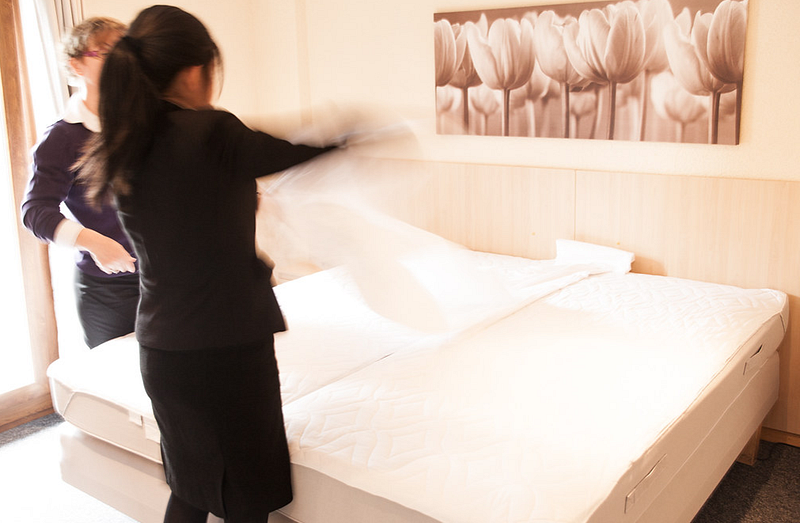
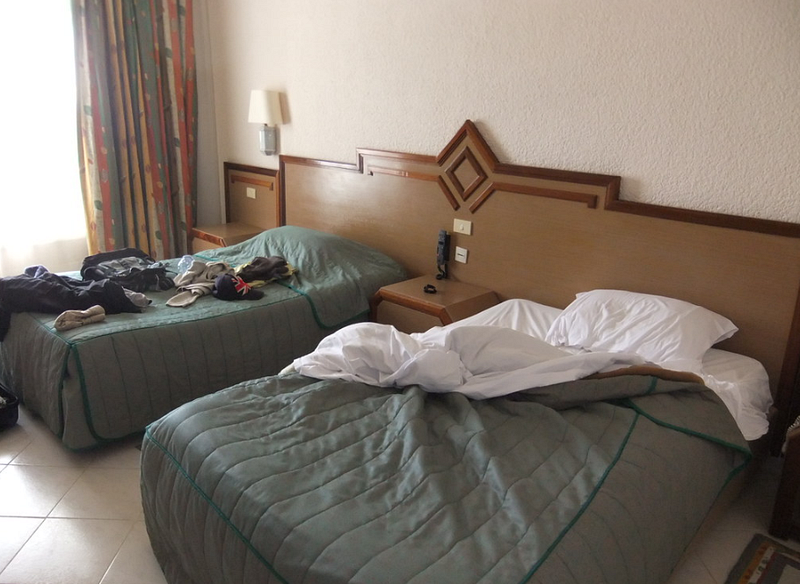
In each room the beds have to be stripped and re-made with clean sheets. Everything left on the floor has to be picked up. Trash emptied. Bathroom sink, toilet, tub, and floor cleaned and wiped dry. Toilet paper and tissues replenished. Towels, soaps, shampoos, drinking glasses replaced. Run the vacuum. Take a towel to surfaces for light dusting every time you’re in the room. Check behind furniture. Notify security if the alarm clock has been taken. Again. And in some places spray some kind of noxious “room freshener”.
There’s no Monday through Friday in housekeeping. At the beginning of the two week pay cycle the schedule goes up and those are the days you work. I’ve worked up to 11 days in a row. I’ve also worked every holiday. Everyone in the “hospitality industry” has. Most places had an on-site laundries and I learned quickly that dragging my cart down to the laundry to load fresh sheets and towels was the way to get a jump on the day’s work.
The Big Time
I really hit the mother lode when I got hired at Stouffer’s Inn on the Square, Cleveland’s fancy ass four-star hotel on Public Square. I believe I jumped from $4.35 an hour to $6.25.
My section was on the side overlooking Public Square: 16 rooms and a suite with two bedrooms and a large living room. I cleaned up after Milton Berle, Tony Danza, Connie Stevens, Placido Domingo, and many other celebrities. Only Mr. Domingo ever left a tip. There were two dollars on the pillow every morning and he wrote a note telling security I was allowed to take home all those roses. I was not invisible to Placido Domingo.

Professional sports teams stayed at Stouffer’s when they came to play the Browns, the Indians, or the Cavaliers. They were generally not too bad. They were like any business traveler. The room was a place to sleep and the teams usually never booked more than two men per room. No tips, but no god awful messes either.
Eddie Napolean was the first base coach of the Cleveland Indians from 1983 to 1985. He and his family would come up from their home in Florida and the team would put them up in a double room in my section during baseball season. He, his wife, and two sons would stay in that one hotel room all summer. They were really wonderful guests. I wasn’t invisible to them, either, even the boys would ask how I was doing.
At the end of the season, Eddie would always leave me a big tip and during the season I was welcome to go down for any game at Municipal Stadium, drop Eddie’s name and get a box seat.
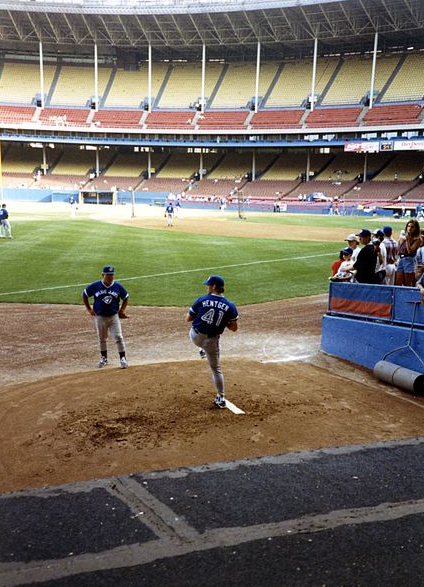
Before you get too excited about that, those were the years when the Indians were total losers. The old Municipal Stadium (which got torn down years ago) was massive. It could seat up to 80,000 people. In those years, if the Indians could bring in 5,000 people to see a game they were doing good. 5,000 people in that vast space was a little sad.
After nearly two years I was promoted to floor manager. That was not good news. The women of color with whom I’d worked (meaning the entire department) suddenly saw me as the enemy because now I was supervising their work. I couldn’t win. Finally I’d just go behind every woman on my floors and take care of anything that hadn’t been done right rather than tell her to do it.
I made it about three months and quit before I got fired after being almost caught stashing a partially drunk carafe of wine in a stairwell.
That uniform renders you invisible
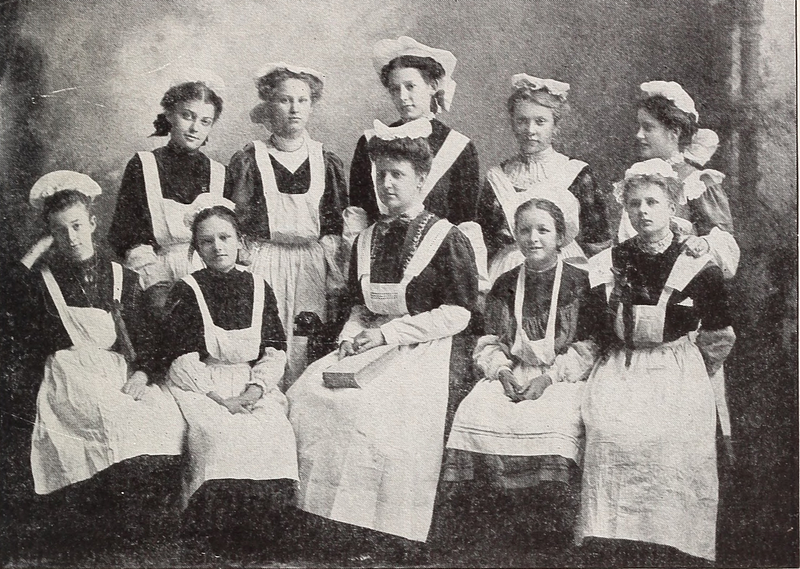
The minute you put on that ill-fitting gray or light blue uniform, you disappear. You’re no longer a human being. You’re just part of the machinery of the facility.
People routinely walk past without a glance. If they do need to ask for more towels or for you to do their room a certain way they seldom actually look at you. I came out of a room once to find a guest trying to walk off with the small vase of zinnias I’d brought from my garden to have on my cart. It’s not like it’s stealing or anything; it’s just on the maid’s cart.
About stealing
It’s hard to admit this but, yes, I was the maid who stole. After years of barely earning enough to get by and working my ass off I got all entitled-feeling. I still have bedsheets and a lamp from one hotel I worked at. Yes, readers, I got an entire lamp past security.
Stealing from The Man is one thing. But I also stole from guests and that’s embarrassing. Small things. A pin I liked. Prescription medication. A slug (or six) off open bottles of booze.
Today when small stuff goes missing, or bigger stuff, I have to call it kharma.
New Year’s Day and ladies’ conferences
The worst. The worst of the worst. New Year’s day was always absolute hell. No one got that day off. Everyone had to work. Guests slept until noon or later, were slow getting out, and then left the most horrifying messes behind. I’ll spare you the details.
And then there were Avon conferences or any other large meeting of women. They would order cots and cram five, six women to a room. Extra towels, please, and lots of them, all to be left in huge wet piles on the floor. Smears of make up on the furniture and sheets. And never, ever, ever a tip.
About tipping
Opening the door to a messy room and finding a buck or two or, saints preserve us, five dollars left on the pillow brightened the entire day.
Allow me to educate you if you hadn’t realized this yet: tip the housekeeper.
That woman is working her ass off so you can have a nice clean room to sleep in while you’re away from home (Oh, the room isn’t as clean as you think it should be? Tip her anyway). Often she’s coming in at 6am to load her cart and make sure she has all the supplies she’ll need for the day. And she’s staying until every one of those 17, 18, 20 rooms are clean.
Tipping is a weird thing that happens in this country. This is a place where people aren’t paid a living wage for doing the hardest, most necessary work and so you and I are expected to make up the difference. It’s wrong, no doubt about it. But I do it.
I tend to over tip, in fact, in restaurants and in hotels. I briefly worked as a waitress at a truck stop. When I say briefly I mean about four hours. I didn’t have what it takes to do that work.
But I could clean a room and do a damned good job of it. I could show up every day and keep my section in great shape. And it was unexpected and wonderful to put two crumpled up dollar bills into the pocket of my gray cloak of invisibility and move on to clean the next mess.
Tip the maid, please.
© Remington Write 2019. All Rights Reserved