Green Hydrogen: Will Cars Soon Emit Just Water And Warm Air?
A closer look at this possibility.

Imagine a world where vehicles emit just water and warm air?
A promise if realised could accelerate the creation of a cleaner world for the next generation.

Hydrogen is everywhere. It is the most abundant element in the universe (as far as we know!)

Green, blue, black, brown, yellow, turquoise and even pink. Hydrogen is a gas that is apparently colourless, but has a lot of variants.
Green hydrogen is different, though.
While the generally used black and brown hydrogen are created through the gasification of coal; gray hydrogen and blue hydrogen are created from natural gas or methane.
Green hydrogen the cleanest of them all in terms of emissions from production to its combustion lifecycle
is created by electrifying water resulting in the splitting of hydrogen and oxygen molecules. This process is called water electrolysis.
The drawbacks
Expensive to produce (currently)
Since green hydrogen is named as such because it is environment friendly i.e. ‘green’ end-end from extraction to exhaustion; its manufacturing process falls into strict qualifying guidelines.
A prerequisite is that the electricity required for the production of green hydrogen has to come from renewable sources.
The cost of producing green hydrogen is currently higher compared to other forms of hydrogen production, particularly grey hydrogen (produced from natural gas with carbon capture) or blue hydrogen (produced from natural gas with carbon capture and storage).
The current high cost of producing green hydrogen is primarily due to the expense of renewable energy infrastructure, electrolysers, and other equipment required for production.
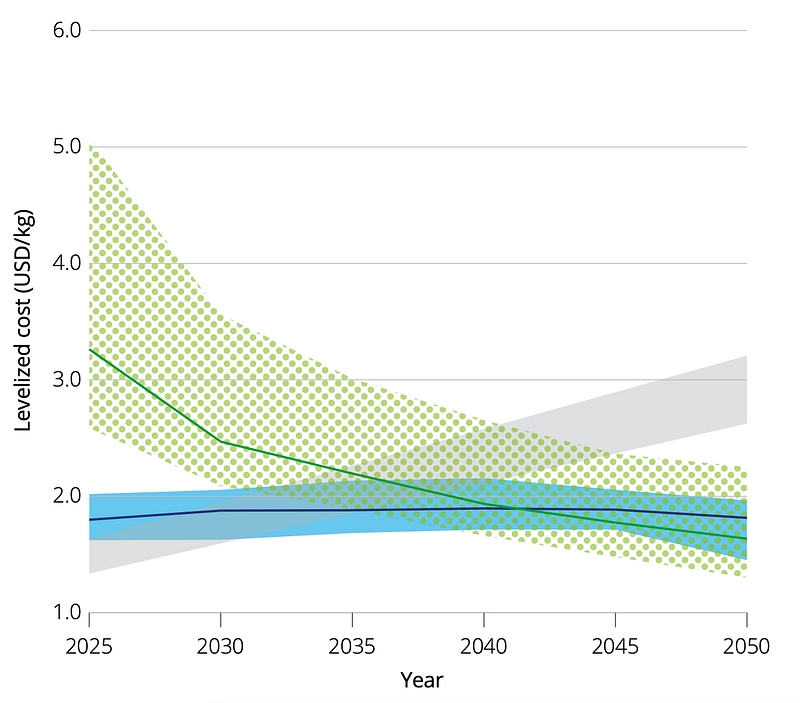
As technology advances the cost of green hydrogen production is expected to fall significantly by 2050
Deloitte’s report : 2023 green hydrogen outlook predicts the cost of producing green hydrogen will drop down to USD$1–2/Kg in 2050 from $USD5 (forecasted price in 2025). The dotted green band in the below graph denotes the production cost of green hydrogen while the grey and the blue bands represent fossil fuel and other hydrogen variants respectively.
Additionally, as investment in infrastructure on renewable energies increase there is huge potential of increasing the production of hydrogen cost effectively using the oversupply of electricity from these energy sources, especially with wind or solar energy currently being produced and not being used elsewhere.
Storage and Transportation
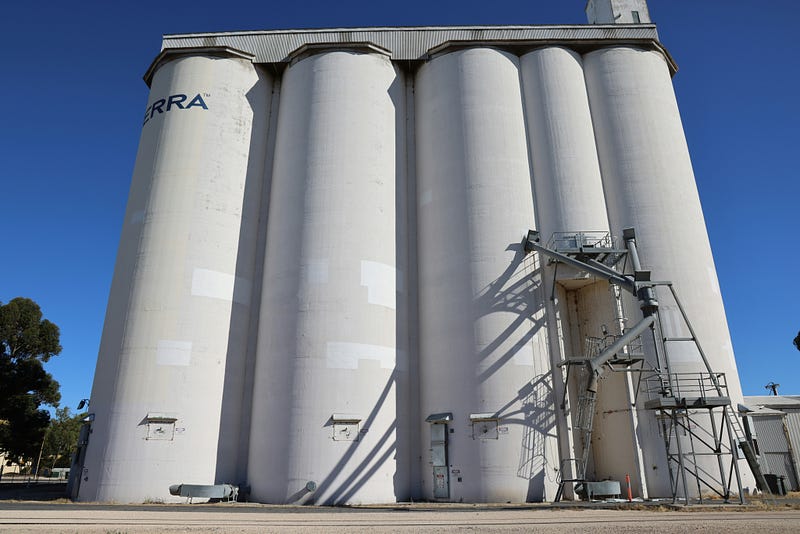
Hydrogen has low energy density by volume compared to traditional fuels like gasoline or natural gas. Therefore, it requires large storage volumes or high-pressure containers for transportation and storage, which is costly and challenging to implement on a large scale.
Embrittlement
Embrittlement is a process whereby hydrogen causes high strength materials like steel to become brittle and crack.
Hydrogen being the smallest atom and molecule, percolates into materials, then cracks and breaks them. This is a major issue to be able to effectively produce, transport, store and use hydrogen on a large-scale.
Hydrogen is considered as a primary energy carrier for the hydrogen economy. However, hydrogen embrittlement (HE) is an inescapable problem that needs to be solved because metals, particularly steels, are commonly used in the transportation and storage of hydrogen, and because HE occurs in high-performance structural components in contact with moisture or hydrogen. — ScienceDirect
Embrittlement is one of the biggest obstacles facing the transition to a global hydrogen economy. There is however hope. A new process discovered to prevent this phenomenon has been uncovered by researchers at the University of Sydney in Australia. They are investigating the protective properties of Molybdenum which is an an essential trace mineral that occurs naturally in foods. When added to steel, Molybdenum combined with other elements to form an extremely hard ceramic known as ‘carbide’. Carbides are often added to steels to increase their durability and strength.
Additionally, there are compainies like Triton Hydrogen who have developed a hydrogen barrier coating that creates a 100% isolation barrier between hydrogen gas and all surfaces including steel, plastic and composites.
A dangerously explosive gas — the Oxyhydrogen reaction

Oxyhdrogen reaction occurs when hydrogen reacts with oxygen, making it one of the most flammable gasses.
When hydrogen-filled Hindenburg exploded back on 6 May 1937, the focus turned towards the volatility of hydrogen and its safety as a fuel in transportation.
That was 1937 and now, 87 years later, technology is so far ahead that hydrogen based engines are safer than gasoline engines, having redundancies upon redundancies built into multiple layers to prevent any explosive incidents.
Hydrogen is the lightest thing known to man and considerably (14x) lighter than air. The consequence is that should a leak occur, the hydrogen will rise into the atmosphere. And thanks to its status as ‘’smallest molecule ‘’ in the universe, it disperses quickly in air and any gas.
The advantage of this is clearly illustrated in gunfire tests conducted on a hydrogen tank. When the hydrogen ignites it appears as a localized jet flame, which is much safer than an accumulation of gas that could suddenly explode.
Finally, the Mirai’s tanks have a pressure relief device that releases the hydrogen gradually in case the temperature should rise abnormally (like in a fire). This prevents any overpressure or explosion; far from the stereotype of a hydrogen explosion. Moreover, the resulting fire leaves much of the car undamaged. — Toyota on its Hydrogen based car — Mirai
Deloitte estimates the clean hydrogen market could reach USD$1.4 trillion by 2050.
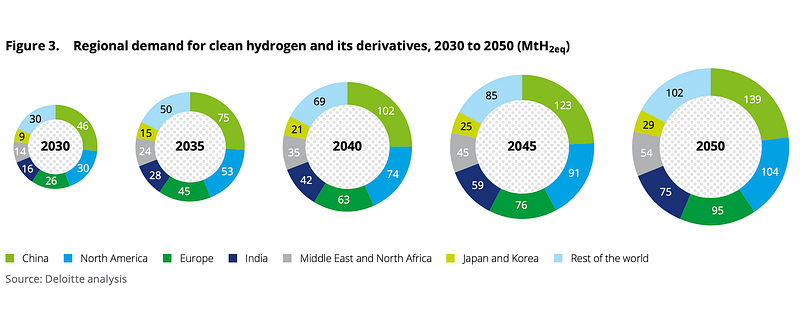
Toyota Plus 2 are betting big on hydrogen powered cars
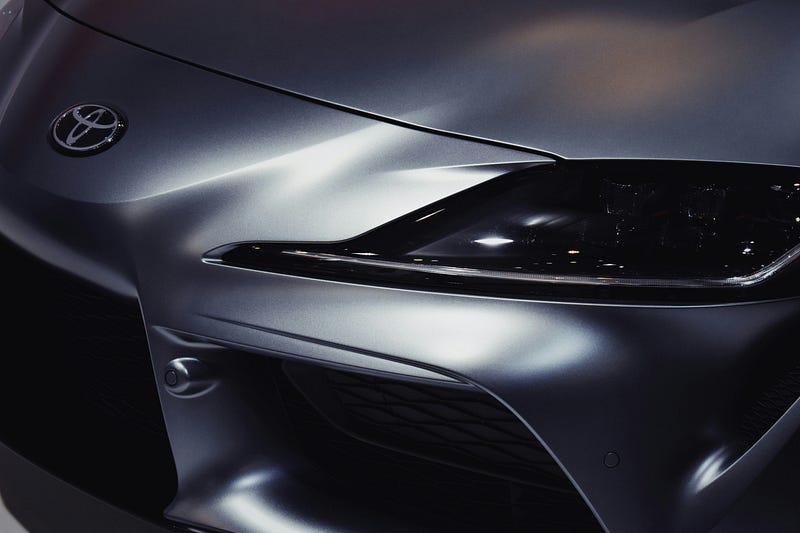
Toyota, BMW and Honda are front running with their plans for the future of a zero emission vehicle. Some of their offerings are:
2024 Mirai — “Mirai combines hydrogen with oxygen from the outside air to generate power, without creating emissions, that helps propel us into a future of possibilities.” — Toyota
BMW iX5 Hydrogen — The BMW iX5 Hydrogen combines the typical BMW dynamics and agility with an innovative, groundbreaking hydrogen drive. Experience an uncompromising, electric driving experience with all the benefits of electricity from hydrogen. Its high range and short refuelling times make the BMW iX5 Hydrogen a pioneer in hydrogen-based, local emission-free mobility. — BMW
Honda CR-V e:FCEV — As the first plug-in Fuel Cell EV in North America, the CR-V e:FCEV combines plug-in charging capability with fast hydrogen refueling for more flexible power for every drive. — Honda
Final thoughts
Although, buying and driving a hydrogen driven car is not feasible for the majority of us at this point in time, the rapid advances in technology have the potential to change this scene very quickly. Think of the timeline of advances in renewables, materials engineering, communications and space tech. The good news is that governments, industry stakeholders, and research institutions are actively working to overcome these obstacles and to accelerate the transition to a hydrogen-based or at least in the interim, towards a hybrid (EV/H2) ecosystem, and take some load off the environment.
Also read : Are We Sure About Electric Vehicles?