Why You Need Creativity to Survive and Thrive in the 2020s
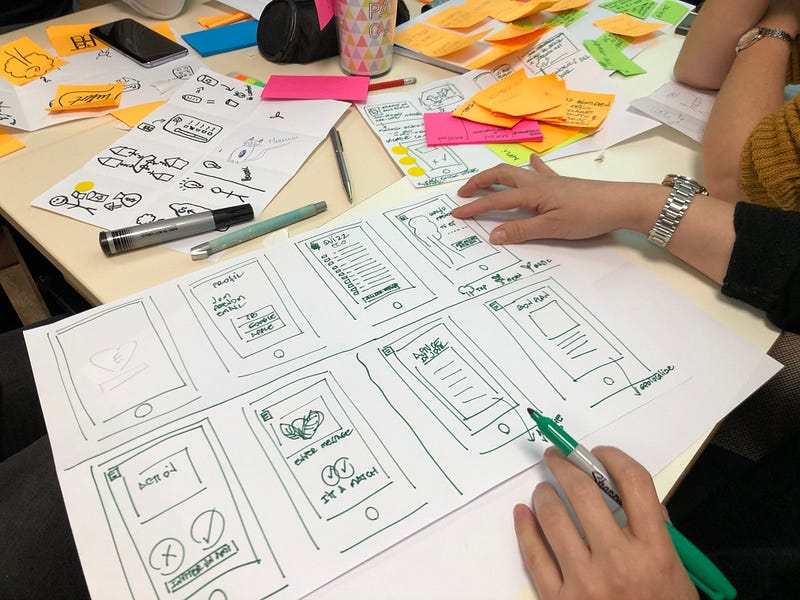
I have recently created a workshop on creativity and asset creation. In this workshop, I discuss why you need creativity to survive and thrive throughout the 2020s.
I have decided to make this workshop available, free, and open for all. Please find the workshop video here (it will premiere on 4th April on my YouTube channel):
The main thesis of this workshop is the following:
“Creativity is no longer a luxury. It is a critical survival skill that we need to adapt to rapid changes, solve complex problems, imagine new possibilities, and navigate uncharted waters ahead of us.”
Our Educational Systems are Bankrupt
I explain why we urgently need creativity as a core value and priority in our educational systems:
- Educational systems are bureaucratic — they change slowly and painfully. Unfortunately, our students are victims of our inability to change fast.
- Textbooks getting obsolete as they prepare for a world that no longer exists. If something is in a textbook, there is a strong probability that it is no longer relevant or useful for the rapid changes we face in the real world.
- We are still operating in an industrial paradigm (conformity, mass production, one-size-fits-all, memorizing, exams, feeding large spoons of content, etc.) This educational system is bankrupt. We need to accept that the whole system is bankrupt. Everything has changed in our lifetimes — why did our schools and universities not change?
- In our current educational system, there isn’t much on offer for a curious entrepreneurial mind or someone who yearns for something different.
We Need Radical Change and We Need It Now
- The future will reward people for their imagination, creativity, passions, vision, entrepreneurship, assets, and compounding. Yet, in our current educational system, we do not reward these qualities in students. This is a huge problem.
- In our schools and universities, we do not teach much about money (financial literacy), personal finance, blockchain, and compounding. Such skills are now becoming survival skills for tomorrow.
- The gig economy is growing fast and freelancers will soon be half of the workforce. Yet, we do not have courses that cater to freelancers, self-employed people, entrepreneurs, and people who participate in the sharing economy.
- We are going through an entrepreneurship revolution. Everyone can start their own company with zero capital (with just a laptop, cell phone, and Internet). Yet, we do not provide our students with enough entrepreneurial opportunities and/or challenges.
- Software has eaten the whole world. Everyone now is in technology. We have not yet understood how critical future technologies will be in shaping the careers and jobs of tomorrow.
- Young individuals are compelled to have a dozen careers now (employee, writer, podcaster, content creator, YouTuber, entrepreneur, blogger, coach, artist, etc.). Yet, we are still treating our students as if they will be academics. Who cares if they do not know how to use APA style in their essays? Why do we obsess about citations when we need to focus on the tectonic changes shaping the careers of our students?
- We live in an era of accelerated and tectonic change, which means specialist perspectives are not adequate. Academics are particularly blind to this dilemma and I view this as a wicked problem. We need to take off our academic hats and start to act like renaissance people.
- AI Revolution is here: Our students will be working with machines, robots, and algorithms in their careers.
- Climate change is threatening everything as we know it — and business is the one area that can make radical and transformational change. We need to provide our students with entrepreneurial and creative opportunities to make an impact across multiple disciplines. Students need to be able to develop their own learning journeys and social innovation projects to address wicked problems such as inequality or climate change.
- As machines will soon become employable, we need to prioritize skills like creative thinking, innovation, emotional intelligence, entrepreneurship, storytelling, and asset creation. Yet, our current educational systems do not provide students with adequate opportunities to practice these skills.
- In our current system, students are not allowed to be wrong, they are afraid to try out new things and stand on their own feet. Yet, students need to make lots of experiments and mistakes to grow.
- Creativity and asset creation should be at the forefront of our modules and teaching.
- How would Elon Musk, Richard Branson, Peter Diamandis, or Oprah design our programs?
- We need to replace academic writing with practical skills and innovative projects.
- We need to focus on disruptive innovation and future skills.
- We need to focus on skills that cannot be outsourced to machines, robots, or algorithms (such as emotional intelligence and creativity).
How I Became Disenchanted With Academia
After the pandemic, I went through a mid-life crisis. I became aware of my mortality. I started asking myself the following questions:
- Am I living the best life that I can live?
- Am I actualizing my full potential?
- Why do I feel so tired and disappointed? Why do I feel like I have years of bitterness and missed opportunities? Why do I feel like I am trapped in the ivory towers of academia?
- Why is there a lack of joy, curiosity, and adventure in my academic and professional life?
- Why do I feel like I am stuck in a rut?
- Why am I repeating myself in my classes — why am I so bored of my own voice?
- What if I had multiple lives that are more colorful, adventurous, and entrepreneurial?
How The Path of Asset Creation Saved My Soul
- I do not want to fit in the academic box anymore. I do not want to be only driven by academic goals, deadlines, career progression, etc.
- I want to embarrass myself, fail lots of times, and stop taking myself too seriously.
- I want to be a good role model for my students. I want my skin to be in the game. If I am teaching entrepreneurship, I have to think and act like an entrepreneur. If I am teaching creativity, I need to be engaged and passionate about my own creativity.
- I want to establish my asset creation games for the next 10 years. I need to complete at least 10,000 experiments to create my own renaissance.
- I have transformed my classes and made them more engaging.
- I turned my lectures into a “Truth or Dare” format.
- The “truth” sections are made of a lot of puzzles. I have stopped force-feeding knowledge to students with large spoons. Instead of presenting knowledge, I turn it into a series of puzzles. I present a bar of big dark chocolate to the student who guesses the puzzle first. I have about 25 puzzles in 2 hours and each takes about 1 minute. This method helps me to keep it fresh, exciting and surprising for myself and for students. I know that I need to compete with TikTok to capture the attention of my students (which is impossible, I admit, but at least I am aware of this.)
- The “dare” sections are made of a lot of individual or team-based challenges. These might be short applied exercises, doodles, creativity challenges, reflective writing, and experiments of imagination.
- I have started writing on Medium and wrote 440 pieces as of now. Many of these Medium articles have enriched my teaching since I use them as cutting-edge teaching materials. I was able to incorporate my own curiosities and passions into my classes using these articles.
- As I am a content creator and entrepreneur, I can relate to the real challenges digital entrepreneurs are facing in their careers. In other words, I put my skin in the game. I am an artist and an entrepreneur who goes through similar challenges with my students, so I know exactly what I am talking about. This gives me enormous credibility as a teacher.
- I have recently become a YouTuber and created more than 600 Youtube videos. I view this as another learning experiment: I know how difficult and scary a content creation journey can be. Whenever I have a fresh idea, I jump into action: I shoot a video or write a Medium article about it. As my YouTube journey is built on rapid experimentation, this journey brings me fresh energy and learning each time I create a new video.
- I do not think educators realize how powerful TikTok is and how it has become the central hub for creativity, innovation, and entertainment for young people. Powered by artificial intelligence, TikTok algorithm offers a powerful window into what might tomorrow’s careers will look like. Everything is shaped around speed, surprise, chaos, and fun. To understand tomorrow, I have become TikToker recently and created more than 80 TikTok videos. I do not intend to crack virality on TikTok — I am on this platform just to observe and learn about the future.
- I have started writing new books. After my doodle book ‘Self-Making Studio’, I was feeling stuck. I have finally taken an action and created a book on Gumroad. It is called “If Life Gives You a Squash, Squash It!”. You can have a glimpse of this book here. You can find my asset creation guide here.
- If I die soon, at least I know that I will be more content with what I leave behind.
Here Is The Mindset I Use
- I am in conversation with my future self who lives in 2032. I write my future self letters using https://www.futureme.org/letters/new
- Start now and start small. Each day is an opportunity in asset creation. Do not fear, take a small action.
- Be extremely curious and learn beyond borders/disciplines. You need to astonish and scare yourself every day.
- Follow your heart and excitements — this is where your happiness lies. You need freedom in your career and freedom starts with your curiosity.
- You need to act as an agent of positive change and transformation for the future waiting us.
Further Resources:
Please find five articles I have written on the issues that I cover in this workshop. They are a limited sample selection from my Medium library of 441 articles.
- How to Be a Renaissance Person
2. What You Need To Know About GPT-3:
3. 42 Mindsets You Can Use to Create Your Assets Right Now
4. Respond to These 15 Questions If You Want to Create Your Assets
5. Why You Need To Establish Your Asset Creation Game Now
Slides of the Workshop:
You can find the slides here:
Video of the Workshop:
You can find the workshop video here:


