To Become a Renaissance Person, Conduct 10,000 Experiments in Your Field
Business Landscape is Evolving Rapidly — So Should You

One of the most significant factors that separates successful professionals from others is their willingness to learn rapidly and adapt to the changes in their environment. In other words, they are learning machines. They are relentless in their experimentation. They keep evolving every day. They upgrade themselves to reach new heights every day. How can we achieve this - even if this is deeply uncomfortable?
Netflix never sleeps
Organizations that learn rapidly and transform themselves are the ones that are shaping the future. Think of Netflix which started as a DVD rental business. DVDs became obsolete, but Netflix transformed itself as a streaming service. CEO Hastings saw that the future would be bright only if they focused all their resources and brand on streaming.
Netflix has become a symbol of successful disruptive innovation with nearly 200 million subscribers worldwide. Netflix has invested in more than 17 billion for original content in 2020 and it reaches nearly 200 countries now. Netflix never stops, and it never sleeps.
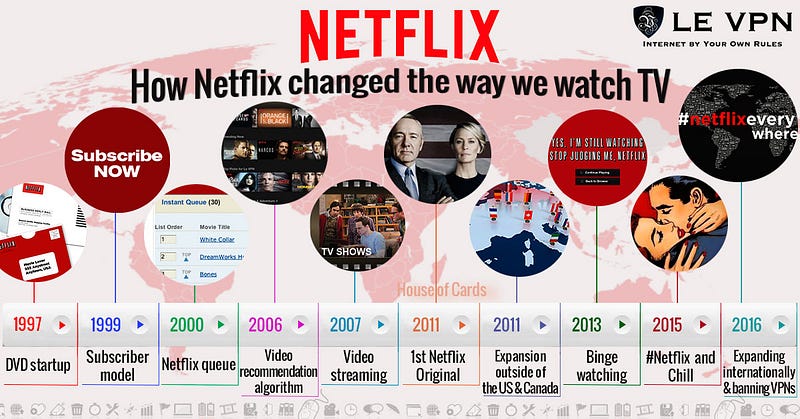
Contrast that to Blockbuster — it was another video rental business. It had over 60,000 employees and more than 8000 stores in 2004. However, it does not exist now in any meaningful way. It has become irrelevant.
Irrelevance is the ultimate fate of companies that are unable to achieve transformation — from Kodak to Nokia, from Yahoo to MySpace, from Macy’s to Sears, and from Xerox to Blackberry.
Re-inventing yourself is the only way forward
Companies that can stay at the top are the ones that are continually transforming and re-inventing themselves. This is incredibly hard to achieve. Although Apple has surpassed $2 trillion, there are troubling signs that its innovation might be stagnating, which triggers huge worries among its investors.
Every day is Day 1 at Amazon
Jeff Bezos says every day is “Day 1” at Amazon; and this has become the company’s mantra for longevity. His office is located in the building called “Day 1”. The sign on his door says: “There’s so much stuff that has yet to be invented. There’s so much new that’s going to happen.”
To be innovative, learn from the habits and mental models of Elon Musk
Elon Musk is the world’s greatest living innovator. History books will write about his incredible achievements and inventions including online city guides (Zip2), online payment systems (PayPal), reusable rocket systems (SpaceX), electric cars (Tesla), Powerwall battery (Tesla), solar roofs (Solar City), fast-paced mass transit (Hyperloop), tunnels to resolve traffic (The Boring Company), and neural laces (Neuralink). He pursues innovation with bold ambition, an insane focus, and a broad cross-disciplinary mindset. Here is how he thinks about innovation:
“When something is important enough, you do it even if the odds are not in your favor….I always have optimism, but I’m realistic. It was not with the expectation of great success that I started Tesla or SpaceX… It’s just that I thought they were important enough to do anyway.”
“Work like hell. I mean you just have to put in 80 to 100 hour weeks every week. [This] improves the odds of success. If other people are putting in 40 hour workweeks and you’re putting in 100 hour workweeks, then even if you’re doing the same thing, you know that you will achieve in four months what it takes them a year to achieve.”
“Failure is an option here. If things are not failing, you are not innovating enough.”
“There’s a tremendous bias against taking risks. Everyone is trying to optimize their ass-covering.”
“I think it’s very important to have a feedback loop, where you’re constantly thinking about what you’ve done and how you could be doing it better.”
“Persistence is very important. You should not give up unless you are forced to give up.”
“Some people don’t like change, but you need to embrace change if the alternative is disaster.”
“It’s OK to have your eggs in one basket as long as you control what happens to that basket.”
“I don’t create companies for the sake of creating companies, but to get things done… A company is a group organized to create a product or service, and it is only as good as its people and how excited they are about creating. I do want to recognize a ton of super-talented people. I just happen to be the face of the companies…. Starting and growing a business is as much about the innovation, drive, and determination of the people behind it as the product they sell.”
“People work better when they know what the goal is and why. It is important that people look forward to coming to work in the morning and enjoy working.”
“I don’t spend my time pontificating about high-concept things; I spend my time solving engineering and manufacturing problems.”
“The first step is to establish that something is possible; then probability will occur.”
“I’m interested in things that change the world or that affect the future and wondrous, new technology where you see it, and you’re like, ‘Wow, how did that even happen? How is that possible?’”
“People should pursue what they’re passionate about. That will make them happier than pretty much anything else.”
“When Henry Ford made cheap, reliable cars, people said, ‘Nah, what’s wrong with a horse?’ That was a huge bet he made, and it worked.”
“I think the best way to attract venture capital is to try and come up with a demonstration of whatever product or service it is and ideally take that as far as you can. Just see if you can sell that to real customers and start generating some momentum. The further along you can get with that, the more likely you are to get funding.”
“Disruptive technology where you really have a big technology discontinuity… tends to come from new companies.”
“If something has to be designed and invented, and you have to figure out how to ensure that the value of the thing you create is greater than the cost of the inputs, then that is probably my core skill.”
We have seen nothing yet: We will witness a tsunami of disruptive innovation
Human knowledge now doubles every year. We will witness crazy times where human knowledge will double every few months. This means a tsunami of disruptive innovation. We are experiencing a breakthrough innovation almost every month now — just look at what has happened with GPT-3 and Neuralink’s demo over the past few weeks.
The only way to keep pace with such rapid innovation and knowledge creation is through continuous learning and rapid adaptation:
You need to conduct 10,000 experiments in your field
If you want to innovate, you need to continuously learn, adapt, take risks, do a lot of experiments, and provide yourself lots of opportunities for failure. Sir James Dyson tried 5126 times and he failed each time — until he invented Dyson’s bagless vacuum cleaners.
You also need to be very flexible and let your strategy emerge as you go. Detailed plans never work, especially in high-velocity industries where innovation is fast and emergent. That is why letting 1000 flowers bloom is a better strategy than sticking to one flower. You take two steps forward, gather feedback, incorporate it, pivot, adapt, or sidetrack. 70% of successful new startups end up with a strategy different from the one they initially started with. If you want to be wildly successful and innovative, follow Elon Musk’s example. Conduct hundreds of experiments and keep learning. Give yourself hundreds of opportunities for failure.
Create a huge library of your work
Renaissance people and inventors thrive by doing 10,000 experiments. Whatever your passion is, you need to create a huge body of work to make a big contribution, and this means creating thousands of pieces of your work.
Joe Rogan created 4000 episodes of podcasts which were downloaded almost 200 million times. Creating this huge library made him the king of podcasting and Spotify paid Joe Rogan $100m to license his contents.
From Leonardo da Vinci to Mozart, from Edison to Einstein, prolific inventors and geniuses allowed themselves to do thousands of experiments. Einstein had 2332 patents on his name. Einstein published more than 300 papers. Leonardo started every day with a list of things to learn that day — from geology to optics.
Companies such as Facebook, Zara, Google, P&G, or Amazon are known to conduct hundreds of experiments each month. The great majority of these experiments result in failure, yet they continue experimenting every day. They all know that experimentation is the only way to go forward.
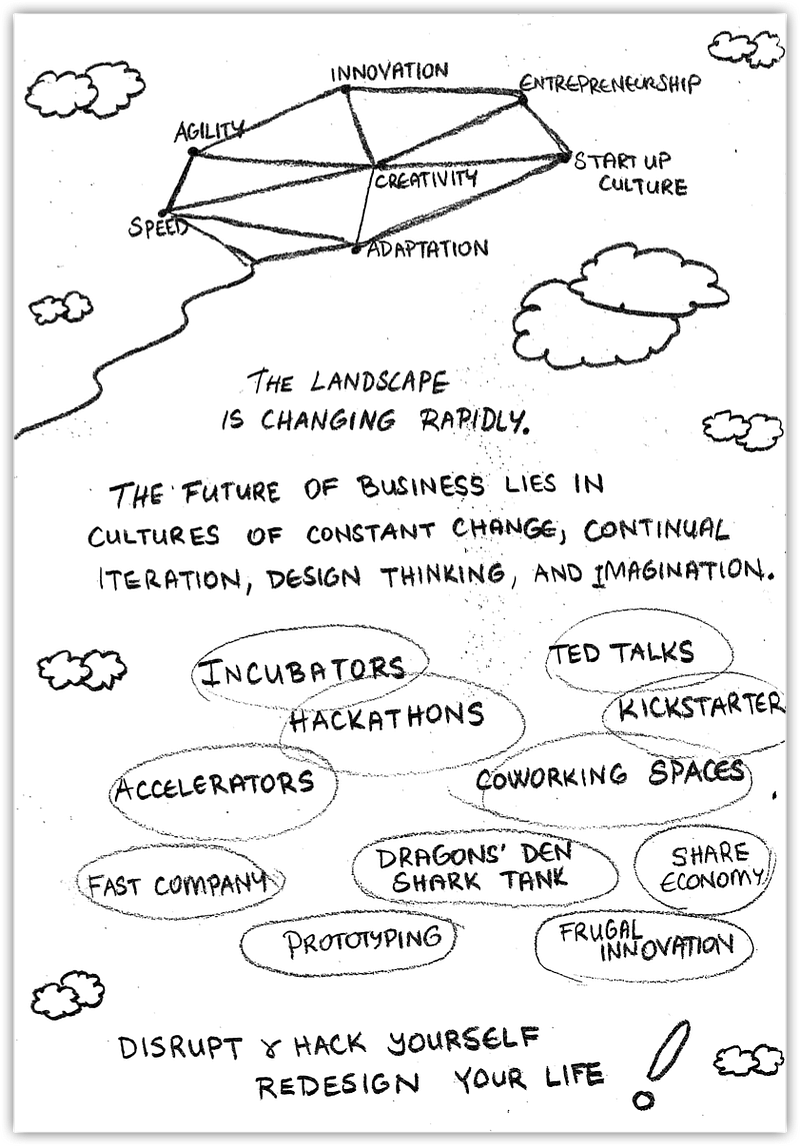
This formula applies to you as an individual as well. How many experiments are you conducting every day? How many opportunities do you give yourself to fail every day? How many new, fresh, and exciting things are you learning every day? These are the true measure of innovativeness and success in today’s world. You need to continue experimenting until you reach 10,000 experiments in the field(s) that you want to contribute to.
Elon Musk has had more than a decade of crashing and burning rockets under his belt. These failures were important because they provided critical feedback points for later experiments and iterations.
Do not get discouraged if you fail. You need to give yourself a lot of opportunities to fail, learn, and reiterate. Analyze your results, draw your conclusions, keep learning, and apply your learning to your next iteration. Build a personal system of creativity and productivity. Repeat your experiments consistently, get better each time, keep learning, and keep creating assets over a long period of time. This is the only sustainable way to innovation.
The critical point you need to remember: Go where no one goes. Invent your market. Create your own field. Pursue growth in a new market rather than an established one. Avoid the crowds and the competition. You should be the only one who does what you do.
If you really want to make a lasting contribution in your field, you need to give yourself at least a decade’s worth of learning, reading, inventing, experimenting, creating, investing, innovating, creating assets, and disrupting yourself.