
Why Writers Should Never Throw Away Any Piece of Writing
Just don’t do it
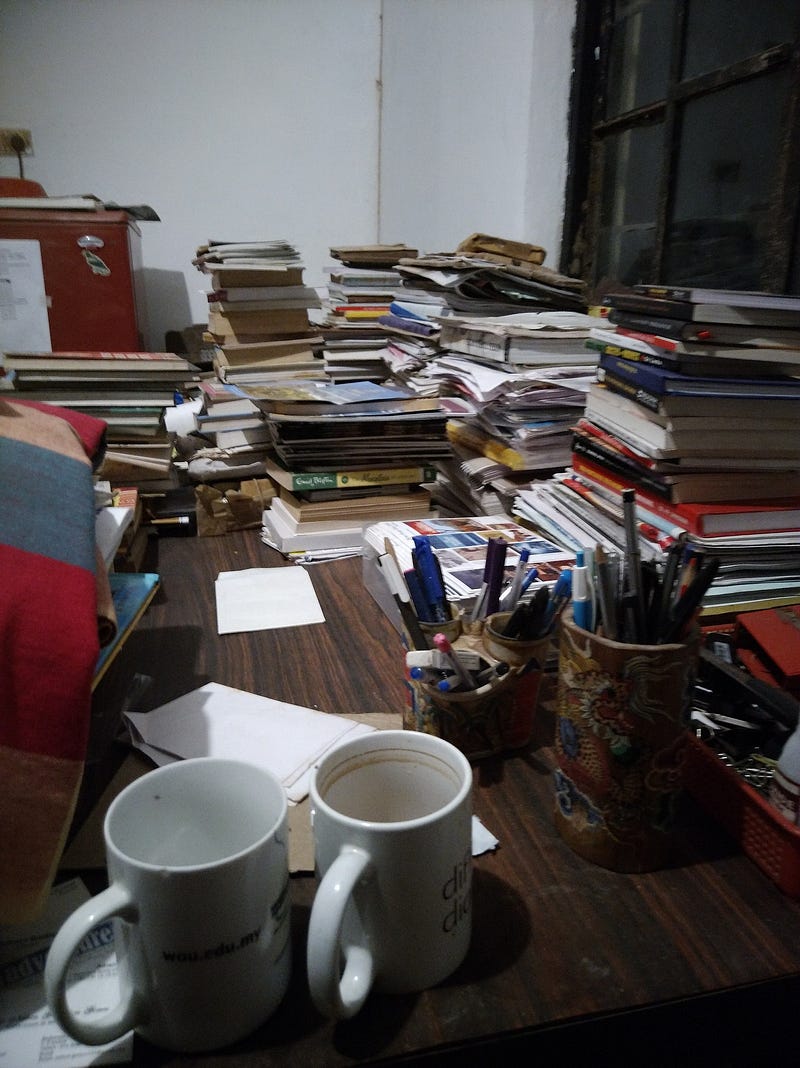
There is a saying among booklovers that “it’s not hoarding if it’s books.” I agree completely; furthermore, I think the same idea should be applied to writers. Whether in a journal, on a legal pad, or in a notes app on your phone, nothing you write should ever be thrown away. The reason is simple: you never know when that hastily scribbled scene that is totally worthless today will be the key to something you’re working on years from now.
I’ll give you an example from personal experience. In 1992, I was sitting in a hotel bar in Savannah, Georgia, when an idea came to me. At that point I did not know if it was a chapter, a scene, or nothing, but I scribbled it down on a cocktail napkin just in case. When I got back to the barracks (I was still in the Army), I transferred that idea to one of the composition notebooks you get for fifty cents during Back-to-School sales and promptly forgot about it.
Fast forward 21 years. No matter what I tried, I could not come up with an ending that I liked for my first novel, The Last Word. Out of sheer desperation, I pulled out every journal and notebook I had and started skimming through them, hoping for some blinding flash of inspiration. It was there that I found that brief piece from the bar in Savannah, and it even had the four words scrawled across the top that became the title of that final chapter of the book: “Paris Stays With You” (a line I brazenly and happily stole from Ernest Hemingway).
The same holds true for the articles you write on sites like this. After a few years, there is the temptation to go back and delete some of your earliest stories, often because those early efforts simply aren’t as good as what you write now after tens of thousands of more words have flown from your fingers. Deleting them from Medium is fine, but you absolutely need to keep a copy somewhere, even if right now it seems like you never want to see it again.
Perhaps you’re embarrassed by the confessional piece you wrote about your first love from high school, or think that a flash fiction sci-fi story was terrible, or that writing an entire article asking which one of the Avengers each E Street Band member would be was the height of insanity (it was not, by the way). Even if all of those things were true, you simply cannot know now if some part of one of those stories would sound perfect coming out of the mouth of a character you have not yet created in a novel you don’t realize you will begin writing sometime in the summer of 2025. It could very well be the key scene that wraps up that novel; it was for me, as I mentioned above.
If you’re a writer, keep everything. Be a hoarder in the best possible sense of the word. Even the stuff that you never use will have value to your children. Tell them to collect all of it into a giant archive and have them donate the “personal papers of a noted local author” to the nearest university for a fat tax deduction. That way your scribbles live on and you screw the IRS at the same time. That’s a win-win situation for everybody.
Keep on writing, and may Hemingway be with you.
Thanks for reading. If you enjoyed this story, you can support my writing directly by leaving a tip below or, even better, joining Medium here. You’ll get access to all of my articles (including my weekly rants and numerous Springsteen stories) as well as those of all the other great writers here.


