
Why Were the Mongols Called Tartars?
Mongols and Tartars were bitter rivals, so why are the two synonymous?
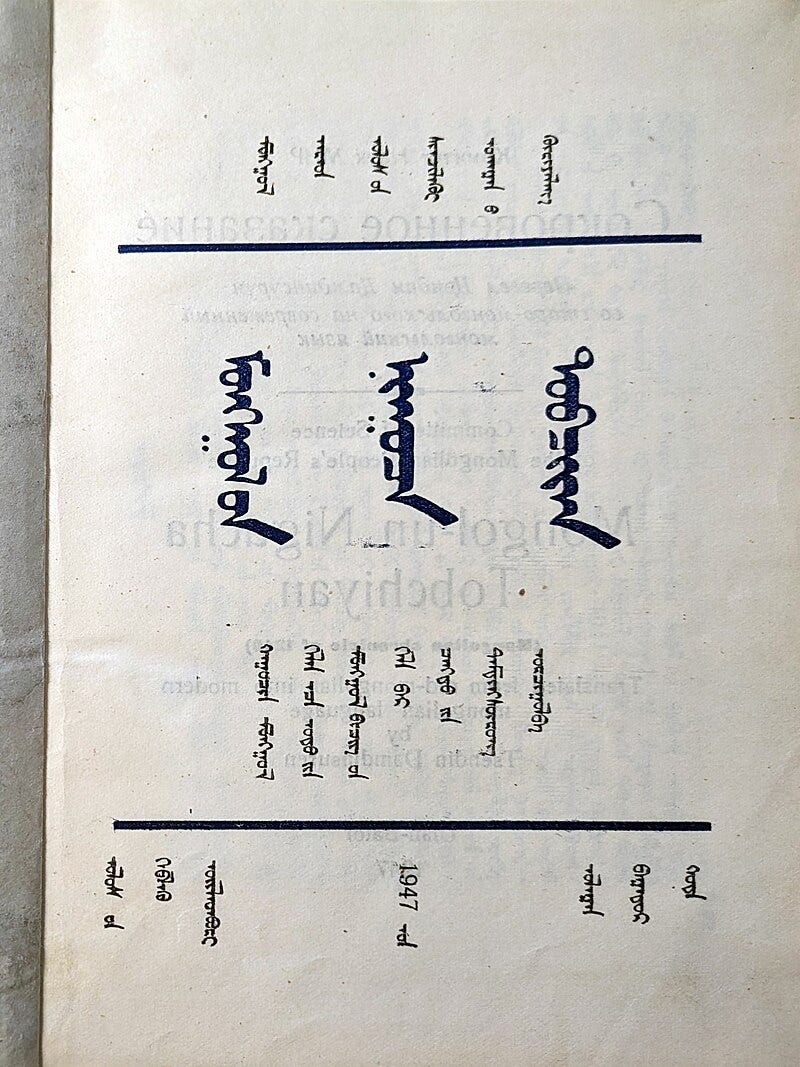
In older literature, you’ll often see Genghis Khan and his Mongols called “Tartars” or “Tatars.” We no longer label the Mongols as Tatars. Today, Tartar refers to Turkic-speaking people of Eastern Europe, Russia, and Central Asia, such as the Crimean Tartars. They aren’t related to the Genghis and his descendants.
Though using Tartar for Mongols has fallen out of favor in academic circles, it persists in popular culture. Travel writer and journalist Justin Marozzi addresses Timur as a “Tartar” in his acclaimed work Tamerlane: Sword of Islam, Conqueror of the World.
Tartar felt odd while reading the book because I’ve never seen it used for Timur. Most historians identify him as a Turco-Mongol.
It made me wonder: why were the Mongols known as “Tartars” or “Tatars?”
Tatars were rivals of the Mongols. Genghis Khan destroyed them during the Mongol unification in the early 13th century. Several medieval sources worldwide identify Mongols with their vanquished enemies, which is puzzling. Investigating the accounts revealed a more complex reality.
The Mongols’ European and Asian adversaries weren’t the only ones who called them Tatars.
The Mongols also identified as Tatars!
Why did they do so, and when did they stop addressing themselves as Tatars? First, let’s discuss who the real Tatars were to understand why the term was used for the Mongols.
Before we begin, if you are unsure whether the spelling “Tartar” or “Tatar” is accurate, both are. “Tartar,” with an extra “r,” is found in European sources. Chinese, Arabic, Persian, Korean, Vietnamese, and Indonesian texts say “Tatar.”
I’ll use “Tatar” in this story because that’s what the Mongols were called in the earliest records.
Who Were the Original Tatars?
The oldest undisputed mention of Tatars comes from the eighth-century Orkhon inscriptions commissioned by Göktürk rulers Kul Tigin and Bilge Khagan. The carvings in modern-day Mongolia's Orkhon Valley were inscribed in Old Turkic. Orkhon inscriptions mention the Tuquz Tatar (Nine Tatar) and the Otuz Tatar Bodun (the Thirty Tatar clan).
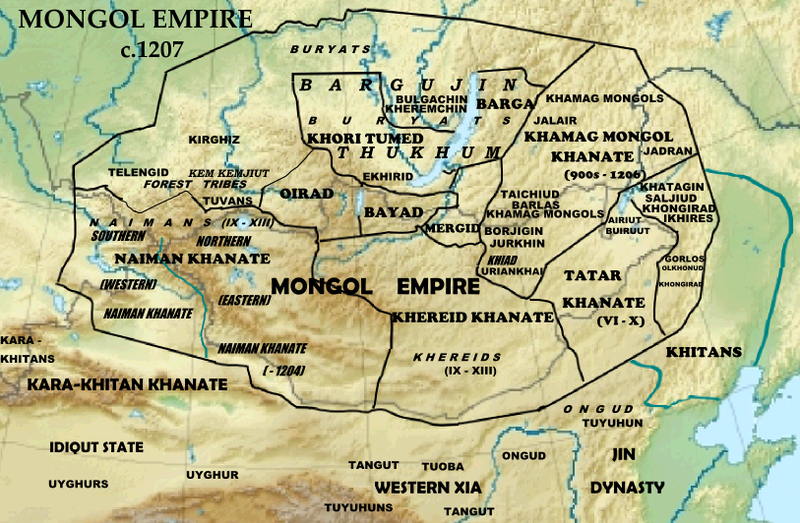
The Nine Tatar was a confederation of tribes residing in east Mongolia. Rashid al-Din-Hamdani, a 13th-century Persian historian, listed the tribes as Tutagud, Alchi, Kuyn, Birkuy, Terat, Tamashi, Niuchi, Buyragud, and Ayragud. He says they lived in the Khalkhin Gol basin.
Scholars have discussed the identity of these tribes. Some historians believe they were Mongolic speakers, while others think they spoke Turkic languages.
According to a 2016 study by Professor Altansukh Ochir of the National University of Mongolia, the Nine Tatars had both Mongolic and Turkic tribes. The hypothesis is likely correct, as Turkic and Mongolic people coexisted in Mongolia for centuries, strongly influencing one another’s culture and languages.
The Tatars became subjects of the Khitan-led Liao dynasty in the tenth century. Khitans were a para-Mongolic people who helped popularize the term “Tatar.” Historians believe their trading links with Europe and the Middle East made Tatars famous.
The Jurchens, who succeeded the Khitans, established the Jin dynasty in northern China. The Jin urged the Tatars to fight the other Mongolian tribes. One such group was the Khamag Mongols.
Around 1171, a Khamag Mongol named Yesugei joined a Tatar camp for a feast. He had battled them before and hoped they wouldn’t recognize him. Unfortunately, his identity was revealed, and his enemies poisoned his drink. Yesugei died a few days later. But his son remembered the incident and vowed vengeance against the Tatars.
The boy was Temujin, who later became Genghis Khan.
In 1202, Genghis destroyed the Tatars, concluding a century of conflict. It was retaliation for his father’s death.
Given the long history of animosity between the Mongols and the Tatars, why were Genghis and his successors called “Tatars?”
Is there anything we’re missing?
Did the Mongols call themselves Tatars?
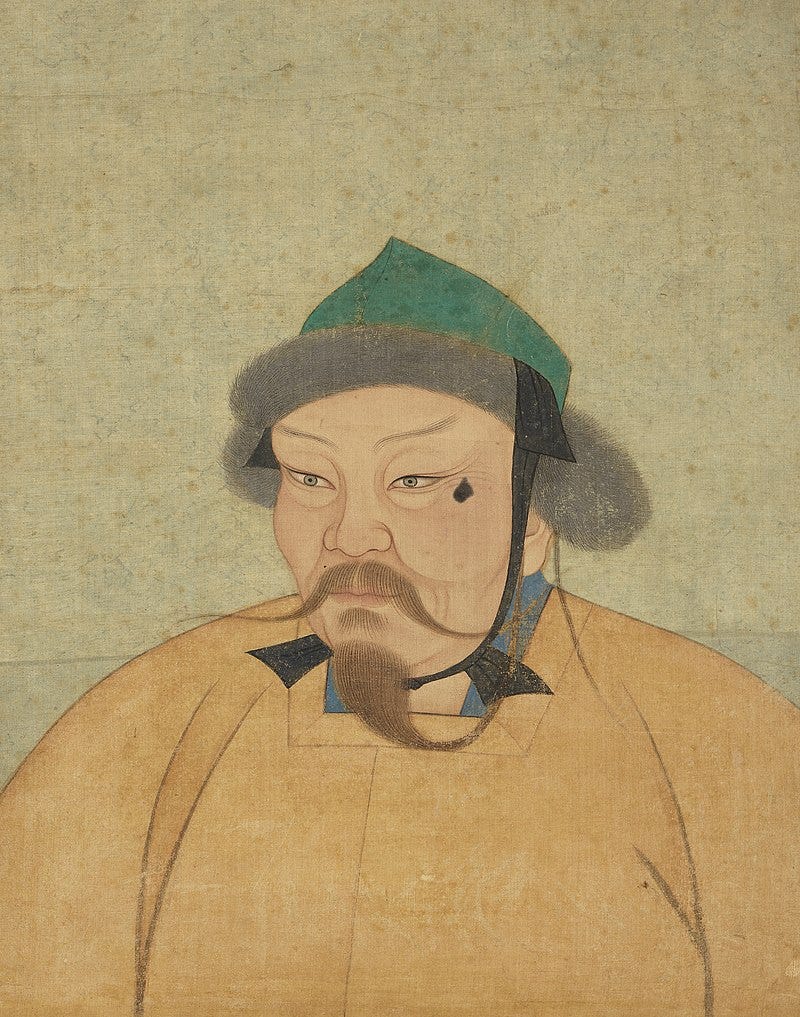
The first mention of the Mongols as Tatars was in 1212 when a Song (ruling dynasty of southern China) emissary to the Jin described Genghis Khan’s invasion of China as an attack by the “Tatars.”
In 1221, a Song ambassador, Zhao Hong, said there were three types of Tatars in the land of Genghis: White, Black, and Wild. The Mongols were Black Tatars. The classification was based on the distances of the tribes from China, the closest being the White Tartars, the Wild Tatars the furthest, and the Black Tatars somewhere in between.
According to Hong, Mongols called themselves Tatars. Muqali, Genghis’ second-in-command and head of the campaign against the Jin, used the phrase “we Tatars” in official correspondence. Hong says the Black Tatars didn’t know who the Mongols were, but after hearing about a “Great Mongol State” from the Jin scribes, they christened their united realm “Mongol.”
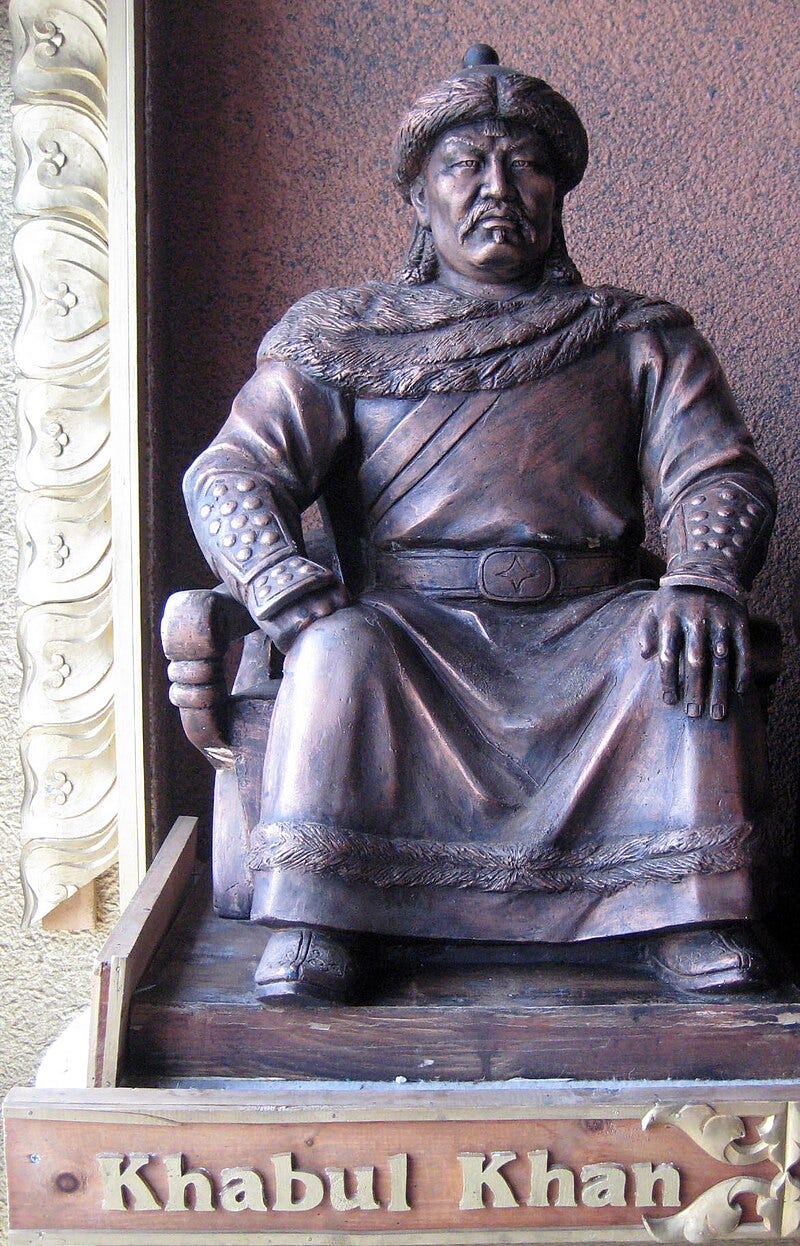
The “Great Mongol State” refers to the early 12th-century Khamag Mongol Khanate started by Khabul Khan. According to the Secret History of the Mongols, the official Mongol history, Khabul is Genghis’ great-grandfather.
Hong’s claims are sensational. His account astounded me.
Are the people we know as Mongols actually Tatars?
Modern historians don’t take Zhao Hong’s descriptions at face value, but there’s some truth to what he was saying.
Early Mongols didn’t object to being called Tatars.
In a letter to the king of Goryeo in Korea, Ögedei, Genghis’ son and successor, addresses himself as a Tatar. Javanese, Georgian, Vietnamese, Persian, Arabic, and European records call the Mongols Tatars. One Armenian source refers to the Mongols as Black Tatars, matching Hong’s classification.
But here’s the twist. In the Secret History of Mongols, they never call themselves Tatars. So why do such references show up in writings across the world?
When did “Tatars” become “Mongols?”
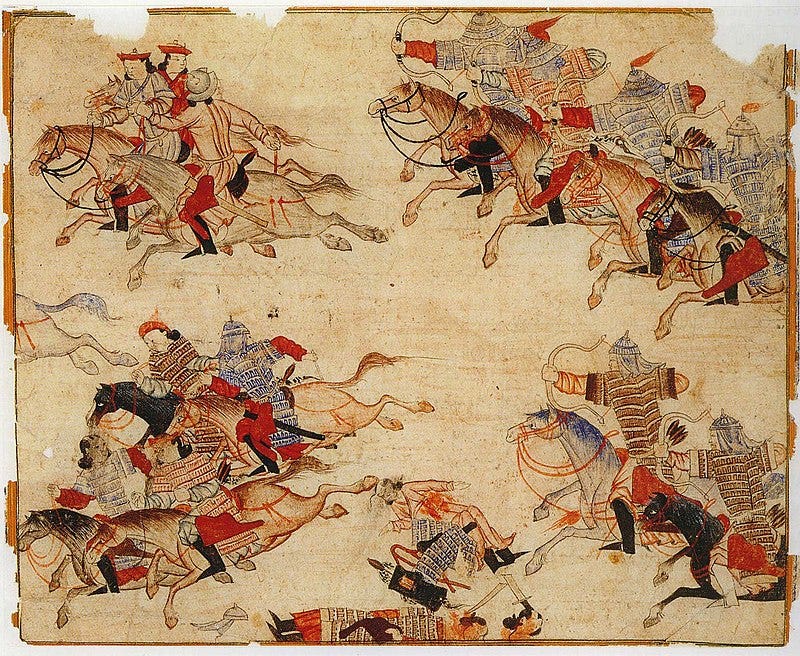
The Tatars were an influential people with a long history. They were mentioned in Turkic, Chinese, and Arabic sources before the rise of the Mongols. In the ancient world, it was common for Steppe tribes to associate themselves with a more illustrious power, even if they were enemies.
Mongols may have jumped on the Tatar bandwagon.
According to Rashid-al-Din:
Indeed they( Mongols) considered it an honor to call themselves Tatar, just as at present, because of the great fortune of Genghis Khan and his urugh, because they are Mongols, other tribes of Turks like the Jalayir, Tatar [sic], Oyirat, Öng’üt, Kereyit, Naiman, Tangqut, etc. each of which has its own special name and sobriquet, all are proud to call themselves Mongol. Whereas before they used to deride this name, now their sons imagine that they have been known as Mongols from long ago, although it is not so.
After Genghis Khan’s ascendancy, tribes such as Jalayir, Tatars, Oirats, Keraites, and Naimans were content to identify as Mongols. The argument that the Steppe tribes adopted the conqueror’s identity is logical. However, other records suggest Mongols disliked being labeled as Tatars.
In the 1240s, Friar John of Plano Carpini, an emissary to the court of Güyük Khan, the son and successor of Ögedei, was the first to acknowledge this. Carpini notes in his report, The History of the Mongols whom we call Tartars, that the Mongols were displeased when called Tatars. He was also the first to point out that “Tatar” was the spelling used in the Mongol Empire rather than “Tartar.”
William of Rubruck, a Flemish missionary who visited Möngke Khan’s (Güyük’s successor) court in the 1250s, claims that the Mongols “wish to abolish their (Tatar) name and bring their own (Mongol) to the fore.” Sartaq, a great-grandson of Genghis, instructs Rubruck to address him as a Mongol.
Why is there a disparity between the earlier accounts and the later emphasis on using “Mongol” instead of “Tatar?”
One theory is that the Mongols were okay with being called Tatars during their rise to power. When they realized they were heaven’s chosen warriors destined to rule the world, the association became irritating. They conquered mighty civilizations, which the Tatars could only imagine.
Why not build your brand?
Highlighting their Mongol heritage was necessary to establish legitimacy and continuity dating back to the days of the Khamag Mongol Khanate. The name “Mongol” symbolized grandeur and power.
Mongol-centric history writing began in the 1240s, focusing on the ruling elite. The Secret History of Mongols and the records of 13th-century historians such as Juzjani and Juvayni refer to Genghis Khan and his descendants as Mongols.
Historian Stephan Pow perfectly describes the change from Tatar to Mongol:
……I contend that the Mongols likely employed “Tatar” as a broad endonym for a time, perhaps for the first three or four decades of the thirteenth century, before transitioning to Mongol as a preferred broad endonym. Tatar was out of favor by the mid-1240s, judging by the unambig- uous reports of Mendicant emissaries on this point. Why this happened can only be inferred.
However, one group was happy to continue being called Tatars.
The Golden Horde was established by Batu, Genghis’ grandson, after the conquest of modern-day Russia, Central Asia, and Eastern Europe. The majority of the inhabitants of the Golden Horde were Turkic-speaking Muslims. Cut off from their Mongolian homeland, the Mongol conquerors became Turkicized and gradually converted to Islam. The Turkic-speaking subjects, in turn, embraced the “Tatar” identity.
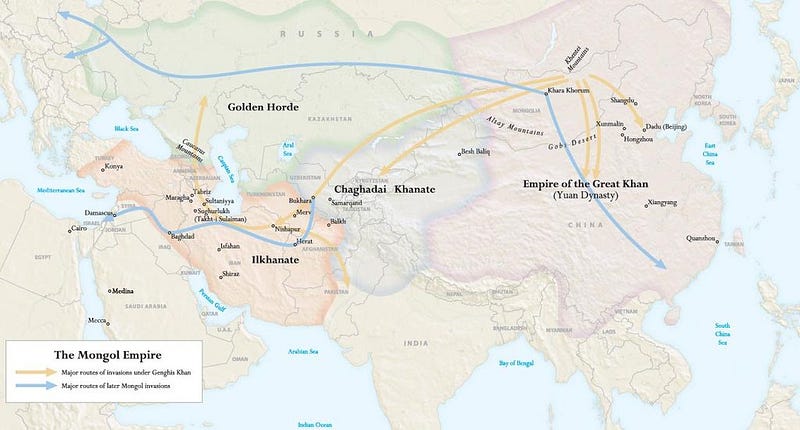
Official Mongol history, highlighting the Mongol ethnicity, was penned in Khan Baliq (modern-day Beijing) and Karakorum (modern-day Mongolia), thousands of miles away from the Golden Horde. The Horde’s rulers were semi-independent, unaffected by the increasing emphasis on being called “Mongol.”
The Golden Horde’s subjects became known as Tatars. They were the ancestors of the Crimean and Volga Tartars.
Key Takeaways: Tatars or Mongols, Which Is Correct?
After reading this story, which term do you feel is more appropriate?
Mongol or Tatar?
Genghis Khan and his successors should always be called Mongols. But now you have a better grasp of why they were referred to as Tatars in earlier writings.
Here are five things you must remember about why Mongols were called Tatars.
- Tatars and Mongols were rival tribes in Mongolia. Asian and European sources refer to the Mongols as Tatars. European sources prefer “Tartar,” while Asian records use “Tatar.”
- The Tatars began as a confederation of tribes in Eastern Mongolia. They were first mentioned in Orkhon inscriptions around the eighth century. They clashed with the Khamag Mongols, the ancestors of Genghis Khan. In 1202, Genghis conquered the Tatars and incorporated them into his armies.
- Mongol leaders like Muqali and Ögedei addressed themselves as Tatars in their communications. Mongols were glad to identify as Tatars because the latter were well-established and had a rich history.
- As the Mongol Empire expanded, the 1240s saw a new period of official history writing focused on the ruling power. The term “Tatar” became unpopular and was replaced with “Mongol.” The Naimans, Keraites, Jalayir, and Oirats, among other tribes defeated by the Mongols, began identifying as Mongols.
- The Mongol royals of the Golden Horde, who lived in modern-day Russia and Eastern Europe, were cut off from their Mongolian homeland. They were unaffected by the increased emphasis on the “Mongol” identity. They became Turkicized and converted to Islam. The Turkic-speaking residents of the Golden Horde were proud to identify as Tatars.
Do you like deep dives about the enigmatic Mongols? If you enjoyed this, please check out the following story debunking a popular myth about Genghis Khan’s appearance.
If you liked this story please clap, highlight, and leave your feedback in the comments. Subscribe to my posts and never miss an update.
References
- Ross, E. Denison; Vilhelm Thomsen (1930). “The Orkhon Inscriptions: Being a Translation of Professor Vilhelm Thomsen’s Final Danish Rendering.” Bulletin of the School of Oriental Studies, University of London.
- Golden, Peter B. (1992). An Introduction to the History of the Turkic peoples
- Atwood C. (2007) The Date of the ‘Secret History of the Mongols’ Reconsidered. Journal of Song-Yuan Studies.
- Igor de Rachewiltz. (trans.) (2015) The Secret History of the Mongols: A Mongolian Epic Chronicle of the Thirteenth Century.
- A. Ochir (2016) Mongolian ethnonyms: issues of the origin and ethnic composition of the Mongolian peoples, Elista: Kigi Ran.
- Pow, Stephen (2019). “Nationes que se Tartaros appellant”: An Exploration of the Historical Problem of the Usage of the Ethnonyms Tatar and Mongol in Medieval Sources.” Golden Horde Review 7 no. 3


