
Why was it so hard for Dale to stop eating chocolate?
And what could possibly help him to overcome this addiction?

In the episode “Chocolate Chip” from 1989, Chip and Dale argued about Dale’s addiction to sweets, especially chocolate. They made a pact afterward: No chocolate 😒for Dale for the rest of their vacation.
After all “emergency” sweets were confiscated and everyone went to sleep, Dale found his “emergency ‘emergency’ chocolate” and just couldn’t resist.
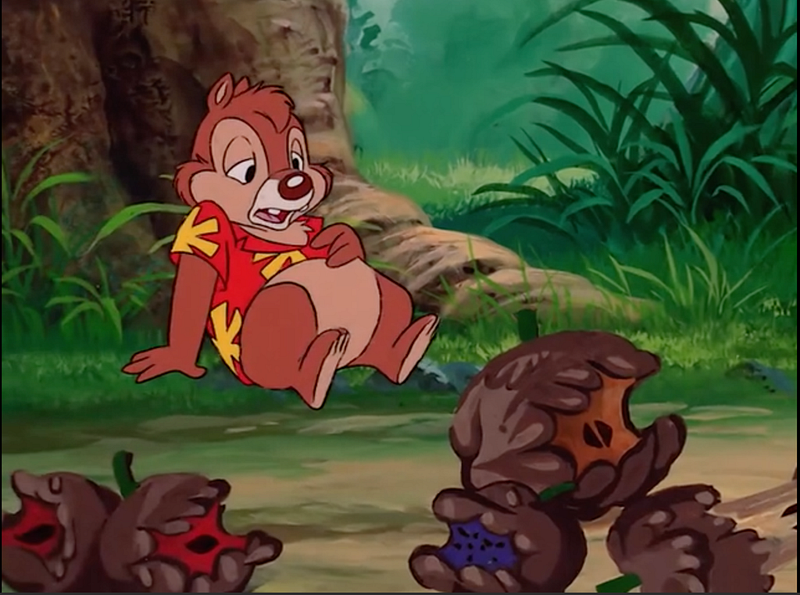
Have you ever found yourself in a similar position? If so, and you wonder why, continue reading.
I have analyzed an umpteen number of chocolates and made some myself too. Let me share with you what I found.
First off, take a look at the following descriptions:
“Sweet notes of toasted nuts with a touch of vanilla bring back memories of traditional childhood birthday cakes.”
“Five unique cocktail-inspired chocolates with gin, rum, sake, vodka, and whiskey, crafted by our Chocolatiers in collaboration with world-renowned Belgian mixologists.”
“Dairy-free dark chocolate has a balanced taste with intense cocoa notes and hints of red fruits.”
And my favorite:
“This chocolate provides a revolutionary zesty and fruity experience. Its bright, citrusy, tangy signature taste is complemented by a tropical fruitiness bursting with fresh mango, lemon, mandarin, and passion fruit.”
Have you noticed how beautifully sensory communication is woven into the descriptions? Utterances like “sweet”, “toasted nuts”, “cocktail-inspired”, “hints of red fruits”, “zesty and fruity”, and “fresh mango, lemon, mandarin, and passion fruit” are all directed to evoke the associations that we created when we tried different foods.
In my previous article, you can read more about how we create those associations during our lifetime.
The first time you tasted mango🥭, your brain captured an image of the fruit in your memory. This image includes the vibrant orange color of the flesh enclosed by a reddish-green outer layer, along with an aroma that resembles that of pineapple, coconut, peach, raspberry, and flowers. The taste is sweet and slightly sour, and the texture is fibrous with a distinctive crunch. Your association with this fruit is either pleasant or unpleasant.
The next time you see the word “mango” in the description of the product you immediately recall all those memories and you buy the product If your associations are pleasant.
We create a flavor image for the chocolate 🍫itself. This process also involves our senses of sight, taste, smell, touch, and sound.
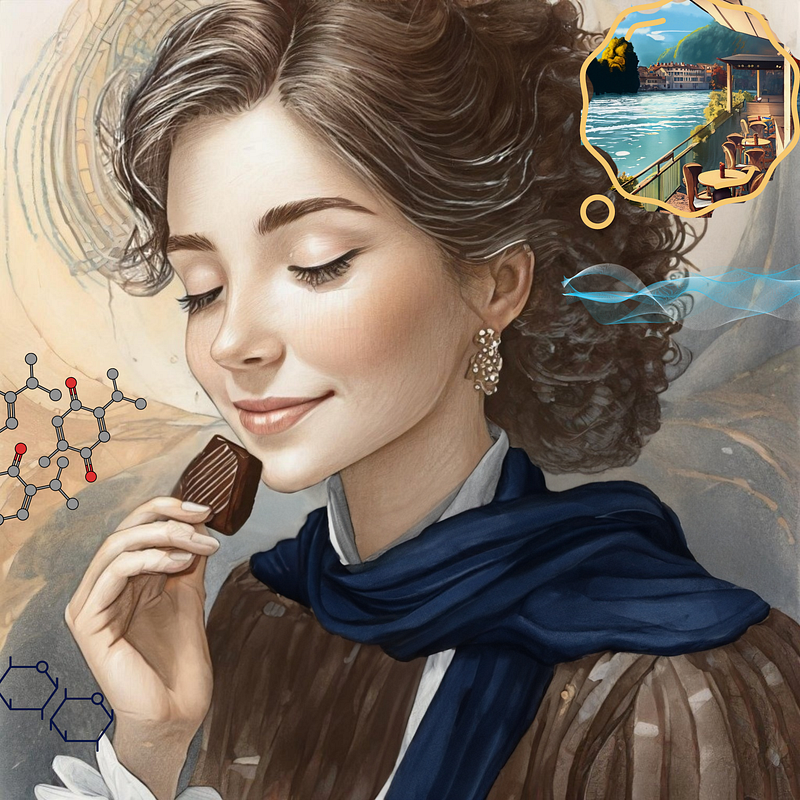
The taste of chocolate is sweet with various degrees of bitterness. The aroma combines cocoa, some nutty, musty, earthy, and burned notes. The texture varies depending on the type of chocolate, but generally, it is soft and velvety. The texture can be described as rich and indulgent, with a silky mouthfeel that coats the tongue. The sound when you take a bite is a distinct snap. The darker the chocolate (more solid particles), the louder the snap you hear. The sight includes the color, shape, shades, and gloss. Dark chocolate has an intense deep brown color with shades of mahogany, the surface is shiny and even, and the shape is more geometrical with sharp edges.
All this describes the chocolate alone without any additional ingredients or aromas. According to recent studies, some aromas enhance the perception of sweetness. Additionally, the change in fat-to-cocoa ratio will influence the presence of bitter notes and the eating experience in its entirety.
Another thing to mention is the palatability of the chocolate. It gives us a pleasurable experience, it is sweet, silky smooth, packed with calories, convenient, and very easy to find nearby. It is a product that activates our reward system and thus we seek this pleasurable experience again and again.
Our homeostatic food intake is regulated by the hypothalamus when it senses nutrients, neuropeptides, and hormones while we eat. Our hedonic regulation, on the other hand, involves the amygdala, hippocampus, orbitofrontal cortex, cingulate gyrus, and insula that are sensing dopamine, serotonin, opioids, and cannabinoids. Read more here.
Individuals who are susceptible to addictive behaviors and show impulsivity may disrupt the balance of their regulation systems by consuming palatable foods. As a result, these individuals may find high-calorie, palatable foods to be more appealing, while the ability to control their consumption weakens.
Let’s return to Dale and his weakness for chocolate (Chip ’n’ Dale cartoon). The character Dale was portrayed as being dim-witted, impulsive, and laid-back. On the contrary, Chip’s protagonist is focused, safe, and logical. Dale loved chocolate and couldn’t regulate his appetite for it, whereas Chip had no problem controlling his chocolate consumption.
Impulsivity is a biological predisposition associated with rapid and unplanned reactions to internal and external stimuli, without considering their possible consequences. It is a behavioral pattern comprised by greater motor activation, less attention, and decreased planning strategies.
Numerous studies have shown that overeating is related to impulsivity and increased sensitivity to reward.
In the study from 2020, the researchers found that impulsivity predicted higher food consumption, particularly higher sugar and fat intake. In addition, they reported that inhibitory control was correlated with impulsivity.
Can you now answer why it was difficult for Dale to stop eating chocolate? I hope you can.
What steps could Dale take to cut down on his chocolate consumption?
1. Be aware of sensory communication: Look for words that evoke the desire to buy and eat chocolate (or any other sweets).
2. Think critically: Food manufacturers want him to eat their products as many as possible, but it doesn’t mean he needs that many calories.
3. Pause: Every time he felt encouraged to eat his favorite chocolate immediately, he could take a few minutes, go and do something else, and he would probably make a wiser choice.
I hope it was as interesting for you to read as for me to write this article. Feel free to follow me, comment, and suggest the next topics.


