
The Invisible Link between Sensations and Idea Sparks
The link between inspiration and idea generation is already established: When we need to find a novel solution, we seek inspiration. What exactly does the inspiration entail and why it helps to generate more ideas?
The inspiration can be drawn from various sources, including experiences, observations, art, nature, and other external stimuli. Have you ever wondered how you can deepen your connection with these sources to enrich your creative journey?
I invite you to explore the world of sensations. The intangible, rich, intriguing, ambiguous, mysterious world.
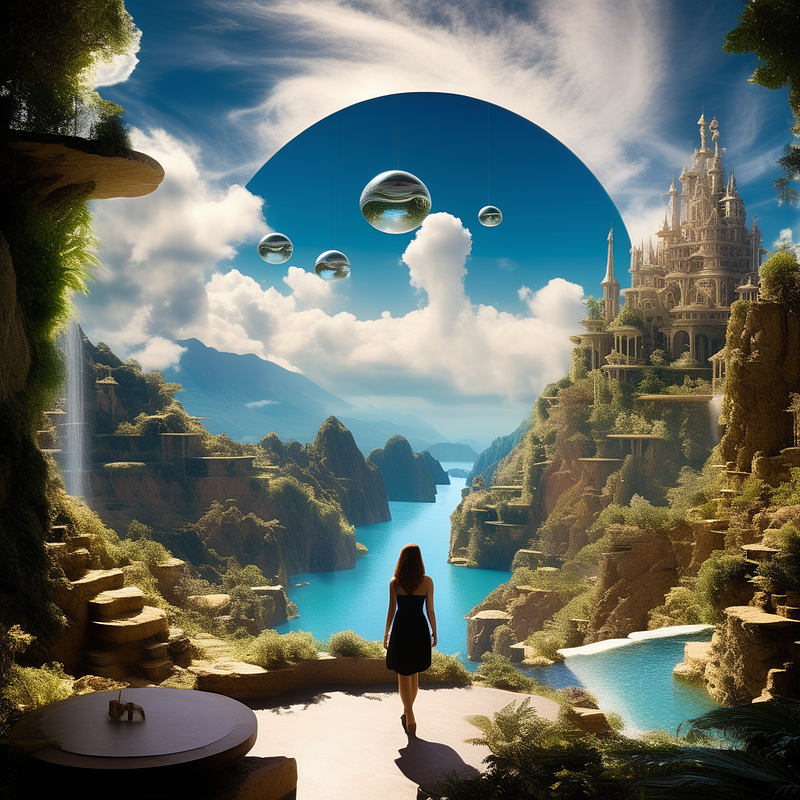
Our sensory system contributes to the perception of the world around us. Interacting with surrounding objects accompanied by our senses we create an array of associations and connections inside the brain. The more we interact with the same object, the stronger the connections we build, and thus, we enhance our ability to separate this object from the others. With every additional interaction, we have the chance to deepen our understanding and gain new perspectives.
As our curiosity evolves, we seek other angles to look at this object by learning, exploring, and playing with a variety of combinations.
Take a look at this picture :
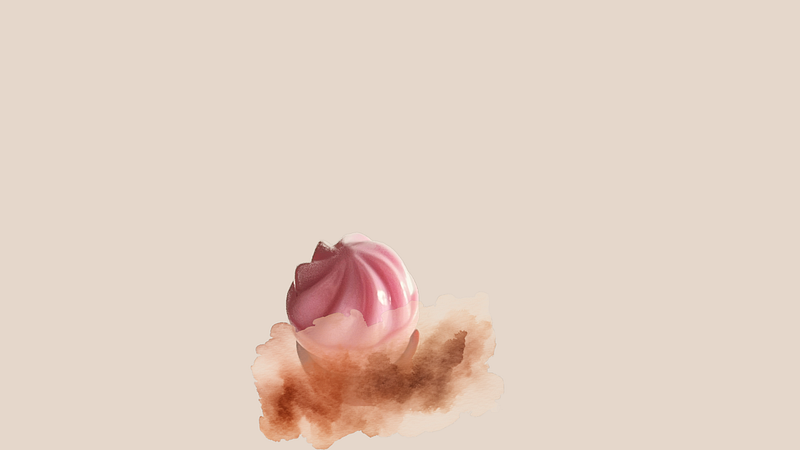
What were your first thoughts about it?
Did you associate it with something like this?

What if I show you the rest of the first picture?

If you are one of those who already saw this new set from LEGO, you would probably assume that the object in the first picture is a piece from the set.
On the contrary, if you haven’t seen it before, your associations would be connected to something like an ice cream or something having similar shapes, swirls, colors, and textures.
What is the explanation?
This is the way we learn about the world around us. Our sensory system encompasses 5 divisions: visual, olfactory, gustatory, tactile, and auditory.
I have recently found a great article. Look how astonishingly beautiful James F Hickey describes his sensations as he moves through the forest.
I engage with all my senses as I move through the forest. I listen to the symphony of rustling leaves and bird songs, feel the diverse textures of earth, foliage, and bark, breathe in the earthy scents, and delight in the interplay of light and shadow.
He used words like “listen”, “feel the texture”, and “breath in the scents”. We rarely notice our sensations in our daily lives, but they always follow us no matter where we go or what we do.
The visual system 👓allows us to see the colors, shapes, and sizes of the objects. Combining all features gives a visual representation of an object. Pink, round-shaped object with a few defined edges, occupying around 10 percent of the space. That is what our brain interprets from the light sources.
The olfactory system 👃makes it possible to sense an array of odors which are volatile molecules flying around. Looking at the picture gives no information about the smell unless you already know this object well. Once you have interacted with it, your flavour image (taste + odor) is located in the memory network.
The gustatory system 👅is responsible for the perception of taste. To this point, scientists have discovered five basic tastes: sweet, sour, bitter, salty, and umami. Our taste buds, surfacing the tongue, differentiate those tastes by the molecules involved in the sensation: mono- and disaccharides, H+, amino acids, NaCl, and monosodium glutamate, respectively.
The tactile or somatosensory system 🫳helps us recognize the temperature, pressure, pain, irritation, or vibration. Even if it is not possible to touch the image, your visual system analyzed and predicted what type of texture you would perceive. For instance, a glossy surface would imply a smooth texture with no graininess.
The auditory system 👂catches the sound waves helping us to locate the sound in the environment and react accordingly. Once again, if the memory network of this object has already been established, you would recall the crunchy sound of an ice cream waffle, or something else.
Those five systems work closely together creating a holistic picture of the surroundings. Piece by piece we build the reality in our brain 🧠 making neuronal connections that encode umpteen events from our daily activities. Higher cognitive functions are involved in the interpretation of those connections, giving them names, navigating between them, and assigning them to emotions.
Our experiences become more vivid as we engage in more activities throughout the day, which leads to making even more connections.
When we are deeply passionate about a particular subject, we tend to immerse ourselves in it in a multitude of ways. The process starts with curiosity and identification of gaps in our understanding and is followed by searching for the missing information. Along the way, we often discover alternative paths that lead us to a more nuanced and comprehensive understanding of the topic. These additional routes broaden our existing knowledge, enhance our perspectives, and enable us to create innovative and practical solutions that we may not have thought of otherwise.
Let me exemplify.
Finding a way from point A to point B in a new city without any GPS assistance is enchanting challenging, albeit tricky. Even if the distance is just two kilometers long, it can take hours to reach the destination because the route is unknown, and has many sideroads and turns.
Regardless of all hurdles, it is indeed quite an exhilarating journey where one can explore the architecture, a few authentic shops, nature, or hear some mesmerizing birds’ songs.
Consequently, a few days later after this journey, one can generate an array of ideas for the new project, app, or interior design.
“Where do those ideas come from?”, you may wonder.
They come from an enriched experience, from the exploration of the world around us. While trying to find a way from point A to point B, our nerve cells created an irreducible dynamic pattern in the brain. This also happens when we learn something new.
Openness to Experience is so strongly linked to creative thoughts, that some argue that “creativity” could be considered an alternative label for this personality trait. who wrote that?
This example shows that the destination itself is rather simple and doesn’t take long to reach. However, extending it with wrong turns or changed directions not only takes more time but also adds refined details to our existing picture of the world.
Returning to our experiment with the picture. If I asked you to do the same experiment all over again, would your perception of the first picture be different?
I think it would. Your reality picture gained more details, you learned something new from this experiment. As you meet more pink-colored objects with swirls and defined edges, you will add more connections to your memory storage. Senses like smell, touch, hearing, and tasting will be combined with visual cues creating associations.
In summary, the sensory journey into idea generation starts when we experience the world through our five sensory channels: visual, olfactory, gustatory, somatosensory, and auditory. Interaction with different objects around us provides information about their shape, color, size, texture, smell, taste, and sound. Consequently, this information will be stored in the memory network where connections are navigated by the highest cognitive function of the brain.
According to the latest research, ideas come from our experiences. The more we see, hear, taste, smell, and touch, the more information we can store in our memory. Cognitive control allows us to navigate within it, manipulate, and select what is appropriate to apply in a particular context.
Thank you very much for your time. Please, share your thoughts in comments, ask questions, write suggestions, or just write whatever comes to your mind :)