
Why Was Celebrating Christmas Illegal in England During the 17th Century?
A seventeen-year ban on Christmas celebrations led to widespread riots.

Can you imagine a real-life Grinch who hated Christmas?
What would Christmas be like without presents, Christmas trees, carols, feasts, and high spirits?
It wouldn’t be Christmas without the fun. But, a group of people in seventeenth-century England decided that having too much joy was bad and passed laws banning Christmas.
The ban lasted seventeen years in England, although it remained longer in Scotland, lasting until 1958.
Yes, until the 25th of December 1958, Christmas celebrations in Scotland were illegal!
This ban also influenced how early nineteenth-century Americans viewed Christmas. Christmas did not become a public holiday in America until 1870.
But why did many in seventeenth-century England want to cancel Christmas?
The Puritan assault on Christmas.

Before we talk about why the English Parliament made Christmas illegal, it’s crucial to understand the country’s political situation in mid-seventeenth-century England. It was a time of great upheaval.
The Civil War between the Royalists and the Parliamentarians tore England apart. The Parliamentarians aspired to dethrone the king and restructure the government of England, Scotland, and Ireland.
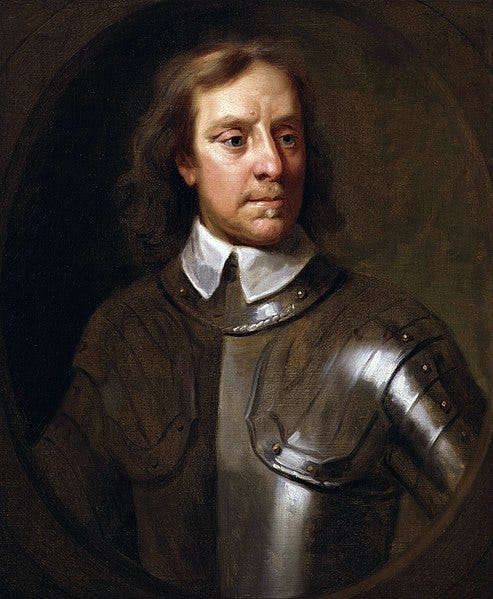
King Charles I of England commanded the Royalists. Thomas Fairfax and Oliver Cromwell, ardent enemies of King Charles, headed the Parliamentarians.
Unfortunately for King Charles, he was defeated in 1649, found guilty of treason, and executed. Cromwell declared himself the Lord Protector of Commonwealth of England, Scotland, and Ireland, in 1653.
What does all of this have to do with Christmas, you might wonder?
King Charles, like most of us, enjoyed the festival. He promoted parties, gift-giving, and lavish expenditures on Christmas. A group of zealous Protestants known as the Puritans loathed this.
There were movements advocating an end to Christmas celebrations even before the English Civil War. Puritans considered it a “Catholic” festival.
There were two factions within the Puritans.
One who rejected the theory that Jesus Christ was born on December 25th, which the Bible does not mention. Hence, they saw no reason to indulge in celebrations of his birthday. They viewed the decision to celebrate Christ’s birthday as one taken by the Pope.
The other who accepted that Christ was born on December 25th but rejected the celebrations, instead called for business to go on as usual.
Regardless of the groups’ differences of opinion, the Puritans considered gift-giving, extravagant spending, and merrymaking to be “Un-Christian” and rooted in pagan rituals.
They were all in agreement that Christmas should not be a public holiday.
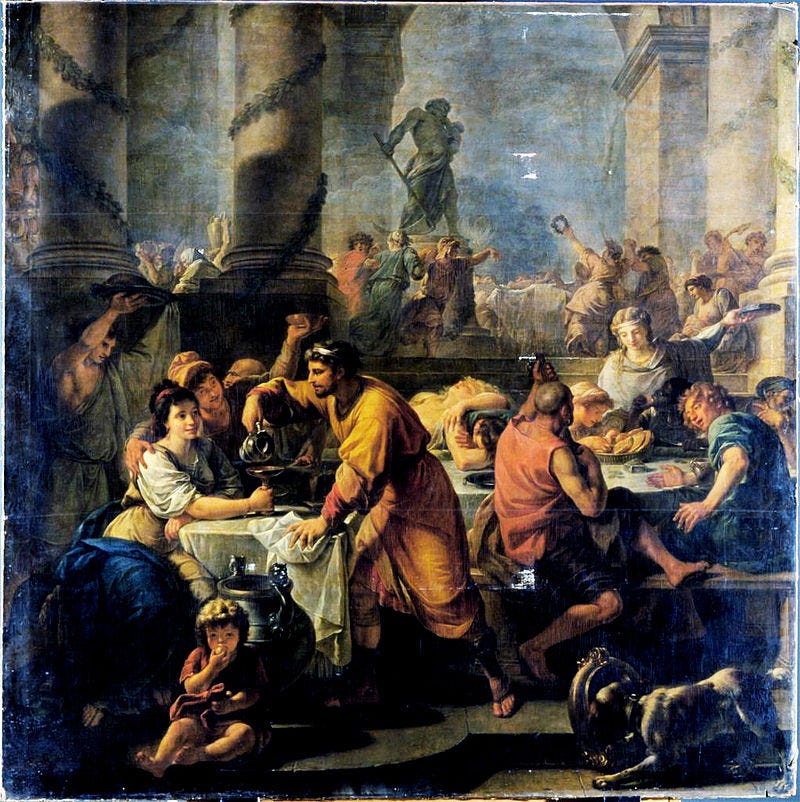
There was some truth to what the Puritans were saying. Many common Christmas traditions, such as gift-giving, may have been inspired by Roman festivals. Examples are the week-long Saturnalia held from 17th-24th December, and the Kalends, during the New Year.
Anglo Saxons celebrated the Yule around 25th December, which was a feast for the winter solstice. Yule also had the tradition of gift-giving, decorating the “Christmas tree” and merry-making. Thus, many of the common Christmas customs existed in England before the rise of Christianity.
Puritans saw such traditions creeping into Christianity as offensive and naturally wanted them canceled.
King Charles’ promotion of Christmas emboldened the Puritans to throw their weight behind the Parliamentarians in opposing the holiday.
The Scots outlawed Christmas celebrations as early as the 1560s. Despite King James’s temporary restoration in 1617, the Scottish Parliament prohibited “Yule Celebrations” (Christmas) once more in 1640.
Baking the Yule bread, a rich and sweet Christmas loaf, was a criminal offense in Scotland.
When the English Civil War broke out in 1642, the Scottish Parliament pledged military support to the English parliamentarians with the condition that the Church of England was reformed.
One change advocated was the abolition of Christmas.
The banning of Christmas and its restoration.

On December 25, 1643, a group of Puritan shopkeepers opened their stores in London as if it were any other day. They had the support of some ministers who closed their churches and parliamentarians who came to work.
In England, the Puritan assault against Christmas had begun.
The following year, the 25th of December fell on one of the monthly fast days, and Parliamentarians urged replacing Christmas feasting with somber fasting.
In 1645, the Parliamentarians dealt the death blow to Christmas celebrations. The Parliament passed a Directory for the Public Worship of God, in which there was no mention of Christmas.
England’s most popular public festival was officially canceled.
This lead to widespread resentment not only among the Royalists but also in the areas controlled by the Parliamentarians. Workers refused to show up for the businesses that opened their doors on Christmas.
Despite their support for Christmas, the Royalists were suffering devastating defeats on the battlefield. By April 1646, King Charles’ soldiers were losing territories, and the fight to save Christmas.
But the people of England were not about to give up their love for Christmas without a fight.
On June 10, 1647, the English Parliament made Christmas a punishable crime. Pro-Christmas rioting erupted in Bury, Norwich, and Ipswich on December 25, that year.
Protesters in London ignored the restriction to “set up Holly and Ivy,” forcing the Mayor’s armed intervention to disperse the crowd.
Canterbury rose in revolt in 1648. Puritan stores that opened during Christmas were vandalized, and protestors took over the entire city.
Canterbury’s success motivated Kent to rebel against the Parliamentarians. These revolts happened at the same time as the Second Phase of the English Civil War, which concluded in King Charles’ defeat and execution.
People’s spirits were dampened, but not extinguished.
Farmers in Devon carried on Christmas traditions, as reported in a pamphlet published by poet John Taylor.
When Cromwell became Lord Protector of England, in 1653, he continued the Christmas ban. But people celebrated Christmas in private defying the law.
In the end, the will of the people triumphed.
In 1660, with the restoration of the English monarchy, the ban on Christmas was over. The joy of Christmas once again returned to England.
While the Puritans could not persuade the people of England, their beliefs found appeal in the thirteen colonies that eventually formed the United States of America.
Once America gained independence, Christmas celebrations were frowned upon and discouraged. The new nation abandoned old English customs.
However, secular practices of gift-giving, merrymaking, and public holidaying were revived in the mid-nineteenth century, and the Federal government declared Christmas as a public holiday in the United States on December 25, 1870.
Today, we may find it difficult to understand why someone would wish to cancel a festival of joy, love, and sharing. But, once upon a time, certain individuals did not appreciate the spirit of Christmas and outlawed it, even if it required the use of force.
Such a mean-spirited move would not last, and good triumphed. Some historians argue the ban ended up making Christmas more popular.
The failure to cancel Christmas is a lesson for those who desire to deprive people of their joy. A desperate move like that, regardless of religious or political ideology, is unsustainable.
On that topic, I’d want to wish everyone a Merry Christmas and a Happy New Year.
Christmas is a time of peace and joy. While the Bible may not have mentioned when Christ was born, it got an important battle in human history right. This battle resulted in the first peace treaty in history. If you are interested to know more make sure to read the story below.
Enjoy reading tales of the past? Please support my work by subscribing to Medium using my referral link and gain unlimited access to thousands of stories.
References.
- Did Oliver Cromwell ban Christmas? The Puritan assault on Christmas during the 1640s and 1650s, History Extra by BBC.
- Scottish Christmas traditions, National Trust of Scotland.
- Flanders, Judith (2017), Christmas: A Biography, St. Martin’s Press
- Beard, Mary; North, J. A.; Price, S. R. F. (2004), Religions of Rome: A Sourcebook, Cambridge, England: Cambridge University Press.
- Simek, Rudolf (2007) translated by Angela Hall. Dictionary of Northern Mythology