
Why Voter Apathy is the Silent Killer of Democracies
When Silence Speaks Louder than Votes
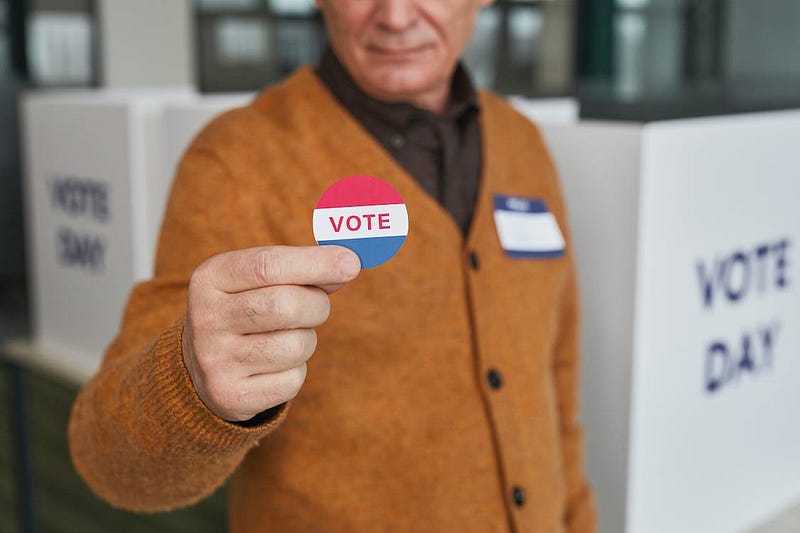
The silence of voter apathy echoes through the halls of democracies, revealing a malaise that threatens the very foundations of free societies. While shouting matches in town halls, sensationalized news, and social media tirades capture our attention, the silent decision not to vote is, in fact, the loudest declaration of discontent. If left unchecked, this silence might very well be the undoing of the democracy we hold dear.
Imagine a bustling marketplace, with stalls bursting with fresh produce, artisanal crafts, and a cacophony of languages and ideas. Each booth represents a political party or candidate’s vision of progress, justice, and prosperity. Now, imagine half of the marketplace empty, with dust gathering and cobwebs forming. That desolation is the representation of voter apathy. Half the society chooses not to voice their preference, essentially allowing the other half to decide the direction of the entire community.
So, why should we be concerned about voter apathy? Why does it matter if a sizable chunk of the populace decides to sit out an election?
At the heart of democracy lies balance — a tug-of-war between diverse ideas, with the winning side representing the majority’s will. But when large sections of eligible voters recede into the shadows, this balance becomes skewed. Decisions get made by a non-representative sample of the society, allowing extreme ideologies and special interest groups to wield disproportionate power. The more polarized and less representative our democratic institutions become, the more disillusioned the silent majority feels, fueling a vicious cycle of increased apathy.
Apathetic voters aren’t necessarily indifferent to societal issues or ignorant of the political landscape. Their decision to abstain often stems from a deep-rooted belief that their vote doesn’t matter, that the system is rigged, or that politicians are just different sides of the same tarnished coin. This loss of faith is dangerous. It provides fertile ground for populist demagogues to sow seeds of division and mistrust, further eroding the pillars of democratic institutions.
A government not representative of its people tends to misalign its priorities. When this happens, public funds can get misallocated, leading to wastage or supporting projects that don’t necessarily benefit the broader populace. Such mismanagement can stagnate economies, increase unemployment, and widen the gap between the rich and the poor, making the silent majority even more disenchanted.
One country’s apathy can have consequences beyond its borders in our globalized world. Governments elected by a small fraction of their populations might adopt isolationist or aggressive foreign policies, affecting trade, security, and global alliances. Democracies, hailed for their stability and predictability, become wild cards on the international stage, creating uncertainty and undermining global cooperation.
The question arises: Can this downward spiral be reversed? The answer, resoundingly, is yes. Democracies are inherently self-correcting, but they require active participation.
Engaging the youth, who often bear the brunt of apathy, through civic education can ignite their passion for change. Similarly, technology can make voting more accessible and transparent, restoring faith in the system. Grassroots movements can mobilize communities, reminding them of the power of their collective voice.
While voter apathy is often painted as a passive act, it’s a weighty choice with consequences reverberating through time. This apathy forms invisible chains that bind progress, limiting the horizons of potential futures and stifling innovation and progress. Democracies, unlike any other system, are based on collective wisdom. They evolve and mature through the active engagement of their constituents. Without this engagement, they become stagnant pools of missed opportunities.
Every society has its pulse, a rhythm that dictates its culture, aspirations, and values. In democracies, elections are the mirror reflecting this pulse. Voter apathy blurs this reflection, making gauging a nation’s true desires and aspirations difficult. This lack of clarity leads to policies that don’t align with societal needs, resulting in disillusionment and a further entrenchment of apathy.
In every election, there are countless narratives — stories of marginalized communities, tales of economic struggles, chronicles of dreams and aspirations. When one chooses not to vote, these narratives risk being forgotten, buried under the weight of dominant voices. The beauty of democracy lies in its tapestry of diverse voices. Apathy risks turning this vibrant tapestry into a monochrome of lost opportunities.
Every generation leaves a legacy, an imprint in the sands of time that future generations can either admire or lament. Our participation or lack thereof in the democratic process determines the kind of legacy we leave. Do we want future generations to inherit vibrant democracies where voices echo with passion and purpose? Or do we bequeath them silent corridors where the echoes of apathy drown out the dreams of progress?
While the specter of voter apathy looms large, all is not lost. Societies have the innate ability to self-heal, to rekindle the flames of passion and purpose. Town hall meetings, community engagements, and public forums can serve as crucibles, reigniting the spark of active participation.
Moreover, democracies worldwide can learn from each other. Sharing best practices, technological innovations, and engagement strategies can be a bulwark against indifference.
In the digital age, where information is abundant, and the world is interconnected as never before, there’s an opportunity to use these tools for entertainment and commerce and bolster the pillars of our democracies.
Democracy is not just about the right to speak; it’s about the duty to listen. When sections of the populace choose silence, they signal a breakdown in that dialogue. The onus falls on society, its leaders, and each individual to bridge that gap.
In the end, democracy is not just a system of governance; it’s a pact of trust, an agreement to disagree, and a commitment to collective well-being. If we let voter apathy go unchecked, we risk not just the future of our democracy but the essence of what it means to be a society. So, the next time an election comes around, let’s not let silence speak on our behalf. Let’s raise our voices, cast our votes, and keep the marketplace of ideas alive and thriving.
Thanks for taking the time to read. I’d like to hear your perspective.
You can also refer to the related articles:
Please subscribe here to receive the latest insightful stories by email.
Did you find this enjoyable? If so, remember to hit the clap button, which you can press up to 50 times and comment. Take advantage of more from me — ensure you’re following if you still need to. Thank you for being an integral part of my journey.


