
Why Unschooling May Be the Best Thing You Do for Your Kids — Personal Story
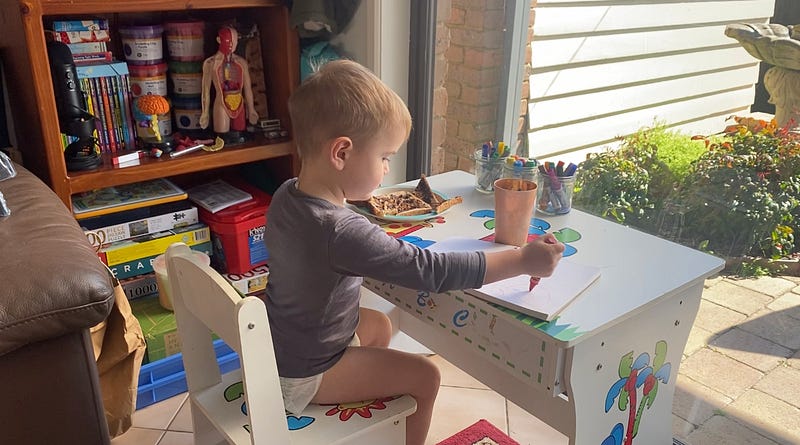
Unschooling is like homeschooling’s wild and free-spirited cousin, who wears tie-dye shirts and never brushes their hair.
As a parent who has chosen this unconventional approach to education for my family, I can honestly say that the benefits of unschooling are too good not to share.
In this article, I’m going to spill the beans on why unschooling is just fabulous, and how it has transformed our family’s life.
Whether you’re already part of the unschooling tribe, thinking about it, or just curious, I hope this article will give you some inspiration and laughs.
From traveling the world with our kids, to letting them stay in their PJs all day (yep, guilty!), to fostering their love of gaming and tech, we’ve learned that unschooling is all about doing what works best for our family.
So, grab a cup of coffee or tea (or wine — no judgement!), and let me tell you about our family’s unschooling journey!
The Origins of Our Unschooling Journey
As any parent knows, raising children can be a wild ride full of surprises, twists and turns.
For my family and I, our unschooling journey began with the realisation that our eldest daughter, a curious and gifted (and still very new) teenager, was not being challenged sufficiently by the traditional school system.
Despite attempts to negotiate with the school to push her ahead, it became clear that her potential was not going to be realised and that her boredom risked other challenges ahead.
I myself was pushed out of school early because I was bright and the school system lacked the appropriate supports necessary to support and assist someone like me.
After leaving in my early teens, and despite the usual nonsense about my “never amounting to anything”, I did in fact go on to achieve a law degree, as well as postgraduate qualifications in my early 20s, notwithstanding the problematic attitudes of these so-called “educational experts”.
None of that story is without its own serious hardships though, and seeing my own daughter on the cusp of having her “education” go the same way, I did of course begin advocating hard on her behalf.
Naturally, I wanted better for her.
When her school dean still refused to see sense though, I knew that we needed to find an alternative path for her.
But let me back up a bit.
At the time, my husband and I had just welcomed our third child, with an eight-year gap between him and our second child.
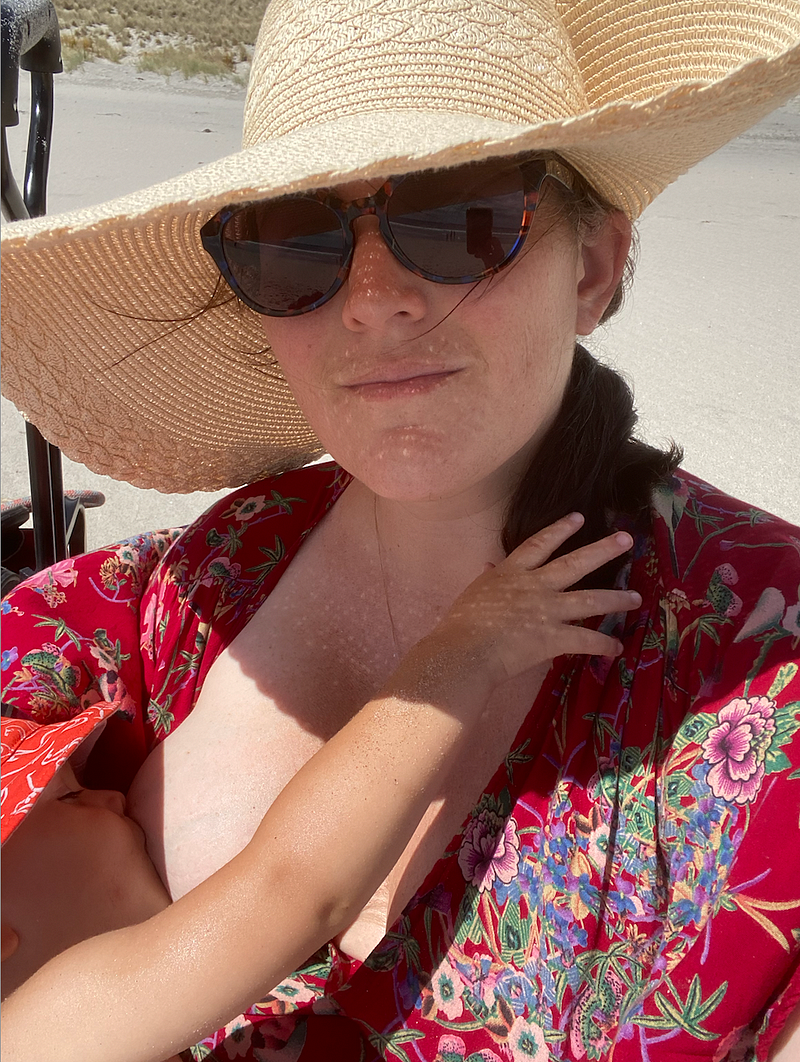
Meanwhile, my professional career was also putting a lot of pressure on our family — my wonderful husband was running between my court and clients appointments with me, so that I could breastfeed between sessions, but we were both exhausted.
Being in my early thirties by this point, I had also read a lot of child development literature and felt significantly more educated and capable than I had when my older children were bubs.
Talking things over with my husband (and our teenage daughter), we came to the conclusion that we needed a change that would allow us to prioritise our family life in better ways and to give our children the education they deserved.
So, we began looking for alternative options.
We knew we wanted to focus on attachment and connection — our new baby was very much at the centre of our thinking on this.
Mostly, we just wanted to be able to centre our family life — we wanted for this to be at the heart of our endeavours, with work, however still necessary, taking a back step.
With that in mind, a decision was made for me to quit my job (I was then the primary breadwinner) and we decided to travel around the world (and later, around our own home country too).
This was a new life not without its difficulties.
We had to find remote work to stay a float still, and it wasn’t all fun and games — life was in many ways more challenging than it had been when we’d been living the “straight” life.
But that said, it was a remarkable period of development for all of us and one that none of us has regretted.
During this period my daughter completed correspondence school/government curriculum that meant she was then able to begin university as she turned 16.
Along the way, she was also able to take in all the other educational offerings from our travels too.
Our second son was also homeschooled until he determined, at age 15, that he was ready for a more independent learning setting.
For him, we then stumbled upon a democratic schooling option, where he has thrived for the past year, in a small creative school with around just 100 or so other kids and teachers actively cultivating personal relationships with their students.
For our youngest two (7 and 3 years respectively), they’ve had the benefit of all that we learned along the way with our older ones, and are unschooling.
It’s a very different life that we live today.
We do of course still need to work to maintain financial independence and ensure our kids have everything they need, but our core focus is on family life, with our kids’ needs coming first.
The unschooling lifestyle, and our more informal work life, has allowed us to embrace fluidity and flexibility in our lives.
Our kids get up when they want (yes, even if it means staying in their PJs all day), attack projects that suit their interests (with plenty of guidance and support), and we’ve prioritised tech and other resources for our kids, so they can pursue whatever takes their fancy.
Both my husband and I are university graduates (I have a number of post-grad qualifications), but I have to say that our real learning and education only really began after we started down this path.
We’ve learned so much alongside our kids, since we began this journey.
The world is our oyster too — we get out camping and adventuring whenever we can.
And although bigger/broader travel has been difficult since our youngest was born (he’s a terrible sleeper and earning alongside his needs has been difficult!), with him turning four this year, and with some greater financial stability hopefully on the horizon too, there may yet be more travel in our future (fingers and toes crossed!).
In the meantime, we make good use of local resources: attending local unschool and homeschool meets, making regular trips to the tramp park, and local playgrounds and parks, and taking the boys out on their bikes.
The boys also attend scouts, we create all kinds of projects at home, and, yes, spend far too much time gaming on Minecraft and Roblox too!
Our unschooling journey has been full of adventure and surprises, but it has also given us the opportunity to prioritise our family life and embrace a love of learning that extends beyond the traditional classroom.
Unschooling and Travel
Travel has been an important aspect of our unschooling journey, providing an opportunity for our children to learn about different cultures, customs, and languages first-hand.
Our family has been fortunate enough to travel to many exciting destinations around the world, including Scotland (where we have family), various parts of Europe, Northern Africa, Australia, New Zealand and Southeast Asia.
One of the greatest benefits of travel for unschoolers is the opportunity for immersive learning.
Our children have been able to experience the world in a way that no textbook could ever match.
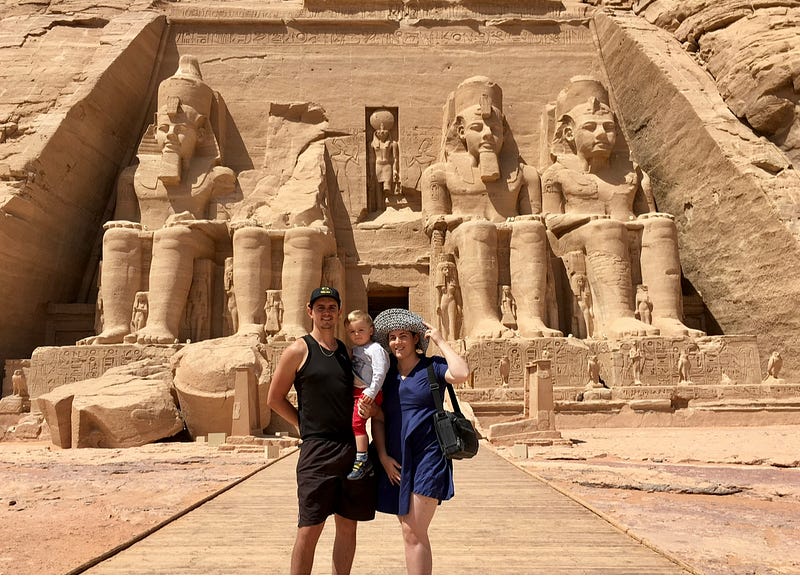
From our visit to Egypt, for example, our kids learnt about the history, mythology and culture of the ancient Egyptians — with the walls of our home now covered with pictures of the temples we explored.
They’ve learnt about archeology, Egyptology, anthropology — how early writing systems were formed and where and how human civilisations developed.
Interest in topics like ancient Mesopotamia, the Suez Canal, the relevance of Egypt to WWII history, and why countries like Egypt are so poor compared to the part of the world we’re from, have all been part of this picture.
A world globe looks different for our children compared to many, because there is a real life dimension to what we talk about when we explore our globe.
Another benefit of travel is the ability to connect with people from different backgrounds and cultures.
Our children played with and made friends with local kids in many of the places we’ve visited, and they’ve learned so much about the way other people live, work, and play.
They’ve also learned about the importance of respecting cultural differences and embracing diversity.
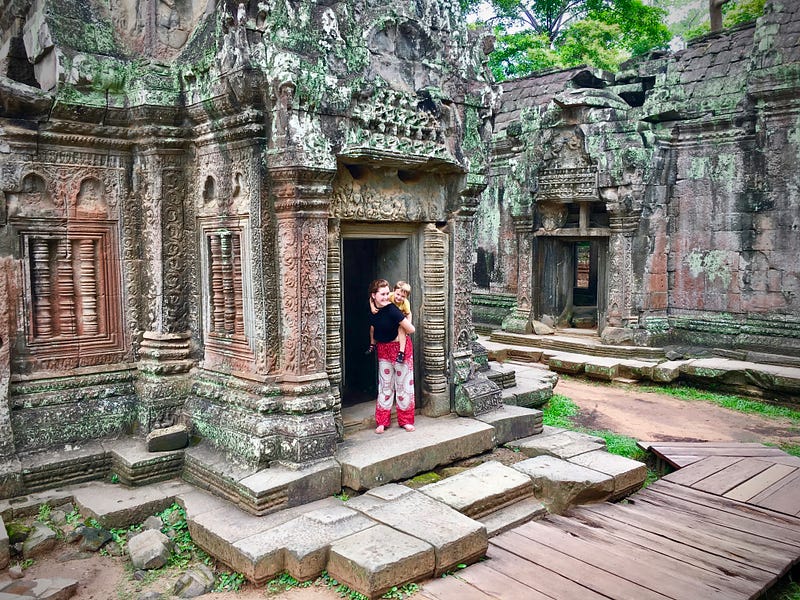
One of our most extended trips was the six months backpacking we did around Southeast Asia, with a large portion of our time spent in Siem Reap, Cambodia and Luang Prabang in Laos.
Our children explored the extensive and fascinating temples of Angkor Wat and beyond and learned about the history of the Khmer Empire.
They also got to see firsthand how people in Southeast Asia live and work — exploring places like the floating villages of the Tonal Sap, where more than a million people live on stilt or floating houses on the lake.
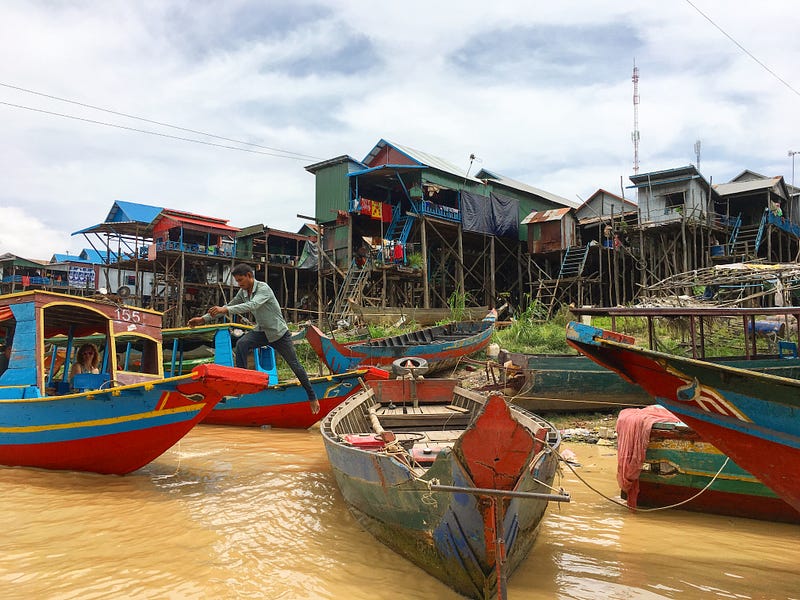
Again of course, we had to work while pursuing these travels — during the work week one of us would inevitably be on a laptop while the other was off doing stuff with the kids — but we had the privilege of learning and seeing the world from another perspective.
We were able to live off just a few hundred dollars a week too — our kids experienced buying street foods every day for a dollar, and learned bits of the local languages in the places we stayed for extended periods.
Writing about it now, I’m eager for us to get back to such adventures once more!
Travel has been an incredible tool for unschooling our children.
They’ve been able to learn in a way that’s exciting and engaging, and they’ve developed a love of learning that will stay with them for the rest of their lives.
Unschooling and Family Life
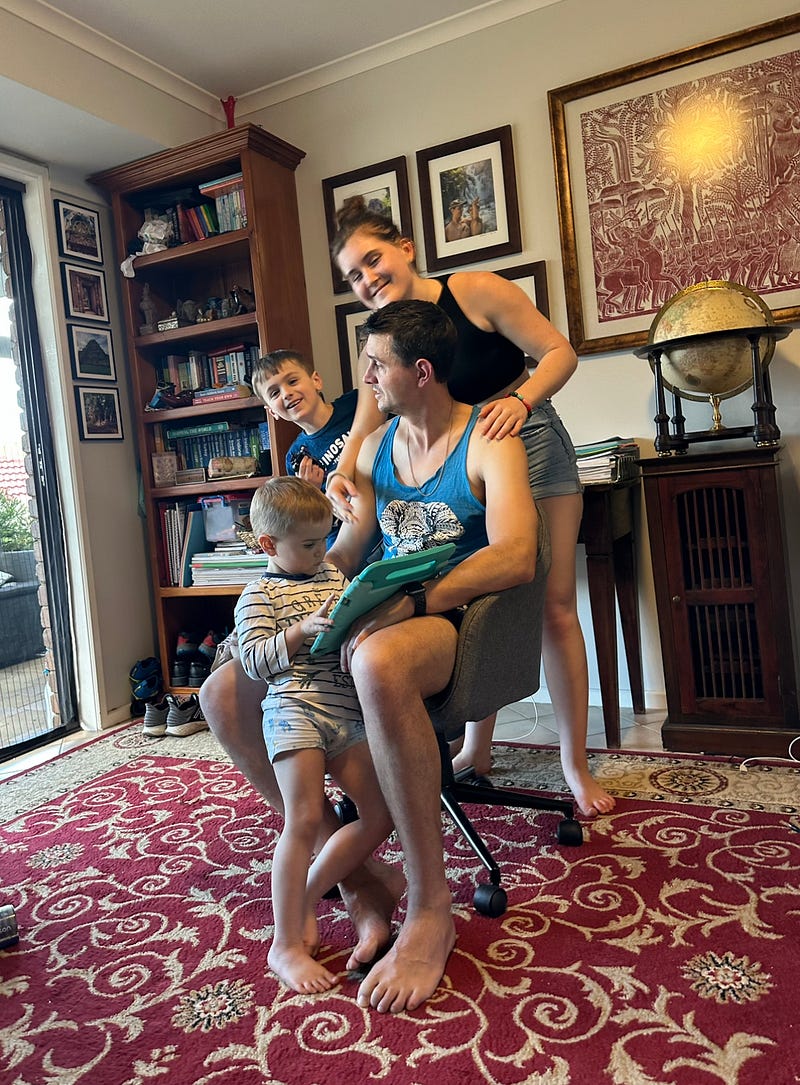
Unschooling has had a significant impact on our family life.
Our family’s daily routine today is fluid and flexible — quite distinctly different to the days when I was a (more than) full time working professional.
Today, our family life and children’s interests and passions sit at the forefront of how we live and make decisions.
We’ve found that our family has grown closer as a result, with family time remaining a top priority.
For example, we make a point of getting out all together every weekend that we can manage.
We also go camping together regularly, and have made it a habit to have regular family game nights — playing board games or cards together —with these simple moments creating lasting memories and helping us to build a strong family bond.
Our daughter, who currently lives in a different city to us (for a couple more months only hopefully!), still messages or phones most days, often for an hour or more at a time.
Parenting doesn’t stop when they’re grown and I love the way this lifestyle has kept her close, even as she has gone off to make her own mark on the world independently from us.
Cultivating Deeper Passions & Interests
One of the other significant benefits of unschooling is the ability to pursue interests and passions on a deep level.
For example, our 7-year old has an absolute passion for animals, and we’ve been able to cultivate that passion by visiting zoos and regularly exploring wildlife reserves.
On many a nature walk, we’ve collected different spiders or insects for him to take back and make a home for, often leading to research online and much discussion.
One of our big projects last year was on Australia’s venomous spiders, and alongside reading books and watching YouTube videos, we built a wooden spider model too.
A running joke after that was our littlest one (aged all of 3), running for our spider book to identify whatever the latest one was that he’d found in our garden that day.
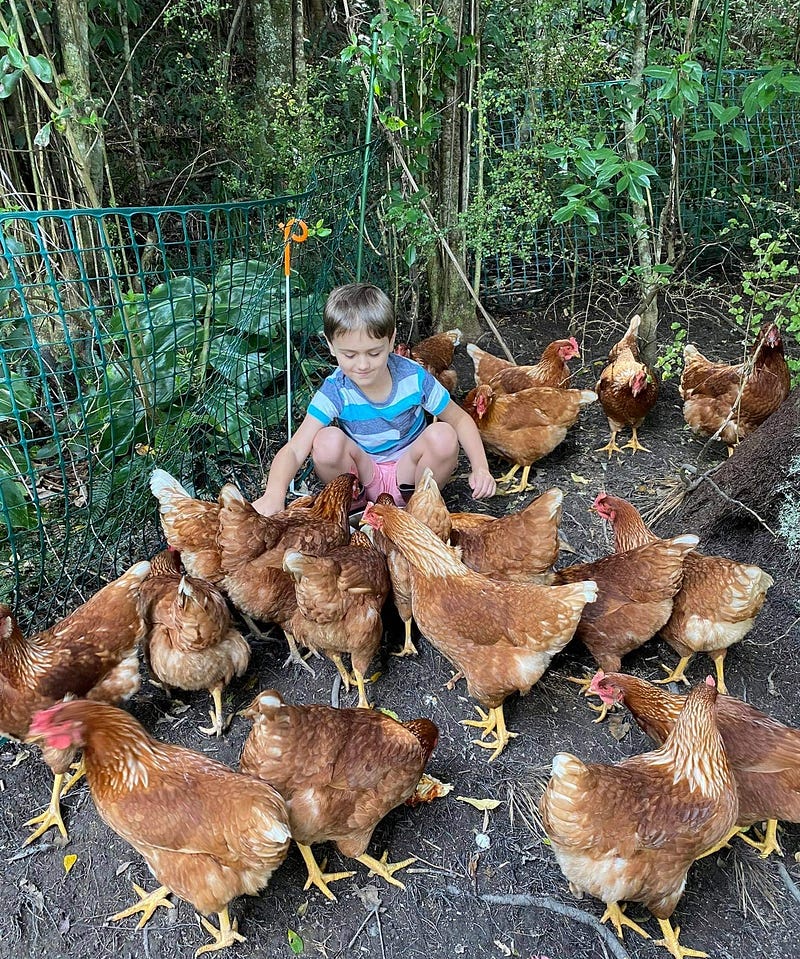
We also adopted guinea pigs and chickens, which led my son down the rabbit hole to countless hours researching and learning about his pets, from how to care for them, their natural habitats to their nutritional needs and even their genetics.
Coming out of these topics has then also been discussion on evolution, with connections made about how our world (and the animals on it!), have come to be as they are today.
From there, we’ve then also gone down the path to discussions on sustainability and climate change — with frank honesty and avoiding the adult anxiety that often attaches to such topics.
The flexibility of unschooling has allowed us to integrate our children’s passions into our daily lives, and allowed us to keep those connections and communications open in a way that is just not possible where kids spend most of their lives in school or other people’s care.
Unschooling and Technology
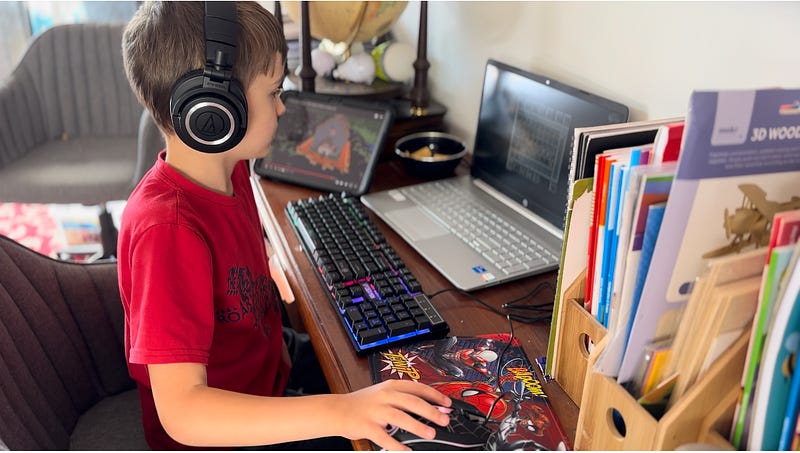
Technology is a big part of our unschooling journey, especially for my three boys — they absolutely love both Minecraft and Roblox, and can spend hours building, creating, and exploring.
It’s amazing to see the co-operative play between themselves, as they work together to create new worlds, often alongside friends on their networks too.
But what’s even more impressive is the creative thinking that these games have helped to foster in them, which they then also apply to the real world too.
Spending hours designing and constructing elaborate structures and cities in Minecraft, for example, helps develop spatial awareness and problem-solving skills. We then see these skills reflected in many of our kids other projects.
We’ve found that technology can be an incredibly useful tool in supporting our children’s learning, allowing them to access a wealth of information and resources that they may not have been able to otherwise too.
For example, my oldest daughter used online correspondence schooling to complete her university entrance requirements while we were travelling, which gave her the flexibility to learn while still being able to explore and enjoy our travels.
Similarly, my youngest son’s love of animals has been greatly nurtured through the wealth of online resources available on the subject — we have spent endless hours googling and exploring on YouTube.
Of course, there are also potential drawbacks to technology in unschooling, and addiction has been an issue at different points in our journey.
It is important to find a balance, ensuring that our children aren’t spending too much time in front of screens.
We’ve found that limiting tech use to the afternoons, for example, often after we’ve been out and about, gives us this balance.
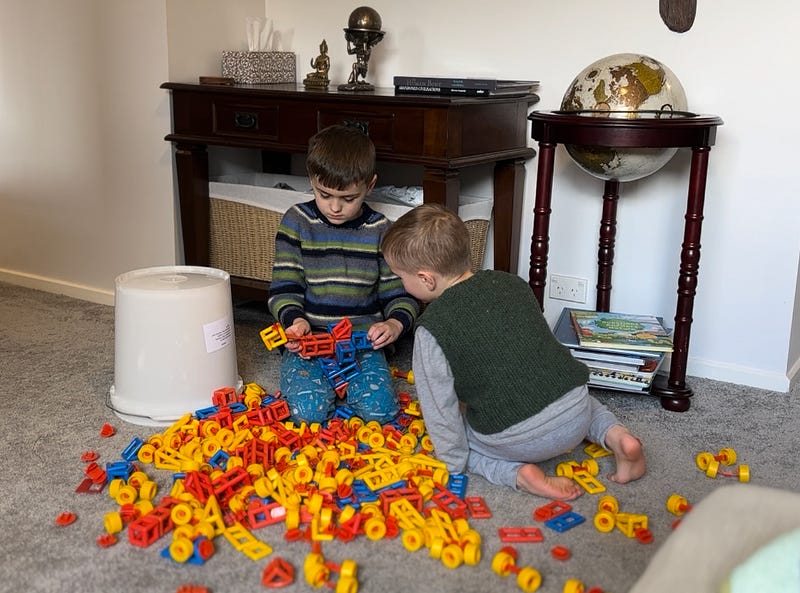
Our boys tend to play co-operatively in the mornings, building forts or with one of their many varieties of blocks, or working on projects or art (we have a bookshelf of different mediums for this, with different kinds of paints, paint sticks, pastels, pencils, crayons, clay, play doh, etc.).
Sometimes they even let me read to them (ha!), or we’ll have discussions based around our world globe.
We’re also outside as much as possible — at a playground or park, homeschool meets, or the tramp park.
Finding the balance is the important bit. Our kids love their tech and that’s where the world is going.
Balancing with other opportunities is how we manage it.
Unschooling and Community
Unschooling is often seen as an isolated choice, but it has actually connected us to a wider community of like-minded families who share our values and approach to education.
We attend local unschool and homeschool meets, which provide a space for our kids to connect with others, make new friends, and participate in group activities.
In addition to attending meetups, we also make good use of local resources, visiting local museums, libraries, playgrounds, and exploring the natural environment around us.
Our kids are able to pursue their interests with the guidance of local experts and professionals, and they’ve had opportunities to participate in everything from art classes to coding workshops.
One of the most exciting aspects of our community involvement has been watching our children build strong connections with other like-minded families at our local tramp park.
Our boys have made friendships with both the floor staff and other regulars, and the opportunity for free play and exercise has been invaluable to their physical and social development.
In addition to the tramp park, our family also participate in Scouting, where our boys have learned valuable skills like knot-tying, first aid, and wilderness survival.
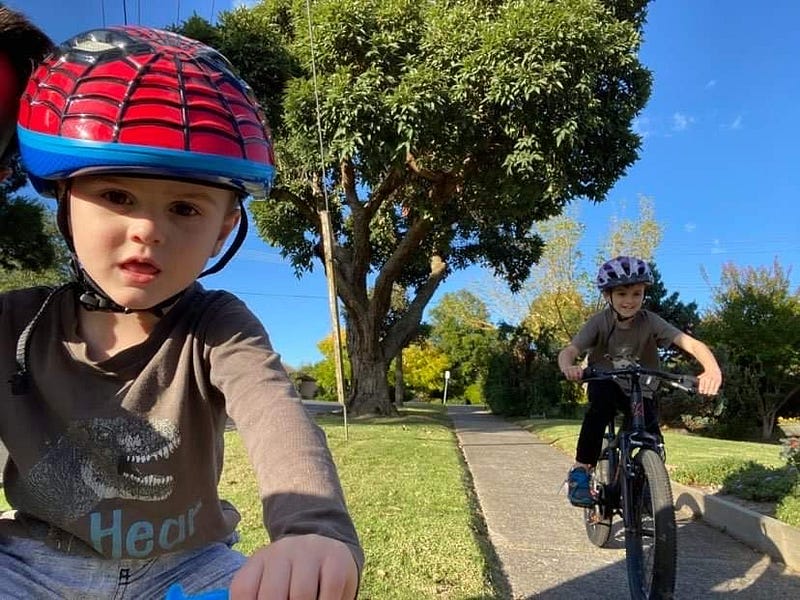
They’ve also had the chance to explore different sports programs, including soccer and basketball, alongside their weekly bike rides.
Unschooling and Personal Growth
Unschooling has not only benefited our children, but it has also greatly impacted our own personal growth and learning.
As we embarked on this journey, we had to challenge and reexamine many of our own assumptions about education and parenting.
We’ve read A LOT!
We also had to let go of the idea that we knew best and learn to trust in our children’s innate abilities to learn and grow.
Through unschooling, we’ve learned to be more flexible and adaptable to changing circumstances, which has allowed us to better navigate the ups and downs of life.
We’ve also become more self-reflective, regularly examining our own values and beliefs, and learning to be more open-minded.
Learning alongside our children has been a rewarding experience, and we’ve been amazed at how much we’ve learned through their own pursuits and interests.
For example, we’ve become experts in guinea pig and chicken care, thanks to our youngest child’s passion for animals.
We’ve also learned about new technologies and online communities, and their value to our boys learning and play, thanks to our boys’ love for Minecraft and Roblox.
Perhaps one of the most profound impacts of unschooling has been the broadening of our worldview and the opening up of opportunities for personal growth.
Traveling around the world and experiencing different cultures has allowed us to gain a deeper appreciation for diversity and has challenged our own cultural biases.
And all through this, our connections with our four wonderful children have only been strengthened by the experience.
Looking back on our unschooling journey, we can confidently say that it has been one of the best decisions we’ve ever made for our family.
Not only has it given our children the opportunity to pursue their passions and interests in a way that traditional schooling could never provide, but it has also brought our family closer together and allowed us to prioritise our family life and values.
Through unschooling, our children have developed self-directed learning skills, critical thinking, and a love for lifelong learning.
They have explored the world, connected with their community, and developed a deep sense of independence and responsibility.
Unschooling has also been a transformative experience for my husband and I.
We’ve learned so much alongside our children and have been able to broaden our worldview in ways that we never thought possible.
We’ve discovered new interests and passions, challenged our own assumptions and biases, and developed a greater appreciation for the joys of living in the present moment.
We know that unschooling isn’t for everyone, and we don’t claim to have all the answers. But we encourage readers to consider it as a viable option for their own families.
If you’re looking for an alternative to traditional schooling that values creativity, flexibility, and personal growth, then unschooling might be the perfect fit.
In the end, our unschooling journey has taught us that the most important thing is to follow our hearts, prioritise our values, and never stop learning.
We feel blessed to have had this opportunity, and we can’t wait to see where it takes us next.