Why Traveling the World Can’t Replace the Depths of a Good Book
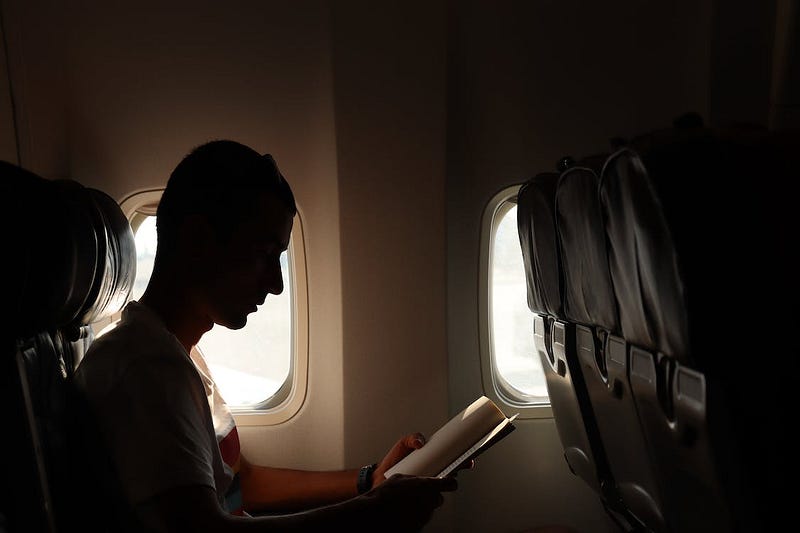
Imagine standing atop the Eiffel Tower, feeling the brisk Parisian wind sweep across your face, or walking through the bustling streets of Tokyo as neon signs and exotic aromas whirl around you. Now, imagine being transported to a distant planet, feeling the weightlessness of zero gravity, or navigating the intricate politics and romances of a fictional 18th-century court. The former can be experienced through travel; the latter, only through the depths of a good book.
An age-old adage says, “Travel broadens the mind.”
But as anyone who has dived into the world of literature knows, books can take you places that even the most extensive travel itinerary can’t reach.
Books have the uncanny ability to transport readers to worlds unbounded by time, space, or physics. While traveling offers firsthand experiences, literature dives deep into unreachable realms. Books transcend the tangible confines of our reality, whether the futuristic societies in the sci-fi genre, the magical realms of fantasy, or the deep dives into the human psyche in psychological thrillers.
No matter how expansive, travel remains restricted to the known physical universe. But books? They journey into the depths of imagination, often introducing us to concepts and places we’d never have dreamed possible.
Travel undoubtedly provides diverse cultural experiences, but books offer profound emotional connections. They introduce us to characters from various walks of life, giving readers an intimate look into their thoughts, fears, dreams, and desires. Throughout several hundred pages, we grow with them, hurt with them, and celebrate their triumphs.
Our interactions with locals are often limited and superficial when we travel due to language barriers and time constraints. In contrast, literature provides a deep, unfiltered perspective into the human experience, fostering empathy in ways travel cannot.
Your passport can get you into many countries, but there’s one frontier it can’t breach: time. Books serve as time machines, allowing us to experience the Victorian era, Ancient Rome, or prehistoric times. Through literature, we can intimately understand the nuances, the struggles, and the joys of a time gone by.
Travel can take you to Rome’s Colosseum. Still, a historical novel can make you feel the tension in the air as a gladiator step onto the sand, hear the crowd’s roar, and understand the societal dynamics that led to such brutal entertainment.
Cost and Accessibility
Let’s face it: Traveling can be expensive. Only some have the means or the ability to jet-set around the globe. However, books are widely accessible, often available in libraries for free or at a fraction of the cost of a plane ticket. In literature, the richness of experience isn’t dictated by one’s bank account.
A journey might last a week, a month, or even a year. The memories, though beautiful, may fade with time. But the impact of a good book lingers. It shapes our beliefs, influences our decisions, and sometimes redefines our perspective on life. The teachings of a book, its dialogues, and its moral dilemmas become an integral part of our psyche, something that a fleeting vacation might not accomplish.
The Immersive Detail of Narration
One thing that sets books apart is the detailed narration. While traveling, you may walk past an ancient structure and marvel at its magnificence, reading a short description on a tourist placard. But in books, you don’t just see the system; you often learn about the people who built it, their motivations, the challenges they faced, the sacrifices they made, and the cultural and historical significance of their work. This narrative depth can provide an emotional and intellectual connection to places and events that are hard to achieve through travel alone.
Travel can undoubtedly lead to self-growth, pushing individuals out of their comfort zones and demanding adaptability. However, books often profoundly challenge our internal beliefs, values, and biases. Reading can force introspection and self-examination, encouraging readers to question their moral compass when faced with the dilemmas presented in stories.
Limitations of Physical Travel
While travel allows you to touch, smell, and see the world, it also has constraints. Some parts of the world are too dangerous to visit, places forbidden to tourists, and regions too remote for most to reach. Books, however, are bound by no such restrictions. Through the written word, you can journey to the smallest, most mysterious, or dangerous places on Earth — and beyond — without leaving your chair.
Travel experiences, once passed, live on mostly in memory and photographs. But a book? You can revisit it time and again. Characters that become like old friends, fictional locales that feel like a second home, and tales that provide comfort can all be experienced repeatedly. Every time you reread a cherished book, you might discover something new, something you didn’t notice before, and it’s akin to reliving a treasured journey.
Traveling the world is an enriching experience, offering new sights, sounds, tastes, and perspectives. It’s a sensory overload, a real-time exploration of the vastness of our planet. But it’s essential to recognize that while travel can stretch our horizons, books deepen them. They take us into the vast oceans of human emotions, the intricacies of diverse cultures, and the boundless expanse of imagination.
So, pick up a book the next time the travel bug bites you but can’t take off. Dive into its depths and discover realms even the most seasoned traveler can’t chart.
In a world where experiences are often weighed by their Instagram worthiness, let’s remember the invaluable, transformative power of a good book.
In the end, as the famous saying goes, “The world is a book, and those who do not travel read only a page.”
But remember, even within that single page, depths await exploring.
Thanks for taking the time to read. I’d like to hear your perspective.
You can also refer to the related articles:
Italy Is the Italy of Your Imagination
Unveiling the Land that Outshines Your Imagination
medium.com
Please subscribe here to receive the latest insightful stories by email.
Did you find this enjoyable? If so, remember to hit the clap button, which you can press up to 50 times and comment. Take advantage of more from me — ensure you’re following if you still need to. Thank you for being an integral part of my journey.