
Breaking Barriers
Everyone Deserves a Holiday
Making Tourism Accessible for People with Disabilities
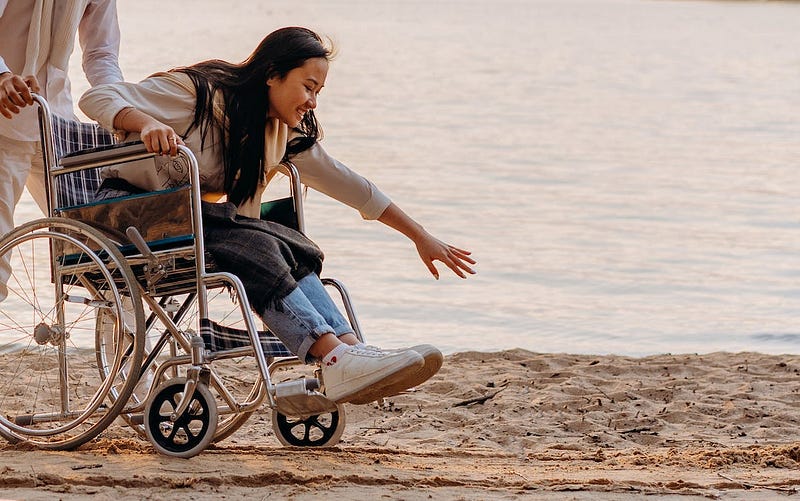
The world is an open book filled with vibrant cultures, awe-inspiring landscapes, and cities buzzing with life. Traveling unravels this book, presenting an opportunity to learn, grow, and build lasting memories. Yet, despite the universal human yearning for exploration, tourism is not equally accessible to everyone. People with disabilities often face hurdles that prevent them from fully participating in this global conversation.
Imagine feeling the worn stones beneath your fingers at the base of the majestic Great Pyramid of Giza. Or tasting the salty air as you sail around the iconic Sydney Opera House. These experiences are not merely luxuries but essential aspects of human connection and understanding. Everyone deserves a holiday, and it’s high time we prioritized making tourism more accessible to people with disabilities.
Building a World That Welcomes All
The journey to an inclusive travel industry starts with infrastructure. Accessibility doesn’t just mean adding a ramp to a hotel entrance or having braille on a museum brochure. It extends beyond the physical and delves into information, communication, and attitudes.
When discussing accessible tourism, we’re not just about wheelchair accessibility. We’re discussing inclusivity for all disabilities — physical, sensory, cognitive, or psychological. It’s about ensuring that the deaf traveler can enjoy a guided tour with the help of a sign language interpreter or that a person with autism can easily navigate a bustling airport.
Spotlight on Success Stories
Places are making commendable strides toward becoming more inclusive. Barcelona, for instance, is known for its accessible public transport, hotels, and attractions, like the iconic Sagrada Familia, which offers tactile models for the visually impaired.
Similarly, Yosemite National Park in the U.S. has integrated a comprehensive accessibility plan that offers wheelchair-accessible trails and picnic areas, sign language interpreters, and camping sites for the visually and hearing-impaired.
The New Frontier of Accessibility
As we advance technologically, we also unlock new possibilities for accessible tourism. Augmented Reality (AR) can bring to life the tales of ancient ruins for a visually impaired tourist, while AI-powered apps can transform smartphone images into descriptive narratives.
Innovation and accessibility have converged spectacularly with the development of the graphical braille e-reader. This allows users to download and ‘read’ maps, graphics, and illustrations by touch. A person with visual impairment can now explore a city with a detailed tactile map at their fingertips.
A Call to the Industry
The tourism industry needs to view accessibility not as a burdensome regulation but as an opportunity to reach a wider audience. Disabled travelers are a significant market segment, with an estimated spending power of over $17 billion annually, per the Open Doors Organization.
Moreover, fostering inclusivity isn’t just about attracting more customers — it’s about creating a world that celebrates diversity. It’s about understanding that when we design for disability, we all benefit.
The Role of Legislation and Policy
Government policy and legislation play a pivotal role in making tourism more accessible. For instance, in the U.S., the Americans with Disabilities Act (ADA) mandates businesses to make their establishments accessible to people with disabilities. However, these laws are not uniformly implemented worldwide, and their absence in many countries can often leave accessibility overlooked.
Legislation should not only enforce physical accessibility but also demand that travel-related websites, booking systems, and other digital resources are accessible to people with visual or hearing impairments. This includes providing closed captions for videos, screen-reader-friendly web content, and ensuring online booking processes are accessible to all.
The Economic Potential of Accessible Tourism
There’s a profound economic argument for accessible tourism. As of March 2023, The World Health Organization estimates that 16% of the global population has some form of disability. That’s a staggering 1.3 billion people. With aging populations in many parts of the world, the number of people who experience difficulty in movement is expected to rise.
According to the American Institutes for Research, the discretionary income for working-age people with disabilities is about $21 billion. That’s an enormous market that’s largely untapped. Businesses need to make their services inclusive to ensure companies can achieve a substantial revenue stream.
Training and Awareness
Education is critical in the push for greater accessibility. Those working in the tourism sector need training to understand the diverse needs of travelers with disabilities and to provide them with positive and respectful service.
Meanwhile, awareness campaigns can enlighten the public about the importance of inclusive tourism. For example, the annual World Tourism Day could be leveraged to promote accessible practices and celebrate success stories.
The Transformative Power of Travel
Travel has transformative power. It can broaden our perspectives, make us more open-minded, and foster a greater sense of empathy. When we make tourism accessible to all, we’re not just expanding market opportunities. We’re enabling more individuals to share their unique experiences and perspectives, enriching the global conversation.
Everyone deserves a holiday and has a role in making this a reality. Whether you’re a policymaker, a city planner, a tour operator, or an avid traveler, you can contribute to making the world more inclusive.
Towards a Future of Equal Exploration
Progress, though noticeable, is slow. For every accessible hotel or museum, countless others remain inaccessible. It’s not just about individual establishments becoming accessible but about transforming the mindset of the entire Industry. The focus should be on ‘universal design’ — creating environments all people can access, understand, and use to the greatest extent possible.
Imagine a world where a wheelchair user can roll smoothly along the cobblestones of an ancient European city or a visually impaired person can enjoy the narratives of a guided tour through their headphones. Imagine a world where everyone can savor the joy of discovery.
Travel should not be a privilege afforded only to some. Instead, it should be a right enjoyed by all. Everyone deserves a holiday. And it’s our responsibility to ensure that the world becomes a place where everyone can satisfy their wanderlust regardless of their abilities.
By raising awareness, adopting inclusive practices, and harnessing technology, we can unlock the world’s beauty for everyone. It’s time we turned the page to a new chapter in tourism — one where everyone gets their day in the sun.
Thanks for taking the time to read. I’d like to hear your perspective.
You can also refer to the related articles:
Italy Is the Italy of Your Imagination
Unveiling the Land that Outshines Your Imagination
medium.com
Please subscribe here to receive the latest insightful stories by email.
Did you find this enjoyable? If so, remember to hit the clap button, which you can press up to 50 times and comment. Take advantage of more from me — ensure you’re following if you still need to. Thank you for being an integral part of my journey.