
Why Social Rejection and Loss Cause Pain
Did You Know that Aspirin Can Actually Help?
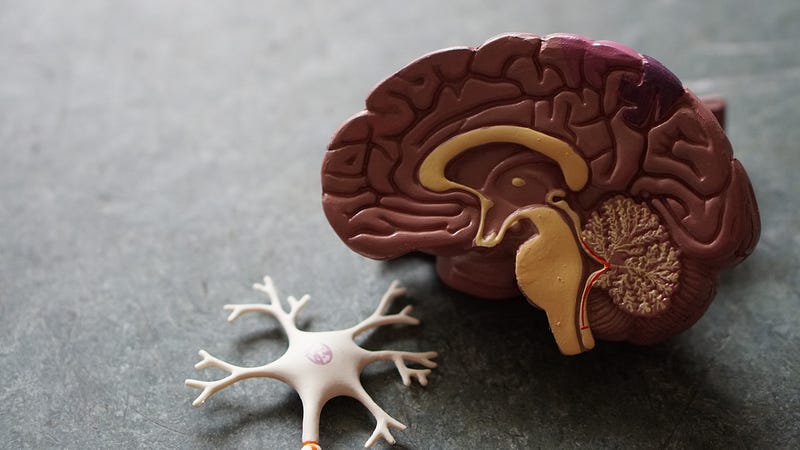
Have you ever said that someone “broke your heart” or “hurt your feelings?”
These metaphors are closer to the truth than you might realize. It turns out that our brains react the same way to social pain as physical pain. The very same neuro-circuitry is used to process social rejection and loss.
Before we talk about the unexpected benefits of Aspirin, let’s take a few steps back and dig into some background. I’ll try to keep it simple, but we are talking neuroscience here.
As an extremely social species, human beings must manage the impact of negative social experiences all day, every day. Any text, email, or glance from a coworker or sigh from a stranger has the potential to leave you with negative feelings — ranging from rejection to guilt, shame, disappointment, anxiety, depression, and dejection.
In “Guilt, Shame and Anxiety,” Dr. Peter Breggin explains the evolutionary biology theory that our negative legacy emotions were selected during evolution to enable human beings to function productively together — specifically to put aside our selfish impulses in the interest of the common good. As the theory goes, these negative emotions both inhibited us from being violent towards our own kind and supported our social tendencies to raise helpless babies, protect others from predators and collaborate productively as a collective unit.
What does evolutionary biology have to do with neuroscience?
Human survival relied in part on our social status and inclusion within a larger community, and our brains developed in such a way that we would be strongly affected by negative social occurrences. In other words, our brains evolved to make us feel uncomfortable (through guilt, shame, or anxiety) when we were in poor standing — so that we would be more motivated to get back in the good graces of others.
Words Can Never Hurt Me?
Remember the old adage “Sticks and stones can break my bones / But words will never hurt me?” While intended as a catchy mental defense to childhood bullying and name-calling, the adage definitely missed the mark, as emotional wounds can do lasting damage.
If you’re like me, I’m sure that you still have quite a number of emotional scars from elementary school or high school lingering in the back of your mind. As I later realized in therapy, many of those experiences had quite an impact upon the person I ultimately became.
“Our sensitivity to social rejection is so central to our well-being that our brains treat it like a painful event, whether the instance of social rejection matters or not,” writes Psychologist and Social Neuroscientist Matthew Lieberman in “Social: Why Our Brains Are Wired to Connect.”
Lieberman explains that the connection between social pain and physical pain was first hypothesized by influential Affective Neuroscientist Jaak Panksepp in 1978. Panksepp noticed that infant mammals separated from their caregivers experienced “drug withdrawal-like pain, whereas reconnection acted as a painkiller. Additionally, infants and caregivers show a reciprocal devotion that fits the description of addiction.”
Lieberman has been studying social pain for decades with his wife and Psychologist Naomi Eisenberger. They designed a study to test the pain of social rejection, using a game called Cyberball. While sitting in an fMRI machine, study participants begin tossing a virtual ball back and forth with two other players (that are actually simulated avatars), and then, suddenly, the two other players exclude the participant in the game.
The neuroscientist couple chose to measure an outer layer of the brain called the Dorsal Anterior Cingulate Cortex (dACC), which is a neural adaptation that distinguishes mammals from reptiles. Neuroscientists had already proven that the dACC becomes active when humans experience physical pain and during infant-caregiver attachment behavior in nonhuman mammals.
When their subjects came out of the fMRI machine, they would often express their sadness or anger about their exclusion in the game. The greater the distress patients reported, the more active their dACC became. Subjects who reported less social distress exhibited less dACC activation and more activation in their right ventrolateral prefrontal cortex (VLPFC), which is associated with control.
Their study was the first to demonstrate that when humans experience more pain, their dACC becomes more active — for both physical pain and social pain. Lieberman and Eisenberger proposed that the dACC acts essentially as an alarm system for pain that both detects the problem and sounds the alarm.
“This is precisely what emotions do for each of us,” explains Lieberman. “The conscious distress of physical pain motivates us to take our hand off the stove; the pain of social exclusion motivates us to work to reconnect with others.”
A Tylenol a Day Keeps the Heartache Away?
Subsequent studies further examined the neural alignment between physical pain and social pain by testing the effectiveness of standard over-the-counter pain medication in instances of social distress.
One study examined patients experiencing grief from the death of a loved one, a breakup, a negative review, or disapproving faces. The other study was another version of the Cyberball study. In both, half of the patients took a placebo and half took 1000 mg of acetaminophen (i.e. Tylenol) every day for three weeks.
While neither group knew what they were taking, the studies both revealed substantial differences between the groups. In the first study, the Tylenol patients reported significantly less social pain in questionnaires. In the second study, the Tylenol patients’ fMRI scans revealed much lower dACC activity.
“Taking the painkiller we reach for to make a headache go away seems to help make our feelings of heartache go away too,” writes Lieberman. “To see these drugs diminishing our social pain, as well as physical pain, speaks strongly to the connection between the two kinds of pain.”
If you’ve ever wondered why you sometimes get so upset by the rejection of others and even minor social slights, now you know that our brains are simply hardwired to feel negative social interactions intensely. You can blame our evolutionary need to be social.
So, before you act mean to someone else in the future, try asking yourself if you really want to physically harm them — because what you’re about to do isn’t all that far off.
If you liked that, you might like these — but no pressure.