
CULTURE|SOCIETY
Why So Many People Feel Like Outsiders in Japan
The origin of collectivism and individualism secretly embraced by many
In February 2023, a snowy town in Fukui suddenly made news headlines. The government of Ikeda Town had published ‘The 7 Rules of Life in Ikeda’ in its promotional pamphlet, and these rules laid down by the town committee made people across Japan frown.
The controversial 7 rules included very specific suggestions for how to fit into the town¹:
- Cooperate with frequent local events and responsibilities which you may not have encountered in big cities.
- Don’t impose your values on others. Don’t act like city-dwellers.
- Be patient even if you feel subjected to the scrutiny of people in the village. Though you may find it invasive of your privacy, this is the way people welcome you.
With heated debate online, the town office explained that they should have made their intention clearer to ask for a better understanding of local customs among new settlers.
The Origin of the Strong Sense of Collectivism in Japan
It’s a well-known saying in Japan that ‘the nail that sticks out gets hammered down’. The example of Ikeda Town might be extreme, but the pervasiveness of peer pressure in any Japanese community is palpable throughout the country.
Japanese people are overly concerned with sticking out in any group. As a result, people continue wearing masks even though health guidelines no longer require them, at least outside. Office workers remain quiet at meetings and stay late at the office as long as their supervisors are there, even if they’ve completed their work for the day. Fewer entrepreneurs reach the same bar of success compared to other Asian countries.
According to an expert, one of the reasons people hold onto this collectivism is the remnant of the agricultural society in villages long ago. Labor-intensive work such as rice planting and harvesting needed villagers to help each other, each farmhouse taking turns².
This explains why skipping local festivals and snow shoveling can cause fatal damage to your reputation in a small town even today, especially in aging communities like Ikeda. The residents of Ikeda Town clean up rivers and practice using fire extinguishers together while organizing seasonal festivals. They withstand both ups and downs as a group to sustain their community.
The Widening Cultural Gap in Japan
However, these rules can be staggeringly complex for people used to living in big cities. Many city residents live in apartments where they don’t even know the names of their neighbors. They don’t need to foster a sense of collectivism to throw their garbage in the designated area of the building any time of the day, and they can attend local festivals as visitors instead of having to organize the event themselves thanks to funding from the local government.
Affordable rent and a quiet life amidst nature may attract burnt-out younger people, which is the actual trend in Tokyo, but life in rural areas isn’t completely peaceful either, with nosy neighbors and a long list of to-dos that requires active participation. Indeed, it is not uncommon for Japanese people to feel like outsiders in their home country, particularly when confronted with the cultural gap between rural areas and well-engineered cities.
How People Feel Like Outsiders in Big Cities
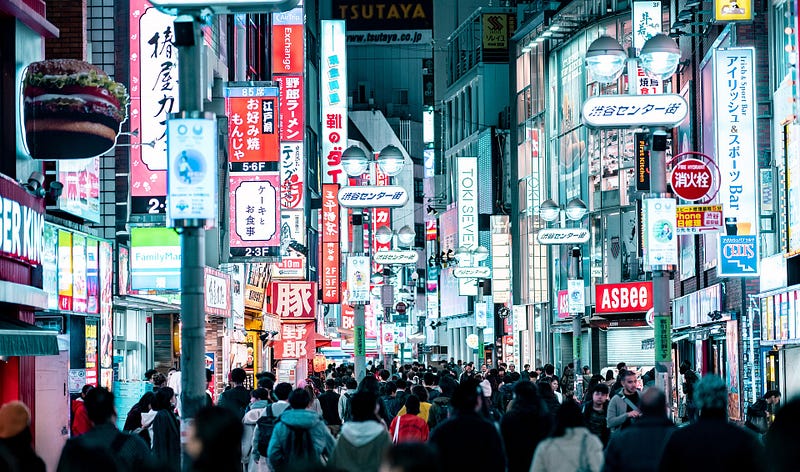
If you have lived in a densely populated area of Japan, you may want to claim that you still feel like an outsider, unable to blend in with the crowds that crisscross Shibuya crossing.
Undeniably, what distinguishes an outsider in Japan is not limited to the cultural gap. Noticeable physical traits, religion, or language automatically give one a tag of foreigner—the word so many non-Japanese residents dislike—gaijin.
Despite my Japanese ethnicity, I have experienced numerous awkward moments in Tokyo. For instance, if my bilingual child speaks to me in English in public, I experience the feeling of being gaijin due to people’s attention. It’s worse in a confined space such as a pediatrician’s waiting room. When parents glare at us, I feel like asking them, Would you like to join us? though I have yet to make that bold move.
The Hidden Voices of Individualism in a Harmonious Country
Now you may assume Japan is a perfectly attuned country where you can’t settle easily, but the reality is unfathomably convoluted.
One survey offers an intriguing result: 90% of Japanese people answer that the Japanese are collectivistic. On the other hand, 50% believe they personally are individualists³. How is that possible?
This suggests many people find collectivistic customs stifling. I also firmly consider myself an individualist, but I still wear a mask and endure the endless barrage of texts from fellow moms, muting the chat rather than leaving the group. I don’t mind being labeled as an outlier, but I keep my politeness around my family to help them navigate their social interactions smoothly.
The 7 rules of Ikeda Town could be intimidating, but if you take a deep dive into any Japanese community, you’ll find each alluring and multi-layered individual, though it may take some time for people to open up to you about their true feelings.
Just be careful not to wear too fashionable attire in a small village in Japan. Your OOTD may become the subject of gossip among locals. Shibuya Crossing will be a better location for your Insta-worthy selfies.
Sources:
¹ 産経新聞, ² Yahoo! Japan News, ³東洋経済
If you enjoyed this article, follow Yuko to read more stories like this. She’s currently writing her debut novel set in Japan.
You can also subscribe from the referral link, which Medium uses a portion from followers for author support without any additional cost. Mediumの購読はこちらからどうぞ。


