
#FINLAND #RUSSIA #HISTORY
Why Russia Wanted to Russify Finland
During the Russian rule, Finland underwent significant economic and political reforms
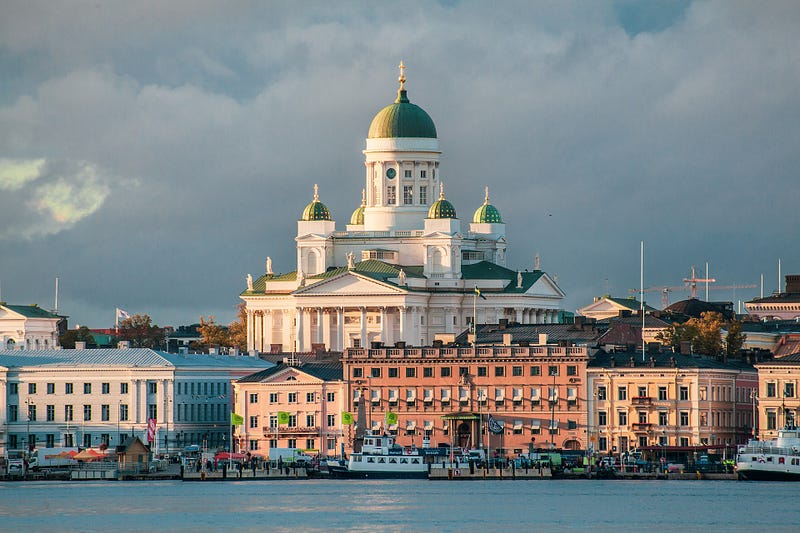
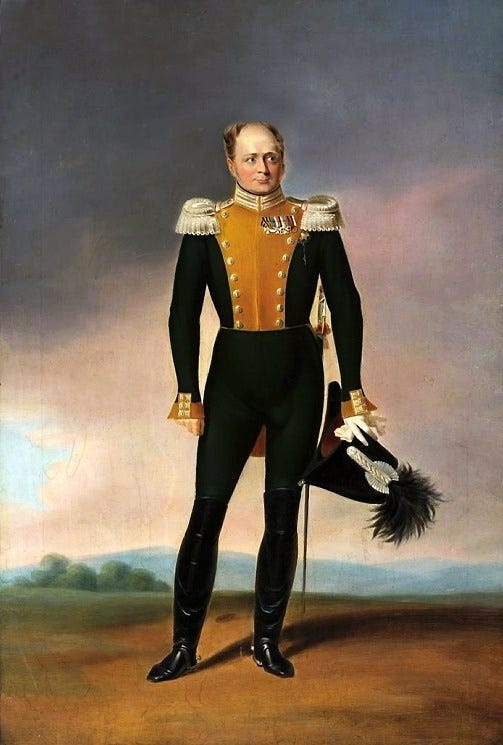
As the Grand Duke of Finland, Alexander I was generous.
He adhered to a policy of benevolence to rule the grand duchy. He also allowed Finland to have strong, wide-ranging autonomies after separating it from the Swedish kingdom in 1809.
That year, during the closing session of the Diet that met in Porvoo to discuss arrangements for the new union with the Russian Empire, he said:
“This brave and loyal people will bless the Providence that brought about its present condition. Placed henceforth in the ranks of the nations, governed by its own laws, it will remember the domination of the past only to cultivate friendly relations when these are restored through peace.”
The autonomy that Finns were granted extensively benefited them. Many of their own state institutions were formed in the subsequent years.
Nicholas I was not as much enthusiastic about Finland’s autonomy as his predecessor Alexander I, but still he decided to leave the Finns alone.
“It is my large Empire’s only province that has not caused me a minute of worry or dismay during my reign” were his words.
His successor Alexander II was considered a good Tsar by Finns. Alexander II played a role in expanding the Finnish autonomy.
Solidification of autonomy
During the Russian rule, Finland underwent significant economic and political reforms. Like other European economies at the time, it industrialised. The textile sector led the industrial revolution.
Finland got its own currency, markka, in 1860. Three years later, Alexander II decreed that Finnish would have the status equal to that of Swedish as an official language within 20 years.
By the 1880s, Finland became a quasi-state. It almost had it all — own Senate and Diet, currency, army, and laws — that were required to be a sovereign state.
The vital element that was missing was independence, although intense Finnish language nationalism during the second half of the nineteenth century would later prove to be a defining factor in gaining independence from Russia.
The Russians did not oppose Finland’s nationalism movement that aimed to elevate and establish Finnish language and culture. They thought seeds of nationalism would remove any possibility of the grand duchy reuniting with the Swedish realm.
In the late 1890s, however, the Tsarist authorities moved to initiate a set of measures that caused the Finnish autonomy to begin to crumble. Finns saw how these Russification policies were threatening what they had achieved culturally and politically over almost a century.
But what started in Finland was part of a larger story of aggressive Russification policies introduced in the 1860s to unify the Empire’s ethnically diverse populations under a common sense of Russian nationhood.
A threat to imperial unity
During the second half of the nineteenth century, Russia was concerned about the growing German influence in the Baltic lands. The right to self-determination also started taking root among the ethnic minorities in the Empire.
This triggered a potential threat of imperial disintegration. The Empire was seriously concerned about the security of its capital, Saint Petersburg. It thus wanted to centralise state power and what followed was Russification.
In Poland and Lithuania, Russification became intense after the 1863 Polish uprising. Estonia and Latvia experienced the worst Russification period between 1880 and 1890.
By Russifying the Baltic people, the Tsarist authorities wanted to ensure that the Germans could not establish dominance in that region.
Security concerns in the North
Finland, by 1890, was the only place that still had its autonomy intact. The Russian Empire then turned to it, shifting the security focus from the Baltic nations to central and north Europe.
Since the 1809 annexation to the Russian Empire, Finland had remained mostly peaceful and no war was fought there. But Germany’s rise as a unified nation state resulted in the growing need for security after 1890, which is why the Empire initiated Russification programmes in Finland.
Later on, it was the same reason — ensuring Leningrad’s security — why Soviet leader Joseph Stalin initiated the Winter War in 1939 when Finns were an independent nation.
Stalin thought he should take control of the Karelian Isthmus, a sparsely-populated Finnish terrain on the country’s eastern border, because the Germans might use it to attack Leningrad.
Clash of standpoints
From the Russian perspective, it made sense to Russify Finns because they viewed Finland in terms of security despite Alexander I’s promise to uphold Finland’s laws, religion, and governance.
But Finns thought their grand duchy was connected to the Empire based on law and morality. They believed they had maintained loyalty to the Tsar and were thus justifiably entitled to exercise their rights without any intervention.
The development of own institutions over the decades also gave them reasons to increasingly see Finland as a separate state that was only united with the Russian Empire.
But by the end of the nineteenth century, the dialogue between Finland and Russia indicated that the Tsarist government saw Finland as nothing more than an autonomous province within the Empire.
Russification mastermind killed
After Alexander III died in 1894, his son Nicholas II became the Tsar. Four years later, he appointed Nikolay Bobrikov as Finland’s Governor-General.
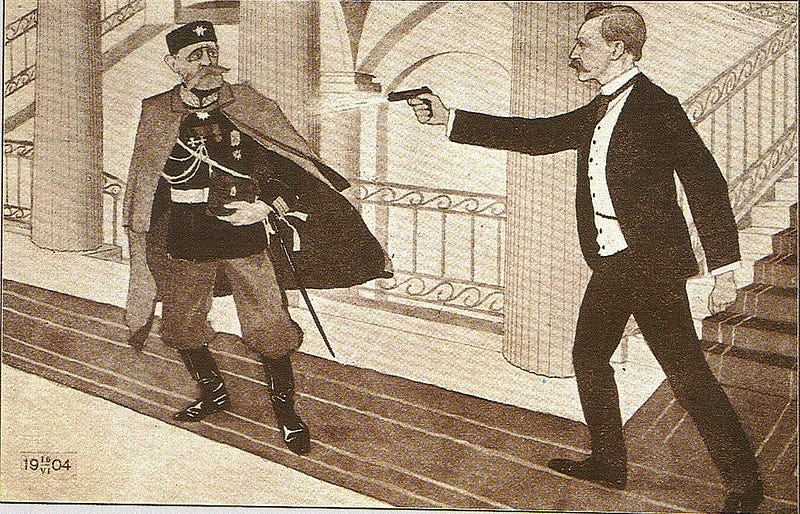
It was Bobrikov who orchestrated Finland’s Russification. Among other measures, he introduced Russian as the language of the Senate and reduced the Diet to a mere consultative assembly.
Finns became increasingly intolerant of his tyranny.
Eugen Schauman, a Swedish-speaking Finnish civil servant, assassinated Bobrikov in 1904 and later committed suicide.
Finland is a nation of readers. Here is how a 150-year-old novel made reading an integral component of the Finnish culture:
Finland and other Nordic nations have a high level of trust in their government and institutions. Here is how trust played a role in Finland’s handling of the Covid-19 pandemic: