Russia Doesn’t Care That Kazakhstan Stopped Exporting Iron Ore To Siberia — St. Petersburg International Economic Forum
I’m writing this story to share some of the latest effects from Russia’s war in Ukraine, mostly on what’s happening to relevant energy and commodities in Europe and Asia. I also want to take this time to introduce one of my latest Medium writings about The Indo-Pacific — A New Era of Adversarial Geopolitics.
I’m introducing that writing here to share with everyone how I feel about the trajectory of Russia-China-USA geopolitical competition going forward; it’s the importance of the maritime domain for the future of international conflict and dispute resolutions.
The Blame Games
On 18 May 2022 Kazakhstan’s largest iron-ore exporter and enricher, Sokolov-Sarybai Mining Production Association (SSGPO), decided to temporarily stop supplying Russia’s Magnitogorsk Iron and Steelworks (MMK) located in Siberia.
Russia’s MMK responded by blaming the situation on USA and Western sanctions.
Although the World Steel Association has projected low growth for steel demand, ~0.4% in 2022 with a rise of ~2.2% in 2023, the Short Range Outlook was compiled in response to an uncertain atmosphere as a result of geopolitcal tensions and China’s recovery from Covid-19 lockdowns in Shanghai.
Meanwhile, energy has taken the center stage over Europe’s dependency for Russian natural gas. Gazprom reduced natural gas supplies to Germany by 33% while also disrupting supplies to Italy’s Eni via the Nord Stream pipeline. It was reported that this was due to operational issues with some of the pipeline’s turbines at the Portovaya compressor station in the Baltic Sea, and, due to the maintanence issues, Gazprom blamed Siemens Energy for withdrawing its services to the pipeline in response to Western sanctions.
The Real Effects
Iron-ore mining projects in Guinea reveal that strong demand for metals is going to see an upside during the global commodity supercycle, irrespective of geopolitics, as countries like China and Australia compete for supply and demand of iron-ore and other metals.
That’s why this most recent situation between Kazakhstan and Russia should not be taken lightly. Just look at what happend on the Caspian Pipeline Consortium to understand the geopolitical nature of energy and commodities right now.
Due to Russia-Ukraine war, energy and commodities are the biggest concerns of the global economy. Germany is now firing up coal plants, Canada’s mining company issued a preliminary economic assessment (PEA) for its Copper World Complex located in Arizona of the United States, and France’s President Macron is in talks with Romania to revive an old railroad transportation route from Odesa to the Danube River to increase grain exports from Ukraine to international markets.
All of this economic activity is occuring under the backdrop of USA and European sanctions on Russia’s critical LNG industry, such as Novatek’s Arctic LNG 2 project.
St. Petersburg Forum
The St. Petersburg International Economic Forum is being used as a stage for Russia to show the world how it is commited to its political agenda.
In the words of Russia President Vladimir Putin:
The Forum’s anniversary is taking place at a difficult time for the entire international community. The mistakes of Western countries in economic policy over many years and illegitimate sanctions have led to a wave of global inflation, the disruption of usual supply chains, and a sharp increase in poverty and food shortages. Yet, as can be the case, along with these challenges, new prospects are emerging. This is why the Forum’s slogan — New Opportunities in a New World — seems so relevant.
“New Opportunities in a New World” sounds like classic revisionism, but it also indicates how important Russia is — or at least thinks it is — to the global commodity supercycle. For instance, China’s President and Chairman Xi Jin Ping stood by Russia at the St. Petersburg Forum in claiming that “the era of the unipolar world” being led by the United States was over.
While most people will understandably focus on the inhumane war effort launched by Russia against Ukraine, with the surge of international refugees and internally displaced peoples (IDPs) all over the world, the global commodity supercyle is driving the economic power of countries like Russia.
This allows Russua to revise the whole situation in the post-Soviet territories of Central Asia. Kazakhstan is worried — extremely. It has had to use the St. Petersburg Forum as a way to committ to the world its territorial integrity in the face of looming Russia threat on its border.
This is in many ways of desperate plea to the world — The United States? — for promoting the cause of Kazakhstan’s sovereignty for a country that has much to lose from USA and European sanctions on Russia’s oil and gas industries.
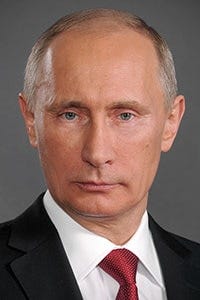
Dear friends,
This year marks the 25th anniversary of the St. Petersburg International Economic Forum. I sincerely congratulate the Forum organizers and all those who have taken and are taking part in its work on this significant anniversary.
Over the years, the Forum has become a highly respected and representative international event. Its participants, which include Russian and foreign politicians, scientists and entrepreneurs, focus on a variety of topics concerning the domestic and world economy: from specific areas of industrial cooperation to information security and environmental protection. Mutually beneficial long-term contracts are signed and business experience is exchanged in the course of direct and constructive communication.
The Forum’s anniversary is taking place at a difficult time for the entire international community. The mistakes of Western countries in economic policy over many years and illegitimate sanctions have led to a wave of global inflation, the disruption of usual supply chains, and a sharp increase in poverty and food shortages. Yet, as can be the case, along with these challenges, new prospects are emerging. This is why the Forum’s slogan — New Opportunities in a New World — seems so relevant.
I am confident that for Russia the 2020s will become a period when the country strengthens its economic sovereignty, which involves the accelerated development of its infrastructure and technological base, qualitative upgrades in the level of training for specialists, as well as the establishment of an independent and efficient financial system. In addition, the Russian economy will increasingly rely on private initiatives and, of course, will remain committed to transparency and broad international cooperation.
It is in our common interests to bolster trade and investment, encourage the joint development of technologies, strengthen financial and stock markets, and increase the share of settlements in national currencies. It is crucial to introduce and develop truly mutually beneficial integration models, as is already being done in the Eurasian Economic Union.
I strongly believe that the Forum will continue to make a significant contribution to solving numerous high-priority challenges facing humanity, while mutual trust, meaningfulness and commitment to fruitful dialogue and partnership will invariably remain its distinguishing features.
I wish you every success and all the best.
Vladimir Putin
Join Coinmonks Telegram Channel and Youtube Channel learn about crypto trading and investing


