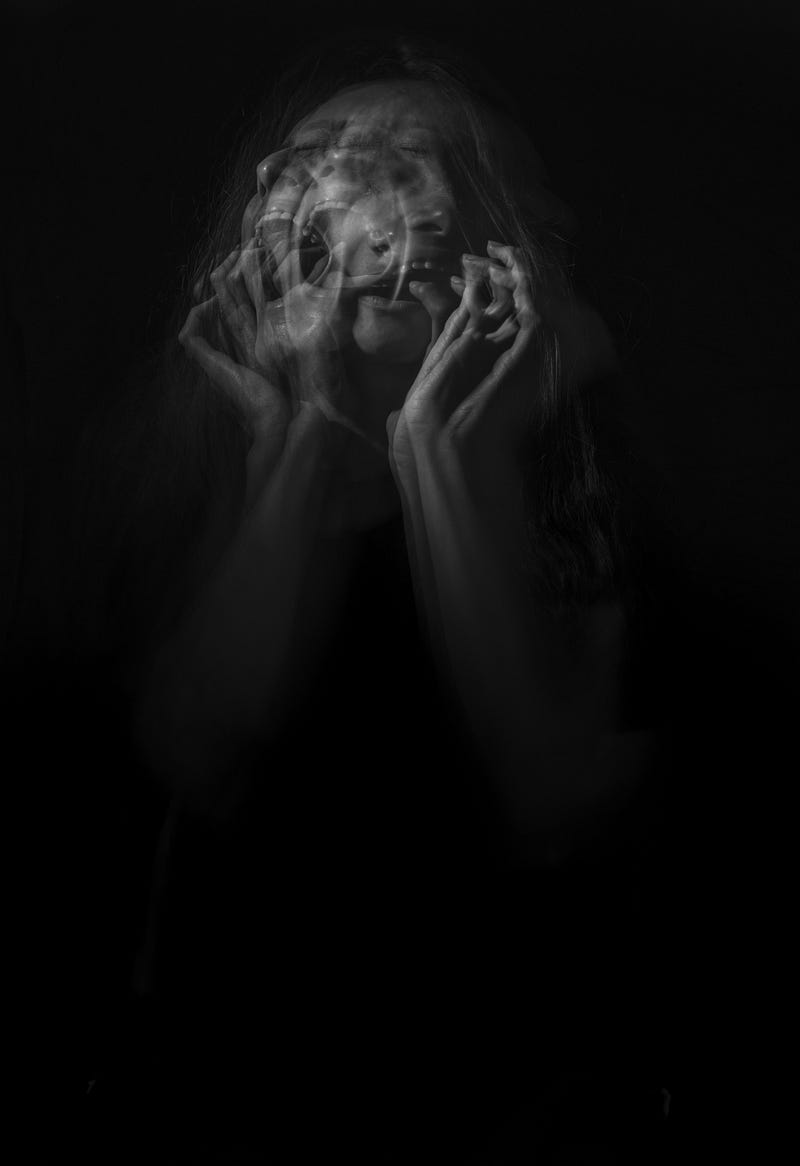
Why Pain Has a Dark and Terrible Beauty
The essential role that pain has in teaching us about life, joy and appreciation
Fellow Medium writer LaVonne Reimer wrote me a very thoughtful comment a few days ago that I feel compelled to share:
… I came to an insight quite recently. I’m in therapy for acute PTSD for almost two years now. My therapist guided me to a form of music and art therapy. It’s the evolution of that process and resulting insight that I believe connects with your primary point.
Initially I wanted glorious music that spoke to new power and, yeah, my pastels just shaped themselves into rainbows and music. Even as I did the work it felt superficial and hollow. We changed course in timbre of the music. The insight that came from that work is that there is a dark beauty in pain. In how it becomes a part of us, enriching the texture of our spirits. Not something to fear, resist, or “get over.” (author bolded)
I found this to truly resonate with me. This pain is very different from being in love with longing or loss, and playing the Woe is Me mini-violin ad nauseum.
Pain is a great and terrible teacher, but only if we let it be.
Pain is one way the body communicates we’re in trouble. You scraped, broke, bruised something. Your guts are in an uproar from that habanero pizza. You slammed your head on the corner of a kitchen cabinet (that would be me). Pain is the immediate message to you from your body that says I AM IN TROUBLE, PAY ATTENTION.
To that I might offer this:
Acute pain, like the open fracture on my left middle finger, is intense, brief and largely manageable. Manageable, likely, because I know I’m going to get better. Healing takes time, and I heal fast. I will use meds but only so long as I am in true and deep discomfort. Physical discomfort.
Yet that has limits. For chronic pain, or say, treatments that are truly painful, can get worse over time. When I was growing up in the Sixties, treatment for a kid who got bitten by a rabid animal was a series of shots to the stomach. They were awful. They got worse each time, not because the shots were more painful but the expectation of the pain made them worse. The mind is a terrible taskmaster.
From the article:
“In chronic pain patients, there is an abnormal functioning of pain processing,” says Tongprasert. Normally, the central nervous system automatically inhibits unpleasant sensations like pain. But with chronic pain, the nervous system’s function is altered and becomes more sensitive to pain. The nerve cells in people with chronic pain may become so sensitive that the brain perceives even a gentle touch as pain. (author bolded)
Physical pain, pain that is not born of acute injury such as I just experienced in a car accident, is one of life’s great informers about psychic and emotional dis-ease. In our Western society, the eagerness to “fix” it, to get awarded hero buttons for making the pain go away, has led doctors and big pharma to lead us to opioid addiction (among other substances, kindly). Anything for a modicum of relief.
My ex-husband was rear-ended in a bad multi-car pileup in the late Eighties. He was convinced to undergo some kind of surgery which was supposed to provide relief. It didn’t. It exacerbated the problem. He was in horrible, chronic pain from then on. Ultimately doctors refused to provide him with relief, and he turned to alcohol. While on alcohol, he turned on me.
However, his pain had far deeper implications. This man- as do I, as do many of us- suffered terrible psychic pain from an abusive father. No pill will help that. The psychic pain heaped upon us by society, in many cases sexual abuse, and the constant cruel messaging that we are not now and never will be enough, has led to, in my estimation, a great deal more pain that people try to manage through opioids and avoidance of almost any kind. I surely did, although my substance of choice was hot Krispy Kremes.
There is considerable research drawing a direct line between childhood abuse, trauma and terrible life events to many kinds of chronic pain. Doctors may do surgery on your back, the technical work was perfect, but your pain persists.
That kind of pain, as doctors are finally beginning to realize, has no basis in the body, but in the brain, and our emotional memories.
This morning I read a very powerful and revealing piece by Rev. Sheri Heller, LCSW:
I share a great deal of what she has experienced albeit via different routes. What struck me was that there is a sacred, powerful journey in our transformation from the stigmatized woman (or human of any kind) to one that is empowered. The journey to sanity, sobriety, self-respect and self-regard is essential or we implode from the pain.
This is not a journey that can be helped with pain medication. For that in all too many cases, and this is just my opinion, simply obfuscates what you and I must face: our history, our conditions and surroundings, and the way forward if we are to get out of them. If we are anesthetized, then there is no path.

One of my favorite Medium writers is the inimitable Rosennab, who is a transformational coach. She pointed out to me a while back how so many of us who have been traumatized, assaulted or otherwise damaged as children end up in helping professions, which is also her life arc. She also argues, and I agree, that the story line that we draw sexual assaults to us is a lie. What I do know is that the life experiences we have are there as teachers and stepping stones, should we use them that way, or we can allow them to be the excuses we wield for a life not lived in full.
When we ache, this is what Dr. Bakari says:
In Western society, we seem to always be in search of a fix, a hero, someone or something to take it all away or make it all better, there there.
From Dr. Bakari’s article:
…I spent years growing into the concept that I could be responsible for healing my pain without blaming myself for my pain.
I had a life script that said: “You broke it, you fix it.” My mind had a particular interpretation that if I take responsibility for fixing something, then I must also take the blame for breaking it. I could not sort out that logic for a long time. If you are feeling a bit anxious reading this, then you may be working with a similar philosophy that doesn’t serve you well.
Believing that pain is external robs us of our work. We end up forever seeking the “answer, the fix, the solution,” whether it’s in love or a bottle of pills or scotch. Or exercise or some other compulsion.
That is horribly dis-empowering. Not only does that serve the patriarchal script (men do it just as much as women do, seeking a “fix” external to themselves), but it robs us of the very climb to the summit that we are seeking. While ultimately the hero’s journey is indeed a solo one, it isn’t done without support, love, and a community to help us along the way. You and I have to do the deep work to stand on that summit, and life has many of them, but one of the great lessons is to learn to receive.
That one I didn’t learn until I was descending from one of the world’s great summits, Kilimanjaro, in 2013.
I was sliding, as do we all, on that scree field when my left leg, which sported a knee which had recently undergone arthroscopic surgery, jammed into a big rock that was hidden by the small ones.
I couldn’t go any further. I was planted in place at eighteen thousand feet, my leg in agony. The Goddess is very good at making Her points. I had two excellent resources just down the mountain: August and Ingaus, my guides. They saw me in distress, hiked back up to me and insisted that I wrap my arms around their strong necks.
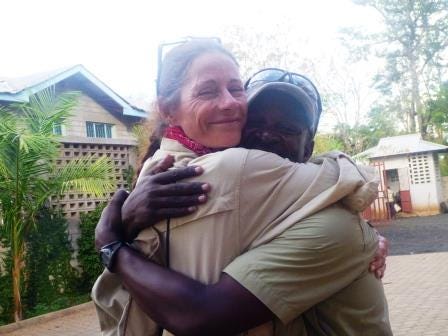
So supported, we reached base camp in a matter of minutes. That was one of the great lessons that Kilimanjaro taught me: receive help when I need it.
I most certainly did.
Learning to receive support, friendship and love has helped ease my psychic pain. It took me a long time to learn that lesson, but I did. Still am. Much of the pain I have felt from being isolated, as Sheri writes in her piece above, is gone. What stood out for me from Sheri’s article in particular:
It took courage and determination to live in my truth. By engaging with my inner ‘madwoman’ I identified the form of rebellion that liberated me from the forces of oppression that were subjugating me. Specifically, this meant cutting literal and psychological cords with my family of origin. It also meant reclaiming my voice and vocalizing my rage over having my torment reduced to ostracizing labels and judgements.
Rather than experiencing compassion for my difficulties, I often encountered pity. There is a huge difference. By opposing these debasing appraisals I championed those parts of me I shunned. No longer ashamed of the archetypal hysteric, feral child, recluse, addict, whore and victim, I was able to reframe their identities so that dignity could be restored. (author bolded)
In so many ways, this is the Great Climb. The hero’s journey. You and I have to do the work to redefine who we are, outside societal norms and damaging stereotypes. We have to discover and learn to celebrate our intrinsic worth. Sometimes that is through service to others (Sheri is a licensed social worker and reverend, Dr. Bakari is a psychologist and coach).
This is a piece of a eulogy from one of Sheri’s theraputic theatre workshops where they honored the stigmatized woman:
As we lay her illusions to rest we are ready to move into adulthood. We are ready to accept that what was taken from her….unconditional love, safety, admiration, and care cannot be compensated for. Her path was and always has been one of defining her own world and surviving alone in this world. Individuation was her calling at a time when survival meant belonging. She has traveled a tempestuous path of exile, finally arriving at a place of letting go of what could never be so as to be reborn into sacred interdependence in which integrity and self-respect prevail. (author bolded)
The whole thing is remarkable, and recommended reading if you are seeking relief.
While I am well aware that there is a seductiveness in woe is me, that there is great satisfaction in what have come to call onedownmanship or I got it worse than you do, I would posit that the advice of these extraordinary women speaks not only to the power of their individual spirits, but their gifts to those with whom they work. It is so very easy to be a victim and wait to be saved. That prevailing viewpoint has led to a great many of our current ills.
It sucks the lifeblood out of us, because the proverbial White Knight is not going to show up. We have to mount our own horses, and take on the work of saving ourselves.
These women, and other remarkable people, are guides on my journey, for I continue to climb. To summit. I need help along the way, from people like me who have done the work. I believe we all do. For to be alive in full is to know pain. We don’t have to buy into suffering, but we will know pain.
As LaVonne wrote,
…there is a dark beauty in pain. In how it becomes a part of us, enriching the texture of our spirits. Not something to fear, resist, or “get over.”
When we are brave enough to confront our pain rather than run from it or soothe it with an OCD or a substance, we grow a taproot into our deepest humanity. We rise. The tears we shed in our process are the very fertilizer for vulnerability, which is our greatest strength.
As Dr. Bakari writes:
Someone can help you process, support you in your journey, or be your cheerleader. But, you must go within to do the work. You must ask yourself tough questions and lean into vulnerability to find your strength. Like Dorothy, everything you need is inside.
We do not have to buy into or live the script of the poor, isolated, strange outcast. We can heal. Not only that, in healing, we help others, as the terrific women in this article so beautifully demonstrate. The greatest lessons I learn are from those who have done transformational work themselves.
We teach others by example. Through our courage we light the way.