
Why Our Brains Make Bad Investment Decisions
The key to becoming a better investor is to do nothing
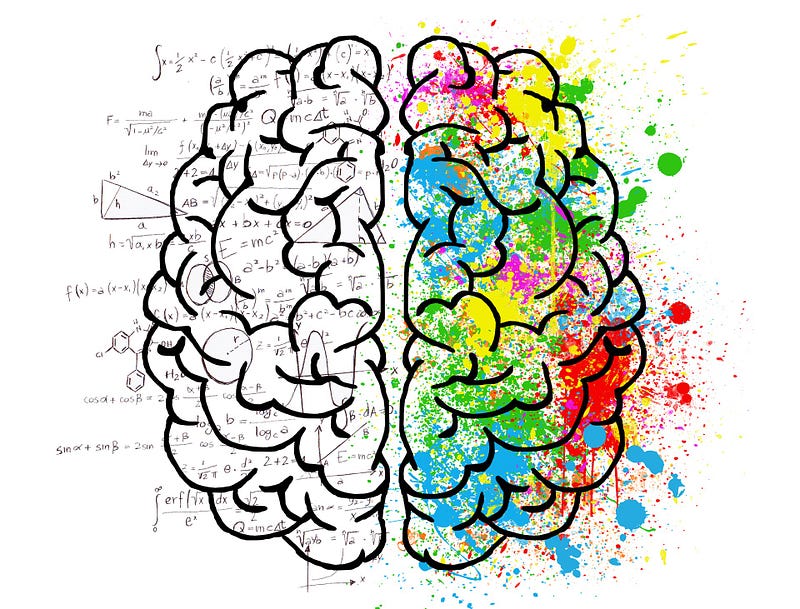
The human brain is more amazing than I could ever possibly articulate. It is also the reason most people are really bad investors.
The human brain is a miracle when it comes to working through complex problems. It is the primary reason we have become the dominant species on the planet.
The three pounds of fatty tissue inside your skull helped humanity discover fire, create an agricultural society, build skyscrapers, cars, and airplanes. The human brain has allowed us to travel to space, create the internet and take boring grapes and turn them into one of the most amazing substances on the planet, wine.
The human brain is more amazing than I could ever possibly articulate. It is also the reason most people are really bad investors.
Our Brains Would Fail Statistics 101
The human brain is not good at calculating probabilities. If you doubt that, pull a quarter out of your pocket and go find the nearest person and tell them you are going to flip the coin 10 times and you want them to predict whether the coin will land heads or tails after each flip.
If the coin comes up tails the first couple of times the person will start predicting the next flip will land on heads. Their reasoning will be that the coin “was due” to land heads. Which is of course not correct. Each flip of the coin is completely independent. There is a 50% chance the coin will land heads every flip. Even if the last 10,000 flips have all landed tails, there is a 50% chance the next flip will land heads.
The same situation will play out at the roulette table. Gamblers who see that the last 10 spins have landed on “red” will put their money “on black” because in their mind “black is due”. This is why the house always wins.
The human brain’s inability to understand probabilities also makes us very bad investors. If a stock has underperformed the market for a number of years someone who thinks they are a savvy investor will buy the stock. After all, the idea is to buy low and sell high right?
Surely the stock price will rebound, and that investor will look like a genius. Or a more likely scenario the stock has been underperforming for years because it is a dog of a company on the fast track to bankruptcy.
Our Brains Can’t Handle Uncertainty
There have been many studies that have shown uncertainty sends the human brain into a state of stress and anxiety. This is particularly true when the stakes are high, like with our money.
When we have no idea what is about to happen we get stressed. When we get stressed we make very bad decisions. That is why so few investors were able to see the “dot com” stock market crash in 2000 or the housing crash in 2008/2009.
Our inability to see these “black swan” events coming can wreak havoc on our portfolios. Ask anyone who had their money tied up in Pets.com in 2000 or mortgage-backed securities in 2008.
Loss Aversion
Your brain is a chicken that never wants you to take risks.
Our genes are handed down from the early humans that were basically too chicken to take big risks. Back before we had houses, a stable supply of food, and weapons it was difficult to survive as a human. The humans that took less risk, were more likely to live, reproduce and hand down their genes to the next generation. Basically, we are descendants of the biggest wimps in history. Being a wimp is an effective way to live longer but it’s a bad trait for an investor.
Thanks to our wimpy ancestors, we receive much more dissatisfaction from losing than we receive joy from winning. If you went to the casino and lost $100 you would feel much more emotion than if you won $100. This is referred to as loss aversion.
Loss aversion leads us to make poor investment choices. Let’s say we invested in 10 different stocks and 9 out of the 10 made money and one of them lost money. We will likely spend more time agonizing over the one stock that lost money and we will hardly think about the nine stocks that made money. This leads us to falsely believe that we did not make a good return in the stock market when in reality the exact opposite is true.
The 2008 financial crisis was so painful that our brains are constantly telling us that every dip in the stock market is a sign of the next full-blown financial crisis. Loss eversion explains why people who lost big in the 2008 financial crisis never reinvested back in the market. Sadly, that means that not only did they lose money during the crash but they lost the opportunity to make it all back (and more) during the 10-year bull market that followed.
Your brain is a chicken that never wants you to take risks.
Monkey Hear, Monkey Do
The media does us no favors. In thinking fast and slow, Daniel Kahneman discusses how experiments have proven that the human brain comes to believe phrases that are repeated often. Every time we turn on the news and see talking heads predicting doom and gloom and talking about how the economy is about to go off a cliff, our brains latch onto that concept and accept it to be true even if it is false.
This can work in the opposite fashion as well. Our brains are not only prone to fear but also overconfidence. If you immerse yourself in the world of Bitcoin and cryptocurrency and all you read is positive stories that reinforce the idea that Bitcoin is a juggernaut that can’t be stopped, you were unlikely to see the crash in Bitcoin that has taken place in 2018. Your brain saw the huge run-up in Bitcoin value and thought “this will continue forever”. Which it did not.
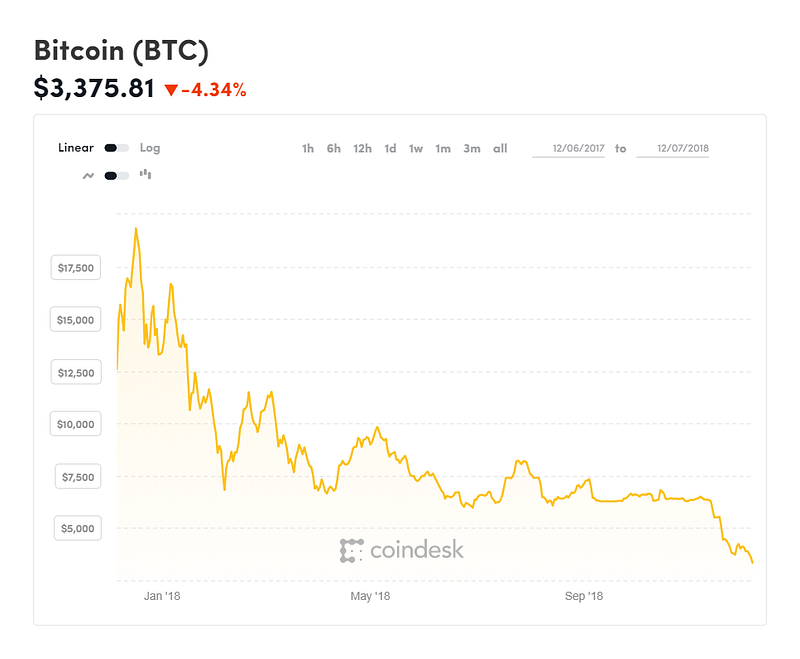
Making this problem worse, our brain is vulnerable to confirmation bias. If you start off with the idea that you like Bitcoin, you are more likely to seek out these positive stories that confirm what you already believe, which is that Bitcoin is awesome. You also avoid stories that highlight why Bitcoin might not be such a great investment.
The design of the human brain makes us bad investors. If human decision making leads to poor investment results, then logically the way to improve your investment results is to make fewer investment decisions.
Stop Letting Your Brain Make Decisions
A mandatory defined benefit pension plan is the greatest tool we have to save our money from our brain.
The greatest virtue of mandatory Defined Benefit workplace pension plans is that it requires only one decision by the employee: when to retire. Everything else is taken out of their hands.
- The decision to enroll
- How to allocate your portfolio
- When to rebalance your portfolio
- How much domestic vs global investments should you have?
- When to sell?
All of the investment decisions are taken care of for you. A mandatory defined benefit pension plan is the greatest tool we have to save our money from our brain.
Sadly, only about 6% of private sector workers have access to a defined benefit pension.
What Can the rest of us do?
If you don’t have a defined benefit pension plan at work, chances are you have a defined contribution or 401k plan. These plans are less ideal because they require more decision making, which gives your brain more chances to screw up.
If you are fortunate enough to have access to an employer-sponsored 401(k) and you either have not enrolled in the program or are not contributing enough to get the full employer match you need to address that right away. Not taking advantage of the employer match is turning down free money.
Once you enroll you still have the pesky decision to decide how to invest your money. If you are comfortable making investment choices go for it. If you are not, spend the money to sit down with a “fee-only” financial advisor and have them set up your portfolio allocation. They can walk you through how much to invest in stocks and how much to invest in bonds.
Repeat after me: Once I have a plan in place I WILL NOT DEVIATE FROM THE PLAN.
By the way, if you don’t have any workplace retirement plan it’s even more important to sit down with an advisor and come up with an investing strategy. You can utilize your traditional and Roth IRA accounts to save for retirement.
The best thing you can do once you have your investment strategy in place is do nothing at all. Don’t watch financial news coverage and only check your investment balances once a month.
There have been countless studies that have shown the top performing investors are the ones who made the least number of transactions. The most famous would be a Fidelity study that found the best-performing investors all had one thing in common: they were dead.
Do you know what dead people have in common? They never check their account balances and they never make fear-driven decisions to sell and greed-driven decisions to buy.
They also don’t have a functioning brain.
This article is for informational purposes only, it should not be considered Financial or Legal Advice. Not all information will be accurate. Consult a financial professional before making any major financial decisions.