
What is a “Bubble”?
The Time a Flower Crashed an Economy

What Is a Bubble?
A bubble is when prices of an asset (think stocks or real estate) experience a rapid increase in prices, followed by a sudden and significant decrease in prices.
How Do Bubbles Form?
Bubbles occur when investors begin to buy assets without considering their economic value. They are buying because they plan on quickly selling it to the next investor at an inflated price. Think of it as “house flipping” in the stock market, except you haven’t actually done any repairs or added any value to the house. You bought the house, did no rehabbing or value-adding and plan to “flip” it to the next buyer for a profit.
Once this starts happening, investors get greedy and they want to get in on the action, carrying the price of the asset even further beyond what the underlying financial numbers would suggest it is worth.
Think of it as “house flipping” in the stock market, except you haven’t actually done any repairs or added any value to the house.
How Do Bubbles Burst?
Like with real bubbles we used to play with as kids, eventually the bubble bursts. Eventually, investors stop buying the over-inflated assets and investors collectively ask themselves “WHAT THE HELL WAS I THINKING?” Panic ensues, which leads to a mass sell-off of the asset and prices plummet.
Famous Bubbles in History

Tulipmania-1600's
One of the first documented, and in my opinion most bizarre bubbles, in history happened in Holland in the 1600s. Believe it or not, in the 1600’s tulips became so popular they became more valuable than gold. Tulips had recently been introduced to Europe and became a coveted luxury item. At the height of the “tulip bubble” in 1637, it was said that a single tulip bulb was worth more than 10-times the average income of a skilled worker.
Something that did not exist a few years prior, which had seemingly no economic value inflated to prices that built fortunes for anyone who possessed a few units (cough, BITCOIN, cough-cough).

As the above graph demonstrates, it did not take long for the tulip bubble to pop, completely wiping out many of the fortunes it helped create.
Housing/Financial Crisis-2008

“Real Estate Always Goes Up”
When we look at the chart below, it would be difficult to argue with someone in 2006 who would justify the purchase of their 3rd house by saying “real estate always goes up”. This was true for nearly every single year from the 1940’s onward. Prior to 2008 entire generations had grown up with the thought that real estate was a safe investment.
Through booms and busts in the stock market, U.S real estate just kept on chugging along, prices kept going up and up and up, until they didn’t.
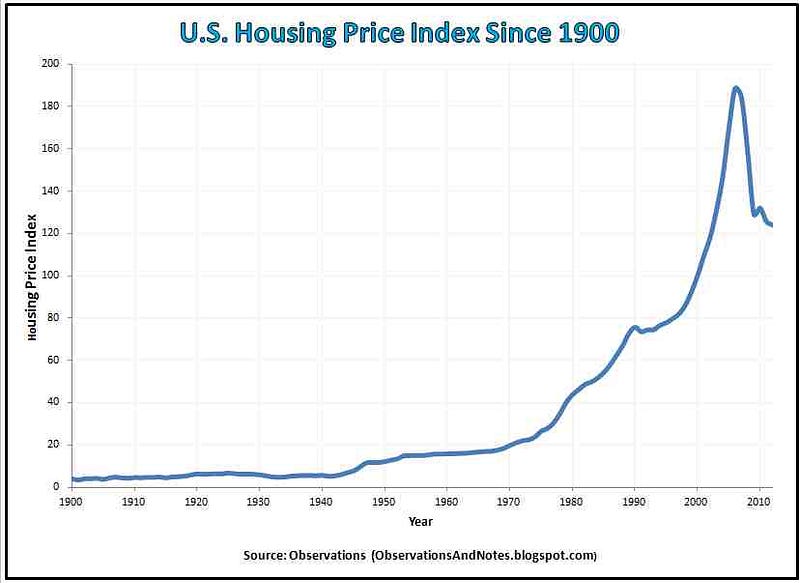
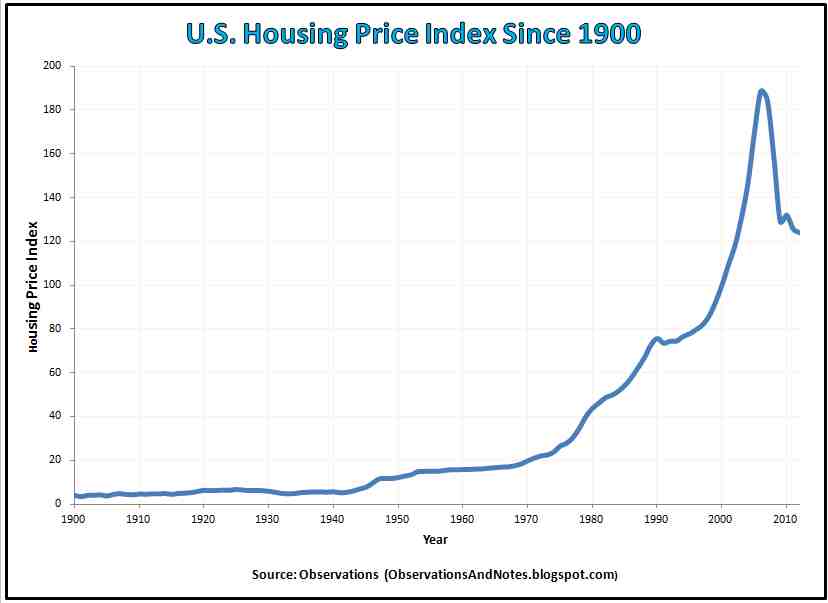
What was it that finally burst the housing bubble? Two words: Subprime mortgages. Subprime mortgages are for people who do not qualify for a regular mortgage, either because of a low credit score or low-income, or both. You might be asking, why would anyone lend money to someone who could not qualify for a regular mortgage? There are many answers to that, but I would point you back to the chart above, the prevailing belief that “real estate always goes up”. This gave banks the peace of mind that even if this homebuyer defaults on the loan, they could get their money back and make a profit by selling a house.
There was also a whole lot of crazy finance stuff going on in the background where banks were bundling these subprime loans together, labeling them as “mortgage-backed securities” and selling them off to buyers who had no idea they were just handed a financial grenade.
Once the bubble burst, some of the world’s largest financial institutions were hit with a “double whammy” of defaulted mortgages on houses that just lost half (or more) of their value and the plummeting of the value of these “mortgage-backed securities”. These firms experienced major “liquidity issues,” which meant they were not lending out money, which almost brought down the global economy. The rest, as they say, is history.
Dot-Com Bubble- Late 90's/Early 2000's

In the late 90’s investors became excited about the potential of monetizing the internet. Like, REALLY excited. Investors got so excited that they began throwing cash at any internet-based company whether they had any realistic path to profitability, or not. All the tell-tale signs a bubble is forming, greed and emotion trumped common sense.
The bubble peaked in 1999 with the Nasdaq Composite (which tracks a lot of internet-based companies) spiked by more than 85%. By 2001, internet companies had lost 75% of their value, erasing more than a trillion in value. Ouch. Super-hyped companies like “pets.com” went from valuations in the hundreds of millions of dollars to go out of business.
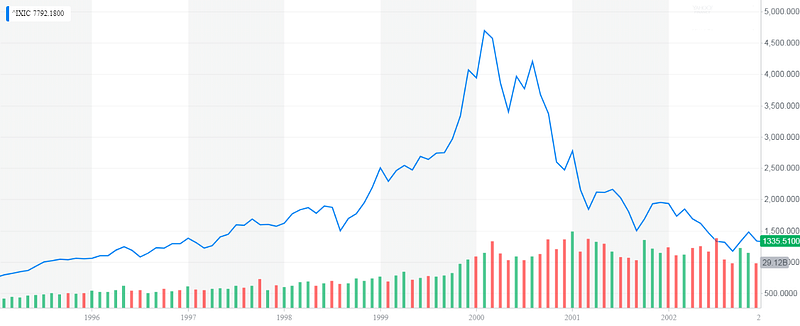
Even Amazon was nearly taken down by the bursting of the bubble, with it’s shares dropping below $6 per share after the terrorist attacks in 2001. In case you were wondering, Amazon’s share price as of the day I wrote this is $1,830 per share.
To put that in perspective, if you invested $1,000 in Amazon at its low point in 2001, those shares today would be worth over $300,000 (and that is not including the dividends you would have collected along the way). That goes to show, that after a bubble bursts there exist potential buying opportunities. Just as greed pushes the price of assets higher than is justified during the forming of a bubble, fear can push the price lower than is justified after the bubble bursts. Those who don’t let emotion dictate their actions can reap significant rewards.
The Next Bubble?

The honest answer is I have no idea! Many people have speculated that Bitcoin could be the next bubble to burst. I can not help but think of the charts of the other famous bubbles when I look at the historical price of bitcoin. It could be the wave of the future, or another bubble ready to pop, your guess is as good as mine.
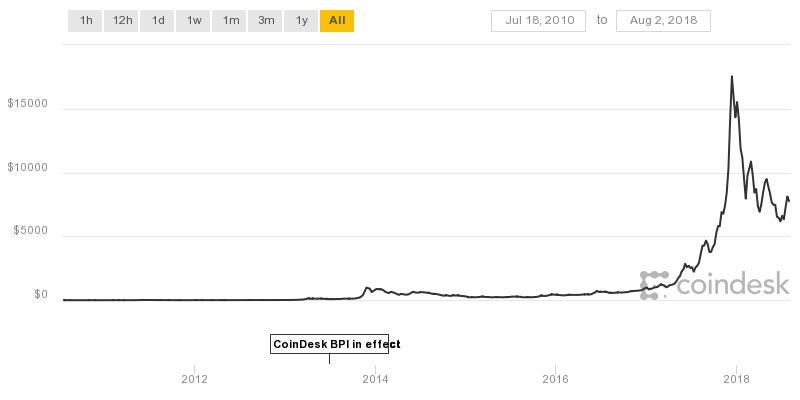
Some people also think tech companies, the stock market in general, and the housing market all look like potential bubbles (again). The point is people have generally been pretty bad at spotting bubbles before they form.
Bonus: Need support to start taking action on your finances? Join the 30-day money challenge where you will be given a new action item to take every day for 30 days. You also get access to the private Facebook group of people who are in the same boat as you.
Click here to Sign up for the 30-day money challenge.
This article is for informational purposes only, it should not be considered Financial or Legal Advice. Not all information will be accurate. Consult a financial professional before making any major financial decisions.