
Why my Grandfather Hated Racists
A coal mine accident changed his world forever
My grandfather’s reaction to me using a racial slur was visceral. He reacted emotionally and quite strongly. Getting a “whooping” certainly got my attention and it did make me never want to say that word again. I did not even know what the word meant, but I saw quickly how much it angered him.
That I had no idea what the “N-word” meant made no difference. I had said it and it had to be corrected.
I soon learned it was a bad word, and I soon learned about racism. He was vehement in his opposition and would not tolerate it in his presence. But why? Why was it such a big issue for him? Why did other people say racist things without care?
But why? Why was it such a big issue for him? Why did other people say racist things without care?
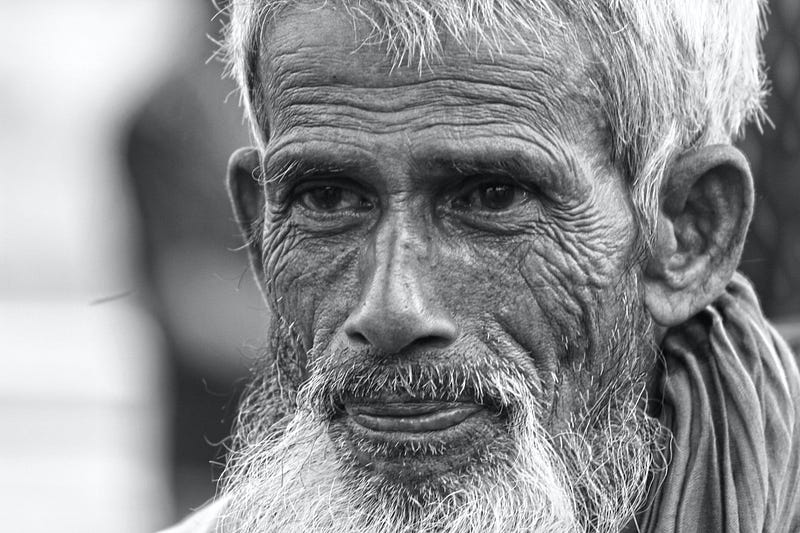
These were burning questions for me as I was a young person in Appalachia in the 1970s. My grandfather was an old man, about 80. He had white hair and a white beard. A typical man from Appalachia. He was soft-spoken until you made him mad. Making him mad was not easy, but if you did there were going to be immediate consequences as I had already learned.
He had a limp that was from an old injury, and a curious-looking black spot under one cheek. Like a lot of mountain men of that era, he was not one to talk about himself even when asked. It took me a long time to get the story, and through that I understood him and why he hated racism so much.
He was like a lot of other people from that area, having grown up poor and going through the great depression. He used to joke that they were so poor they did not notice the great depression. They knew about poverty from experience.
To the outside observer, my grandfather was still poor. Even so, he owned his house and farm with no debt. He grew almost everything he ate. He grew all the tobacco he smoked and even made the small amount of alcohol he drank. He was getting a social security check and seemed to always have a quarter to give to a visiting grandkid.
Like many people of that era, he had little education. Two or three years of school was about average. A few made it to sixth grade, and virtually none went to high school. He taught himself to read with a King James Bible. That was common in that area in the early 60s. By the 70s some of us were going to college and he was proud of his grandkids who did so.
He told me his story in bits and pieces over a few years. He had grown up extremely poor in southwest Virginia. A few people were rich and everyone else was poor. If you did not have some land you had to take whatever work you could find or starve.
He worked alongside black people in the Virginia coal mines — a dangerous and low-paying job.
There were very few safety standards in those days and no insurance. If you got hurt, you would probably get fired and no one cared. If you got killed the company would shrug and send someone else down to work — not to get you.
The poorest white men, and black men, worked together in those mines. Sometimes there were partial cave-ins, or a post would give way allowing rocks and dirt to fall on the miners. It was during one of those times that a piece of shale fell on him. It was as big as a wall, and it trapped him in such a way that he could not shout enough for help.
Eventually, a large black man noticed him and lifted the shale off him. This was no easy task. The man carried him out of the mine to safety. My grandfather had a broken leg that never got medical attention. Fifty years later he still had a limp. The black spot under his eye was coal that had gotten lodged deep in his face during that accident.
He never went back to the mines, but he also never forgot who saved his life that day. His opposition to racism was in some way repaying that incident.
He never went back to the mines, but he also never forgot who saved his life that day. His opposition to racism was in some way repaying, or at least honoring, that incident.
From there he moved to Tennessee and somehow managed to get a piece of land. He had raised 10 children, including my mother, on that piece of land on a mountainside, and lived there until he died at age 95. There were others like him who opposed racism for their own reasons.
And as far as I know, I have not used that word since that day he punished me for doing so.
Here is the first part of this tale
The second part
James Jordan is a freelance writer who lives in the midwest now, after having grown up in the south. Reach me at [email protected]


