
Why Letter Writing Could Save Your Life
“A friendship can weather most things and thrive in thin soil; but it needs a little mulch of letters and phone calls and small, silly presents every so often — just to save it from drying out completely.” — Pam Brown
Anita turned 90 years old this summer. But with Covid, she couldn’t be surprised with an in-person party, so her family threw her a card party.
Anita was touched by the effort friends and family made to acknowledge her birthday. She wrote a thank you card to everyone who sent her a birthday card.
According to the Greeting Card Association, the most popular event people make the effort to send a card for is someone’s birthday. That is followed by Sympathy, Thank You, Wedding, Thinking of You, Get Well, New Baby and Congratulations.
The most popular seasonal card is the Christmas card. The Greeting Card Association states that over 1.6 million cards are purchased during this time of year. With that many cards purchased, lots of people will be receiving cards in the next few weeks.
Over time, you might add people to your annual Christmas card list and you might take people off it, but some people are forever excluded from it.
Their circumstances place them behind life’s walls. They reside there invisible from general society and generally forgotten except for the staff who are paid to work in the institutions where these people live.
Some people needing a little extra encouragement because of their circumstances, include:
- Hospitalized children, via Cards for Hospitalized Kids.
- Nursing home residents, via Love for Our Elders.
- A person without stable housing, via Silver Lake Love.
- Other seriously ill children, via Post Pals.
- A deployed soldier, via Spread Kindness.
- A prison inmate, via Write a Prisoner.
Letters can disrupt loneliness
Loneliness has been identified as the biggest culprit in personal dysfunction across the adult life development span. Millennials report suffering from it the most.
For the last two years, the pandemic has been the main culprit in increasing the sense of isolation and separation people experience. While technology has mitigated the isolation somewhat, it is also a contributing factor towards it because it only allows for a two dimensional interaction.
Other factors contributing to increased loneliness include the violent culture in which society is immersed. If you perceive the world as a dangerous place, then you must be on guard against injury and death.
This heightened state of alertness prevents feeling connected when everyone is perceived as a possible enemy. Everyday errands and events, such as attending parades, music concerts and theaters, dancing at night clubs, and shopping at Wal-Mart have essentially become a gauntlet run to survival.
A little piece of human contact can make the difference between losing hope or keeping it. Encouragement through the mail can be a tangible way for people to know they are not forgotten.
Knowing what to write
Knowing what to write in a letter to a friend, relative or complete stranger might seem complicated. After all, you don’t know what they would like to read about.
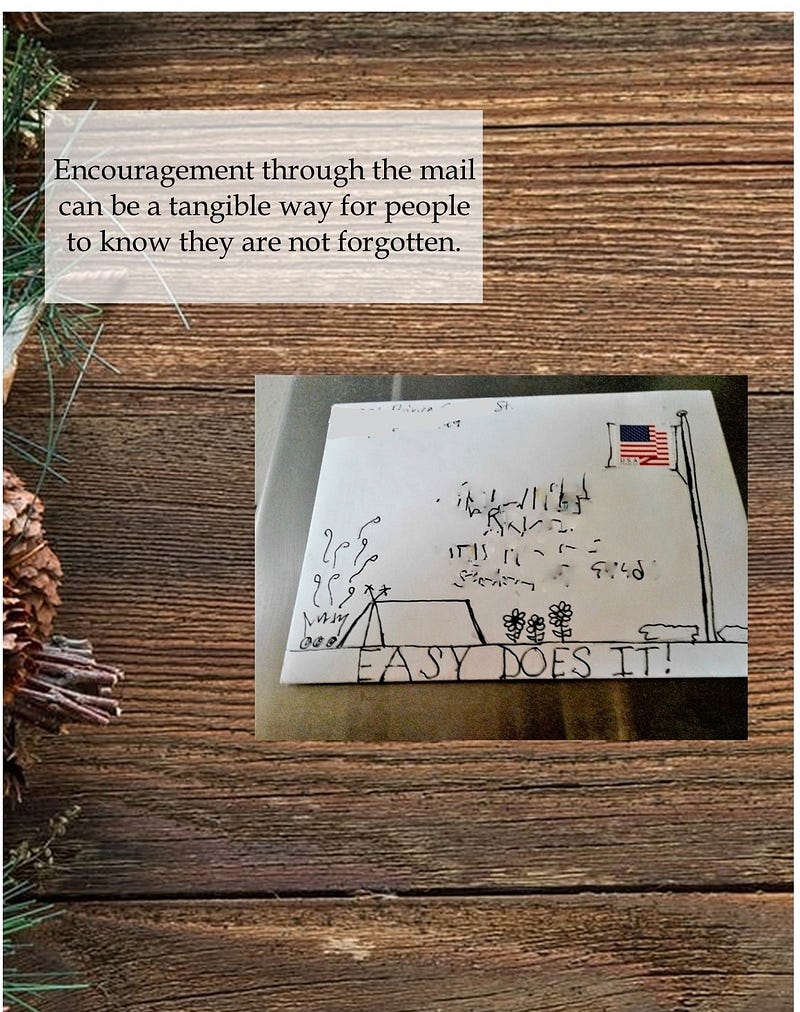
That’s okay. Your recipient will understand the intention behind the gesture. So, if you write just a few lines, that’s plenty to be a day brightener for anyone.
But here are some ideas to get you started:
- Current Netflix shows you’ve been binge-watching
- How work has been and if you’re working from home or going into the office
- The minutiae of your surroundings, what you see, hear, smell.
- New foods you’ve tried.
- Hobbies you pursue.
- Books or magazines you’ve been reading.
- Your favorite brand of coffee or tea.
- What the weather is like.
As you can see this list can be endless.
The ephemera of your life
In addition to writing interesting or encouraging things to another, you can slip in nice items. An extra piece of paper with a positive affirmation is something your recipients can put into their pocket or purse to look at throughout the week.
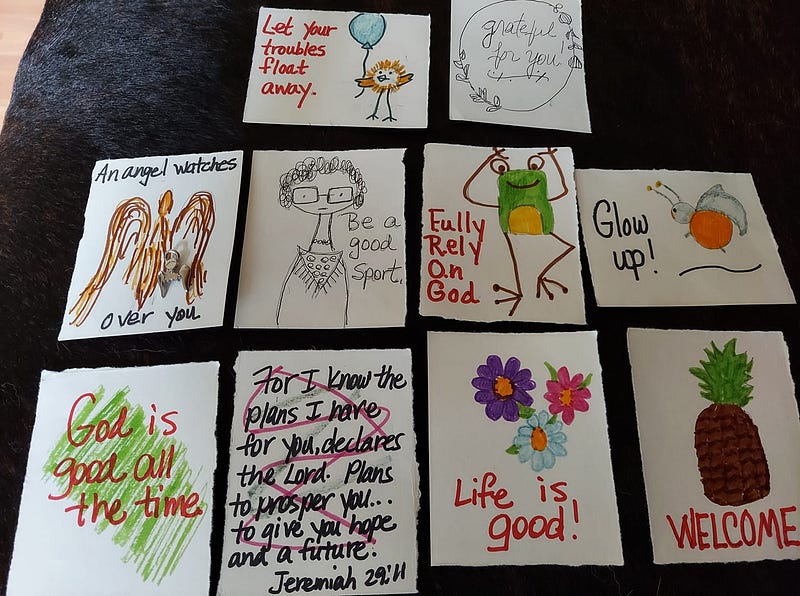
You can also send small, consumable items, such as wrapped tea bags or pieces of candy.
Perhaps, you would even like to send a small piece of art.
Handwritten notes are worth the effort
Many years ago a few people in the psychiatry field discovered a way to help hopeless people feel tethered to the world.
Psychiatrist Jerome Motto and Statistician Alan Bostrom conducted a research project with 869 people between 1969 and 1974. A contact group received for two years cards or notes on a periodic basis after discharge from an inpatient stay.
In the group who received the notes only 1.80 percent had committed suicide. This is compared to 3.52 percent of people who didn’t.
“Even 13 years after hospital discharge, patients who had received letters from the hospital still had lower rates of suicide than those who had not,” according to the Stanford SPARQ website.
A website with suggestions
Today, the volunteer group Now Matters Now is advocating and providing a means for people to learn how to support themselves (if suicidal) or someone they love (who is suicidal.)
You can find a page on their website with suggestions of what to say in a caring note to someone. Or if you struggle with loneliness leading to suicidal thoughts, the website provides many suggestions from those who have been there about what works to overcome and mange this experience.
And while you’re at it, check out the myriad ways the Coffee Times writers, such as Yousuf Rafi, are contributing to helping others by reading his post “Stop Scrolling Your Phone And do These 7 Things Instead.”