
LANGUAGE + HISTORY
Why Labels Change, But Racism Is Stubborn as a Mule
No matter what racial minorities are called, they experience racial discrimination
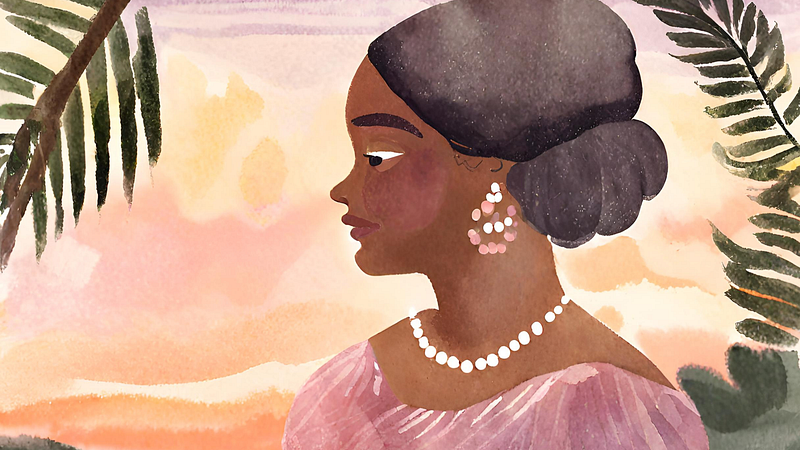
Whenever we say that "race is a social construct," we're pointing out the fact racial identity is man-made, not biological. While various groups of people look different on the outside, they're all part of our human family. It's only through racist beliefs, policies, and laws that a distinction between racial groups is made. Indeed, we can see this in the different ways racial groups identify throughout time, even in the same lifetime.
While reviewing some branches of my family tree, I learned more about some of my enslaved ancestors and those born free. One of the most fascinating points I discovered was the use of different racial identity terms throughout their lives. Using Census data, a survey taken by the federal government every ten years since 1790, you can learn the racial identity of your ancestors, and this is precisely how I discovered some discrepancies. To simplify this analysis, let's begin with my 3rd great-grandmother, Aimée Bazile (1819–1880), and work our way down to the modern era.
Aimée, whose listed as property in Jean Vavvasseur's estate, was valued at $1800 and described as a Creole Negress in 1851. However, in the 1880 census, she identified as Black. Charles Jefferson Vavvasseur (1835–1910), my 2nd great grandfather and the son of Aimée and a White enslaver, Jean identified as a Mulatto in 1860, 1870, and 1880, but Black in the 1900 Census. Charles' daughter, my great grandmother, Marie Mercedes Vavasseur (1886–1947), identified as Black in 1900, Mulatto in 1910 and 1920, and Negro in 1930 and 1940. Marie's son, Elmer Wiltz (1916–2009), my grandfather, was identified as Mulatto in 1920 and self-identified as a Negro in 1930, 1940, and 1950. His son, Gregory Wiltz, my father, who was born in 1958, has identified as African American but also Black.
This brief investigation demonstrates that people we see as Black today may have well used other terminology to describe themselves, depending on societal views. If race were a biological characteristic, we wouldn't see such a variation in how people racially identify. When St. James parish enslavers called Aimée a Creole Negress, they were identifying her in a way they saw her, not as she saw herself. However, once free, she identified as Black and no longer added "Creole" to the descriptor. Charles considered himself Mulatto, which seems to track since his father, Jean, was a White enslaver, and his mother, a Creole Negress; however, in 1900, he stopped calling himself Mulatto, and began to identify as Black. Could it be that others saw him as Black, and as a result, he began to identify as such?
Marie was described as Black in the 1900 census, but she was a 14-year-old teenager at the time — could someone else have documented this? Ten years later, in 1910, she identified as Mulatto, and did so in the next census too. It wasn't until 1930 that she began to identify as Negro. Could it be that the way racial identity terminology shifted and that Negro became the most popular term at this time to describe Black people or people of color? When Elmer was four years old, he was identified on the census as Muatto, but by 1930, 40, and 50, he identified as Negro.
As Tom W. Smith wrote in an article entitled, Changing Racial Labels: From "Colored" to "Negro” to "Black" to "African American," "labels play an important role in defining groups and individuals who belong to the groups," noting that "over the past century the standard term for Blacks has shifted from 'Colored' to 'Negro’ to 'Black' and now perhaps to 'African American.' These changes can be seen as attempts by Blacks to redefine themselves and to gain respect and standing in a society that has held them to be subordinate and inferior,” Smith added. At one point, Negro was preferable to Black. Now, this term is often seen as a racial slur, particularly when uttered by a White person. What one generation considered a term associated with social advancement, another has dismissed as offensive.
Of course, as someone from Louisiana, the racial terminology we have here is much different from those used elsewhere because many enslavers were French and not English. For instance, Charles was also described as a mulâtre affranchise, essentially, someone who was mulatto (half Black and White), born enslaved but freed. Examining the variety in terminology used to describe racial identity, it becomes painstakingly clear that race is a social construct and not a biological one. And if history is any indication, the racial identity labels of tomorrow may indeed be far removed from those we use today.
The artist Tyla, from South Africa, described herself as coloured, a distinct racial identity from those with predominately African ancestry. This terminology makes some Black Americans feel uncomfortable because of the way "colored" has been used as a slur in American society. Nevertheless, we shouldn't try to shove one another into boxes; rather, we should seek to understand and respect what individuals identify as. Racial identity is a social construct, which is made painstakingly clear when we examine how someone's racial identity can shift, even in one lifetime.
While labels change, racism is as stubborn as a mule. That is to say, no matter what Black people called themselves, whether Creole, Mulatto, Negro, Affranchie, Colored, African American, or Black, they experienced discrimination and were frequently targeted because of the color of their skin. Meaning, that while labels are interesting social conventions, and we can always debate their usefulness and appropriateness to describe a group of people, we should focus on the discrimination perpetrated against racial minorities. The racism Black people endure in this country has never been contingent upon the terms we use to describe ourselves but on the decision of White Americans to discriminate against them based on a distinction in color.
To replicate my limited study, you can use Census data, which is publicly available for deceased members of your family. That way, if this information is available for an individual, you can learn how they identified every ten years. Overall, it's important to consider that the terminology we use to describe different groups isn't in stone—it's changing all the time. This is why we see that some are using these African Americans while others feel more comfortable with Black Americans.
🌹Learn more about the author here.