
RACE
Are Creole People a Privileged or Oppressed, or Somewhere in Between?
Louisiana's history exposes the complexity of the racial identity
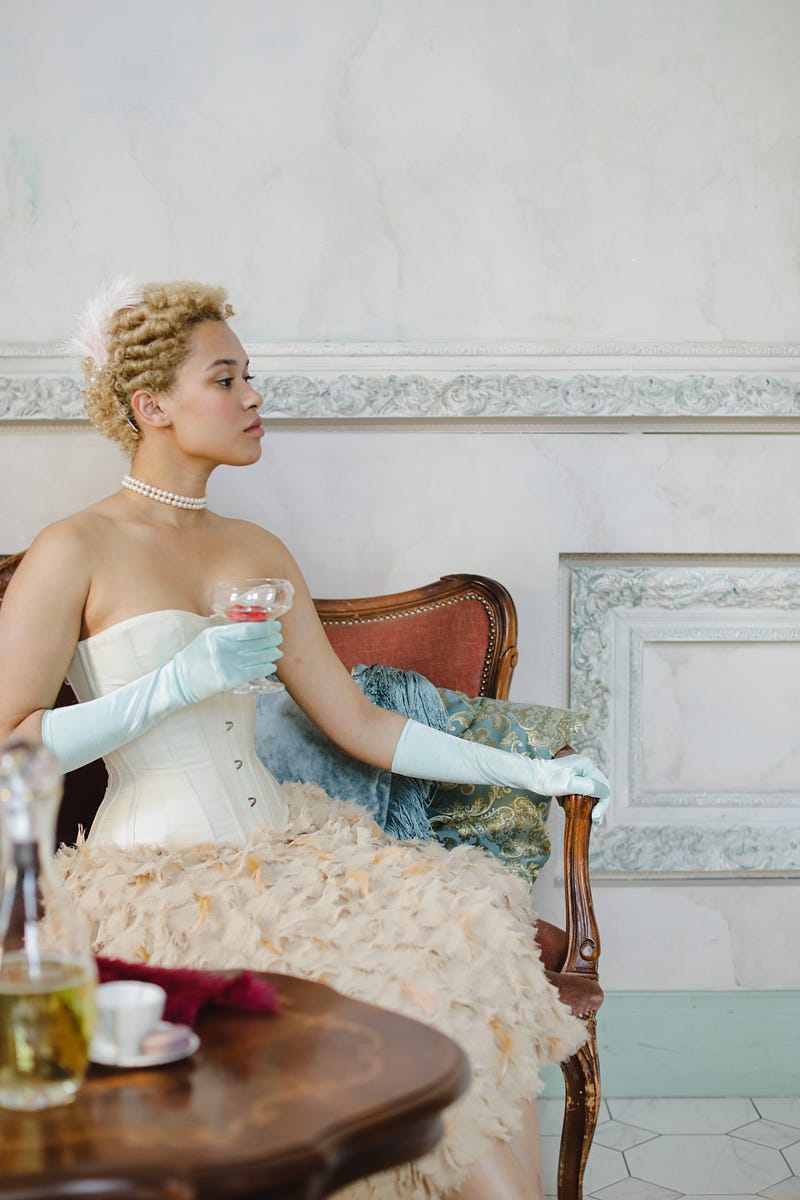
Creole people are a group of Louisianians mixed with African, Indigenous, and either French or Spanish ancestry. If you've visited New Orleans, you may have tried some creole dishes like gumbo, shrimp and grits, red beans and rice, jambalaya, and bananas foster. However, only some people outside of Louisiana understand who Creole people are and what their experiences have been like. The question many people want to know is whether or not Creole people in Louisiana were an oppressed class because of their African and Indigenous lineage or privileged because of their proximity to whiteness. So, let's unpack this.
In many ways, Creole people are a product of the chattel slavery system. When French and Spanish colonizers arrived in the early 1600s, the land we now call "Louisiana" was inhabited by Indigenous tribes, such as the Chitimacha, Atakapa, Caddo, Choctaw, Houma, Natchez, and Tunica. Rene-Robert Cavelier, a Frenchman, Sieur de la Salle, led expeditions throughout the coastal wetlands and made first contact with Indigenous tribes "whose ancestors had resided throughout the Mississippi River Valley for more than a thousand years." Sadly, the population of Indigenous tribes dwindled in the years that followed, as many died from "the contagion of European diseases." The French relied on the African slave trade to make money and would often urge tribes like the Choctaw and Chickasaw to help defend their territory from the British.
The forced migration of approximately 6,000 enslaved Africans created a significant demographic shift in French colonial Louisiana. "Approximately two-thirds of the enslaved came from the Senegambian region of West Africa, while the rest came from the Bight of Benin and Angola," bringing with them valuable agricultural knowledge of crops like cotton, rice, corn, and tobacco. By 1724, French colonizers introduced the Code Noir to regulate enslaved and free people of African descent, similar to the system implemented throughout the Caribbean. According to the Code Noir, Black enslaved people had to practice the same religion as their French masters, Roman Catholicism, and could not meet in groups to congregate. The law also forbade interracial marriage and declared that all children born to enslaved women would also be enslaved, and they had no right to own property or decide to marry.
Specific instructions were given on how to treat runaway slaves. They "shall have his ears cutoff, and shall be branded with the flower de luce on the shoulder" for the first offense, while continued attempts would result in execution. This racially discriminatory legislation stripped enslaved African people of civil rights within French territory, causing many to create runaway communities, le marronage throughout the Lower Mississippi River Valley swamps, where they could live freely alongside Indigenous people and plan slave revolts against their former masters, whenever possible. In Louisiana, Black people were treated as second-class citizens who could be held accountable to the law but would not be protected by it.
Where do Creole people fit into the story of Louisiana?
Since Creole people were technically related to French and, at times, Spanish colonizers, they were given preferential treatment and had some privileges deprived of enslaved African people, but that's only part of the story. Free persons of color found themselves somewhere in the middle, between enslaved Black people and free White people. Some owned property and even enslaved fellow Black people. Unlike Black people, who were forbidden from reading, Creoles received a formal education, sometimes in Europe. However, the status of the Creole people was fragile. For instance, the Code Noir forbade free people of color from helping enslaved Black people. If "free-born negroes not be able to pay the fine" as a penalty for harboring an enslaved person, they were "reduced to the condition of slaves, and be sold as such." So yes, some Creole people participated in the slave trade. Still, unlike the French and Spanish, who willingly migrated to Louisiana to enslave people, Creole people were often coerced to participate under the threat that they would be enslaved.
An example can be found in my family tree, where my third great-grandmother, Aimée Bazile (1819–1880), was described as a "Creole negress” or griffe, someone who is of one-quarter European descent and three-quarters African descent. Being a Creole woman did not protect Aimée from the bitter sting of white supremacy. She was enslaved by Jean Pierre Gaspard Vavasseur (1778–1850), a French colonizer, and bore him a son, Charles Jefferson Vavasseur, who was also born a slave. Both of them, despite being Creole, remained enslaved until the Civil War, after which Jefferson went on to hold state office and Aimée married for love. On May 16, 1874, Aimée Bazile, also known as "Aimée Vavasseur" and "Aimée Blouin," married Joseph Exhart Hartman, a Frenchman. Their wedding is listed in a collection of racially mixed marriage filings in Louisiana Creole Families.
While it's accurate to say some Creole people enslaved African people, the point that they, too, were enslaved and constantly threatened with enslavement is often left out of the story. Moreover, many people don’t realize the privilege the Creole people experienced was short-lived. Once Louisiana became a state, the cultural climate shifted so that "by the 1890s, no middle ground remained for the mixed-race ethnic group." To put it bluntly, no one cared whether or not Creole people had some French or Spanish heritage because, under the American racial caste system, they were considered Black and were racially segregated and targeted as such. Or as historian James Haskins put it, "It did not matter how wealthy or how educated the Creoles were — [they] were grouped together with other people of color."
Free people of color were considered "legally and socially inferior" to White people. And while Creoles consistently fought against second-class citizenship, they often did so in a self-serving way. For instance, after the Battle of New Orleans and the War of 1812, some Creole people sought to distinguish themselves from enslaved Africans by amassing wealth and taking positions as "mechanics, cabinetmakers, shoemakers, cigarmakers, tailors, construction workers, and hunters." In contrast, Negro freedmen often had to take positions as "draymen, cabmen, and servants in hotels," according to The Creoles of New Orleans, a book by James Haskins. For generations, Creole people refused to learn how to speak English and instead continued to speak French and make Roman Catholicism a centerpiece of their culture to differentiate themselves from enslaved African people who were primarily Protestant and spoke English.
Still, despite trying to draw a line in the sand, Creoles were subject to the same discrimination in most cases as enslaved Africans and other groups of free people of color. During the 1830s and 40s, Haskins suggested that Americans had a much more stringent, black-white view of race that didn't allow Creoles to benefit as much from proximity to whiteness as they had under French and the brief Spanish rule. For instance, in 1896, Homère Plessy, a French-speaking Creole man who was one-eighth Black challenged racial segregation on a New Orleans street car that required him to sit in a blacks-only section nearly sixty years before Rosa Parks refused to give up her seat. His efforts show how Creole people, despite benefiting in some ways from their proximity to whiteness, were also treated as second-class citizens and contributed to the battle to secure civil rights for all Americans, regardless of their race or caste.
Creoles were stuck between a rock and a hard place. Haskins wrote that "even one drop of white blood had been enough to guarantee special privileges," but "from then on, a single drop of black blood was enough to guarantee no privileges at all." One story that illustrates this point is the way schools were racially segregated. In 1861, public schools opened for people of color, but by 1877 schools were resegregated in Louisiana. As a result, Light-skinned Creole students were forcibly removed from classrooms and separated from White students. When a White Leaguer visited an integrated school on Royal Street in New Orleans, for instance, he brought a list and called out the names of Creole, non-White school girls, "they had to stand, and they were forced to leave." Despite the girls shrieking and crying over the embarrassment, the practice continued. Still, you could hear the privilege in their pleas. "Must I go to school with my own servants to escape an unmerited disdain," one student asked.
Colorism is pervasive amongst Creole people who, at times, enjoyed privilege due to their proximity to whiteness. However, it's a misconception to assume that all Creole people were light-skinned because their skin color, hair texture, and facial phenotypes differed. Creole people can be light-skinned, brown-skinned, dark-skinned, or anywhere in between, but few know their history enough to realize this. For instance, since I could not pass the Brown Paper Bag test, schoolchildren often told me, "You can't be Creole. You're too dark and have nappy hair." However, after conducting genealogical research, I discovered that many of my family members were Creole and declared as much on the Census until after the Civil War when they started using terms like colored, negro, and Black. As a result, I have White French men like Jean Vavasseur, who enslaved people in my family, Creole people like Aimée, who were enslaved as well as enslaved West Africans, and Indigenous family members from the Atakappas tribe. Furthermore, Creoles often married other Creoles, as well as Black, Indigenous, and European people. As a result, Creole people have many different physical features and are one of the least homogenous ethnic groups in Louisiana. Haskins noted that "hair texture seems to have been considered more important than skin color," so "a darker-skinned Creole with marabon hair would be more successful than a light-skinned Creole with wooly hair."
To this day, Louisiana is the only state in the union that uses parishes instead of counties because the Roman Catholic Church controlled the territory during French and Spanish rule. According to Haskins, "Creoles owe much to the Roman Catholic Church" since the "records of St. Louis Cathedral are a testimony to their family history," whereas "non-Creole Negroes can only guess at their past, for no church cared to record the births, marriages, and deaths of their forefathers." So, were Creole people privileged, oppressed, or somewhere in between? I would say that in some instances, Creole people enjoyed privilege from proximity to whiteness, while at other times, the mere presence of African blood condemned them to slavery and, after the Civil War, second-class citizenship. Some Creole, French-speaking poets fought to expand civil rights during the Civil War. For instance, Louis Charles Roudanez, a Creole man, was one of the founders of the New Orleans Tribune and L'Union. These newspapers regularly featured poems that criticized racist systems and beliefs.
Creole people make up a complex social tapestry that has to be unraveled slowly to grasp fully. However, Louisiana’s public schools do not provide students with much information about Black history, let alone Creole history. It’s essential to recognize that Creole people, as byproducts of the chattel slavery system, embody the story of America, one that is much more complex than the black-white racial dichotomy that people often imagine when they discuss racial identity. Too often, Creole people are treated like leftovers, ignored, and “othered,” despite making significant contributions to American society and Louisiana history.
🌹Learn more about the author here. 🖊Sign up to read all my stories and thousands more.
🦞Follow Louisiana Creoles to learn more about our history and culture.


