
Why John Vervaeke Dances Around the Question of Life’s Meaning
Sorting through spiritual charlatanry, self-delusion, alienation, and Neoplatonism
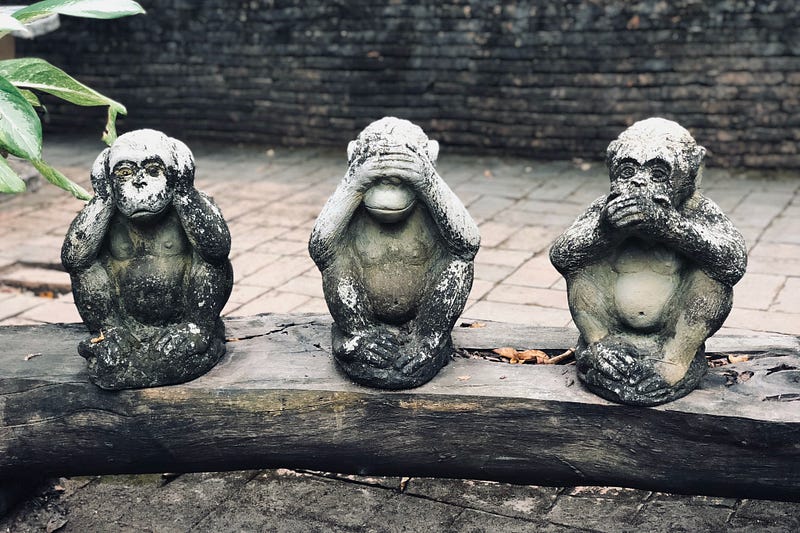
In a revealing interview, the cognitive scientific guru John Vervaeke summarizes his views on how wisdom can free us from “the meaning crisis.”
He thinks that the modern world has gone wrong with its construal of rationality as the logical manipulation of statements. Wisdom is a broader capacity for connecting us to ourselves, to others, and to the world. And meaninglessness becomes a crisis when we feel anxious and alienated because we’re stuck in our head, a condition which Vervaeke thinks of as a kind of self-deception in that we’ve lost the sense of our embodiment.
The wisdom of religious traditions
In Vervaeke’s words,
Human beings face perennial problems of self-deception. They’re continually threatened by anxiety, absurdity, alienation, and you need sets of practices. There’s no panacea of practice; every practice has strengths and weaknesses, and you have to find complementary relations between them. You should always complement a meditative practice with a contemplative practice. You should always complement a seated practice with a moving practice. You should complement an awareness practice with an inferential practice. You have to address the dynamic complexity of your cognition.
And Vervaeke says “wisdom is ecologies of practices that ameliorate foolishness and afford flourishing, that sense of living connectedness. But ecologies of practices have to be honed and situated within communities and institutions that give you access to the power of distributed cognition, to collective intelligence. This is what religions have done.” The problem is that “the very processes that make us intelligently adaptive make us perpetually susceptible to self-deceptive, self-destructive behaviour, both individually and collectively” (my emphasis).
He recognizes, then, that groups can be self-deceptive and self-destructive too, as in the cases of groupthink, mass hysteria, and a mob mentality. But Vervaeke admires how religions performed this role of addressing the dynamic complexity of our thought processes, as opposed to presuming that the sole function of rationality is bean-counting logic.
As he puts it, “Religions worked at all of those levels in an integrated fashion, and that was for good reason. They allowed people to do things individually. You could be a monk and retire into a cave as a hermit, but you also belonged to the machinery of the Church, and it was this multilayered, dynamical system. We have to take seriously that the answer has to be something like that.”
In explaining Nietzsche’s point about God being “dead,” Vervaeke says, “One way of thinking about the meaning crisis is that we need what religions used to do for us.” We need “those ecologies of practices, but for many people established religions are no longer viable. The scientific, secular worldview can’t simply be left behind or abandoned.” Modern people are thus “suffering a wisdom famine.”
Self-deception and embodiment
Indeed, he says, “Most of the ‘nones’ — no official religion — describe themselves as spiritual but not religious…What that means is a spirituality that I do by myself for myself and I cobbled it together on my own. The chances that that’s going to get the functionality you’re looking for are very small. The chances that it’s going to be warped by the very self-deceptive machinery you’re trying to deal with are very high. And that’s the meaning crisis.”
Did you catch that? Those who try to be spiritual in isolation are unlikely to succeed because they’ll tend to deceive themselves. Yet Vervaeke acknowledges that there are collective forms of self-deception. So, we might wonder why Vervaeke is making it seem here as though collective practices are inherently more trustworthy than private ones. And the reason seems to be that organizations such as religions at least address the non-propositional aspects of cognition.
Here’s Vervaeke again:
One way of thinking about the meaning crisis is that we’ve reduced our understanding of what knowing is to merely the propositional level, and we’ve left out the procedural, the perspectival, the participatory. We’ve left out all the non-propositional aspects. In so far as we’ve done that, we’ve actually disconnected our awareness from most of the kinds of processes that are responsible for creating meaning.
So, we think meaning is largely about structuring propositions…but we forget that knowing that gold is an element is dependent on knowing how to do a lot of things. And that knowing-how is dependent on knowing what it’s like to have this conscious state of mind, to have this perspective. And that knowing what it’s like is ultimately based on knowing by being with other things: because I’m an embodied being, I know what it’s like to be a body because I am a body. I participate in embodiment and that connects me to the world in a profound way.
So, in so far as we’ve lost an awareness of how we’re embodied and embedded and enacted and extended, we are trapped in a kind of propositional tyranny, which is another way of thinking about the meaning crisis.
How the Neoplatonist finds meaning in life
Now, to say that we’re living under a “propositional tyranny” is to say that scientific and modern philosophical conceptions of knowledge have held sway, and we’ve forgotten about the ancient Greek ideal of wisdom. Wisdom isn’t just knowing the facts but knowing how to get what we want by building up the required skills or virtues. Those skills include the ability to feel connected and embodied, which are precisely what put meaning in life, according to Vervaeke.
Vervaeke is careful to distinguish between “the meaning of life” and “meaning in life”:
I don’t propose to tell people what the meaning of life is. That’s a metaphysical claim about whether there’s a plan or something like that. I don’t have the relevant expertise. I have doubts about predestination and things like that. What I do talk about is something that I do study and many people study scientifically, which is meaning in life…
Meaning in life is the degree to which people feel that connectiveness to themselves, to each other, and to the world that alleviates or ameliorates that anxiety, absurdity, and alienation, so that life is worth it to them…Do you have those kinds of connections enough that you don’t find life overwhelmingly absurd and futile, that you don’t feel yourself overwhelmingly alienated, that you’re not overwhelmingly beset by both psychological or existential anxiety?
Finally, in describing his personal contemplative practices and those he leads in weekend workshops, Vervaeke doesn’t shy away from laying bare the Neoplatonic framework that guides him. I’ll quote him at length here because this seems to me damning:
For a while I was doing the Stoic practice of the view from above, but then I realized that that practice was taken into a Neoplatonic contemplative practice…So you get people first to be aware of their awareness…your sight, your smell, sound, taste, touch. And then, what do they all have in common? The awareness. So, you become aware of awareness. And then realize that awareness is not just inside you, but it’s also outside you…So you move through these different levels. The Greek terms are physis, psyche, noesis, henosis, theosis…
At the first level when people are in this awareness, you get them to become aware of the continuity of their awareness, how it’s unfolding. And it’s not just in them, it’s also outside of them: reality is unfolding moment to moment; there’s a throughline, and it’s the rhythm of reality. And next, notice that within you there’s this self-organization…it’s feeding back on itself, and then realize that everything else is doing that. That’s psyche, and that’s how everything is like this. And that’s like the melody; everything has a melody and it’s unfolding itself through time, and you are too. And your knowing of its unfolding of itself — these are inseparable in your awareness.
And then you move to: beyond the melody, all these melodies are in harmony; there’s a world, they’re somehow all one together, and you realize that. And you realize that continuity and that coherence — they’re all just three different aspects of this fundamental oneness. And you realize, wow, that oneness is everything, it’s not just a thing, it’s a universal process. And then you realize: behind the process there must be a principle, and then even the principle is based on something more profound and ineffable. And that’s the ultimate; it cannot ever be grasped. And those three things, the process, the principle, and the profundity are also deeply one in some sense, and now you’re at the stage of theosis.
Vervaeke’s doctrinaire contemplations
Here’s what struck me as odd about all of that. On the one hand, Vervaeke is saying that modernity faces a meaning crisis because we’ve forgotten about wisdom, and wisdom is a matter of establishing connections beyond the logical ones between propositions.
Of course, we haven’t just forgotten about wisdom. Instead, science and modern philosophy have obliterated the religious and ancient philosophical assumptions that upheld those ways of training us to feel “embodied and embedded and enacted and extended.” In any case, the point is that if we find secular equivalents of those religious organizations and practices, we can avoid the “foolishness,” “self-deception,” and “self-destruction” of focussing too much on narrow rationality and propositional knowledge when we try to figure everything out by ourselves.
On the other hand, one of those practices, namely that which Vervaeke personally undertakes and leads is one that presupposes the grandiose Neoplatonic metaphysical framework that does indeed posit a candidate for the meaning of life. And that’s a framework that’s far from being obvious or from being anything you can be simply “aware of.” The keyword in Vervaeke’s description of his contemplative practice is “lead,” when he says that besides practicing it himself, “I also lead people through it.”
Calling this a case of broadening awareness, then, is misleading. It’s more like indoctrination. You’ll be meditating in an open-minded state of being “mindful,” and Vervaeke will be droning on in the background, filling your imagination with his guiding images of Neoplatonic wholeness.
Indeed, there’s no such thing as pure awareness since we bring to bear our background knowledge, experience, and conceptions to understand what we might abstractly think of as raw sense data. Many of those conceptions, for example, are pragmatic and anthropocentric. We don’t just generally think of things as they really are; instead, at least in the individualistic West, we’re preoccupied with what they can do for us or with how we can use what we find.
The obvious question to ask about Vervaeke’s Neoplatonic contemplative practice, then, is whether he treats it only as a practical exercise in which he suspends his disbelief or whether he and his students are supposed to believe that Neoplatonism is metaphysically correct, that there really are such levels of progressive “melody,” “harmony,” and ontological “unity.”
Recall that he dismissed the philosophical question of the meaning of life by saying that such a meaning would entail that there’s a “plan,” and he has doubts about “predestination.” But that means only that he rejects a theistic notion of life’s meaning or purpose. This leaves open the possibility of a monistic, Eastern, Daoist conception of life’s meaning. Our purpose would be just what the Neoplatonists said it is, that we should enlighten and deify ourselves by recognizing our oneness with the divine, cosmic unity. Vervaeke is implying that the meaning or grand ambition in life is theosis, a transformative process of achieving union with the ultimate reality that unifies all apparent pluralities.
Mistaking subjective for objective unities
Thus, Vervaeke’s eschewing of that primary philosophical question, in favour of the humbler task of finding meaning in life seems disingenuous. But the reason Vervaeke demurs from taking such a stand seems clear: science and modern philosophy have demolished the basis for Neoplatonism.
Just look at Vervaeke’s description of those levels of awareness. He says you “realize that awareness is not just inside you, but it’s also outside you.” The awareness of awareness is supposed to lie beyond the five senses because it recognizes what they all have in common, namely awareness.
But how does Vervaeke know that that’s not just an act of reification, an analytic inference that needn’t match up with any fact outside our ways of thinking? Maybe this is like the dubious ontological proof of God’s existence, which says that because we have the concept of a perfect being (that would have to exist in reality, not just in the imagination, to be perfect), therefore that being does in fact exist. On the contrary, none of our concepts necessarily agrees with any set of facts. Indeed, all our concepts simplify the facts, and many of them may be only imaginary or badly confused and self-indulgent.
The fact that we can be aware that we’re perceptually aware of things with our five senses needn’t be interpreted as a state of raw, universal consciousness. That meta-awareness might be saturated with religious and philosophical assumptions and interpretations that are extraneous to what’s really going on.
Or take those teleological terms, “rhythm” and “melody,” which Vervaeke slips into his account of the levels of so-called awareness. How does Vervaeke know those patterns are objective? This question is especially pertinent because cognitive scientists understand our penchant for pareidolia, for seeing patterns that aren’t objective or that depend on the interpreter’s ways of thinking.
Apologizing for spiritual charlatans
In short, defending the metaphysical truth of Neoplatonism in the twenty-first century wouldn’t be so clearly viable. That leaves Vervaeke the option of treating that framework purely as a mantra or as a matter of faith or even entertainment. The point would be that the mental exercise works in making Vervaeke feel happier and more connected.
That would be fine were it not for the fact that this pragmatism opens another can of worms. If we ought to engage with some organization to improve our wisdom rather than risk deceiving ourselves as we disconnect from society, are we obliged to prefer organizations whose creeds are at least halfway plausible?
Here again Vervaeke talks out of both sides of his mouth. He says we can’t surrender science’s naturalistic worldview, but traditional religions succeeded in making ancient and medieval people feel their lives were meaningful. Thus, Vervaeke implies that happiness and even wisdom can be sustained by pure delusions since scientific progress means that those old theistic religions were in fact thoroughly wrong in their descriptions of how the world works and of what’s out there for us to find.
If delusions make us “wise,” too, by supporting our mere feeling of being connected to ourselves, to others, and to the world, Vervaeke’s implicitly apologizing for all those gurus who turn out to be fraudsters. If their practices work in building those felt (but possibly bogus) connections, why be so obsessed with questions of propositional knowledge? Wisdom, the skill of getting what we want, such as a happy, meaningful life, might not depend on having philosophically worthy beliefs, namely those that are epistemically justified and likely factual.
Again, Vervaeke posits that broader kind of rationality, the virtue of finding meaning in life through social and felt cosmic connections. Yet those who are “wise” in that sense might also be the most deluded among us. Theistic fundamentalists, for example, might be “wise” (happy and well-connected), while having execrable standards in epistemology, critical thinking, and propositional knowledge. After all, ignorance is bliss.
How dark existential revelations create the meaning crisis
Vervaeke’s handling of the distinction between knowledge and wisdom is convenient also because it enables him to bypass a more obvious cause of the meaning crisis. One reason why we in the late industrial era may have trouble connecting to others and to nature is because we’re humanists.
After the Scientific Revolution and the Enlightenment, we discovered that we have inherent human rights in so far as we’re individual persons with godlike powers of creativity. We found that we’re all members of a species (because of our genotype), and that the human mind is concentrated in the individual brain. Thus, we don’t identify with castes or kingdoms because that kind of class consciousness was a rationalization for patriarchy, slavery, crusades, and perpetual war. We prefer the peace of secular humanism.
But because of the egoism that’s implicit in our secular humanism and our individualism, we feel alienated from nature. We have the liberty to pursue our personal happiness precisely to the extent that we identify as individuals who are not connected to everything else. Moreover, we discovered that nature isn’t God’s handiwork, but is a monstrously inhuman wasteland which we prefer to ignore, as we’d rather fixate on our modern distractions, from social media to tribal politics to hedonistic or creative adventures.
Now, those causes of the modern meaning crisis are largely objective matters of unpleasant advances in propositional knowledge. Vervaeke’s saying we can emphasize practical wisdom to pick up the slack. And I’m saying that his distinction between knowledge and wisdom is dangerous because wisdom — which is ultimately the same as happiness, for Vervaeke and the Neoplatonist — might even be impossible without delusions. The more we know about ourselves and nature, as opposed to the more we feel or mentally project, the more we might be bombarded by life’s absurdities, which in turn would terrify and alienate us.
Vervaeke climbs out on a long, unsteady limb when he says that those modern ills are “foolish” matters of “self-deception.” True, these negative existential impressions might be self-destructive, but it’s possible that intelligent species tend to destroy themselves as their knowledge increases, assuming the cosmic facts to be known are horrific rather than encouraging.
Who is fooling himself more, the atheistic, naturalistic philosopher who reflects on our existential predicament or the happy, well-connected religious fundamentalist? As we see from the Trump cult, QAnon, Evangelical Christianity, and the like, the gullibility, prejudice, and illogic at the individual level can ramify and be exacerbated at the social one.
The wisdom of feeling alienated from objective horrors
In any case, secular humanists who feel absurd, alienated, and anxious have a ready reply to Vervaeke: the facts obtained in the modern world make them feel that way. Who is to say, then, that happiness is more rational in the sense of being wiser than alienation and anxiety?
As psychiatrists recognize, you’re supposed to feel bad when traumatized or when faced with disaster. They go on to say that if these negative feelings overwhelm the victims so they become socially dysfunctional, those feelings might be “mentally disordered.” But that amounts to a political judgment, not to a medical or scientific one. Psychiatrists presuppose that social norms ought to be upheld.
Likewise, Vervaeke presumes that our life should be meaningful, that we ought to be happy, wise, and well-connected. Certainly, those value judgments can be defended, but the point here is that they seem more dubious when juxtaposed with the state of modern knowledge.
Obviously, when theism was the default even in intellectual circles, in much of the ancient and medieval worlds, it wasn’t so hard to feel connected to the world. God was supporting everything, and he’d reward those who do his will. Consequently, folks could identify as Christians or Muslims without feeling cognitive dissonance. But when atheism became the modern default, that kind of naivety was no longer so possible or even admirable.
Vervaeke says in the interview that there’s this other side of the challenge: “You also have to pay attention to the historical forces: you’ve got to think about what kind of worldview you can make that will bridge — in an intellectually, ethically, and rationally responsible manner — between your community and its ecology of practices, and the scientific worldview.” But he adds, “And it goes both ways: you should think of good ways to challenge that scientific worldview; science should always be open to good arguments, good challenges, good questions.”
Thus, Vervaeke likely thinks that the scientific worldview can be pushed in the direction of Neoplatonism or perhaps Baruch Spinoza’s pantheism. Even if that were so — and I’m sympathetic to the pantheistic interpretation — that wouldn’t entail that modern folks ought to expect to be happy and wise (at peace emotionally and practically). Those goals may not be feasible for Nietzschean Overmen. Happiness, rather, might be for sheeple who can be misled into thinking they’re children of God or of a harmonious cosmic whole.
The informed secularists might have to settle for the horror of being aware, rather, of how they’re divorced from the monstrous, pointless, inhuman, amoral wilderness, there being no ascending scale of metaphysical harmonies. The higher wisdom, in that case, would be the sublimation of that cosmicist awe and disgust, the channeling of them into feats of high-tech engineering, existential art, and Romantic tragic heroism, as in ascetic renunciation or the repudiation of degrading social games and hypocrisies.


