
Why It’s So Hard Living With Anxiety
For those of you living “in the dark” about this disorder, there are some things we desperately need you to understand
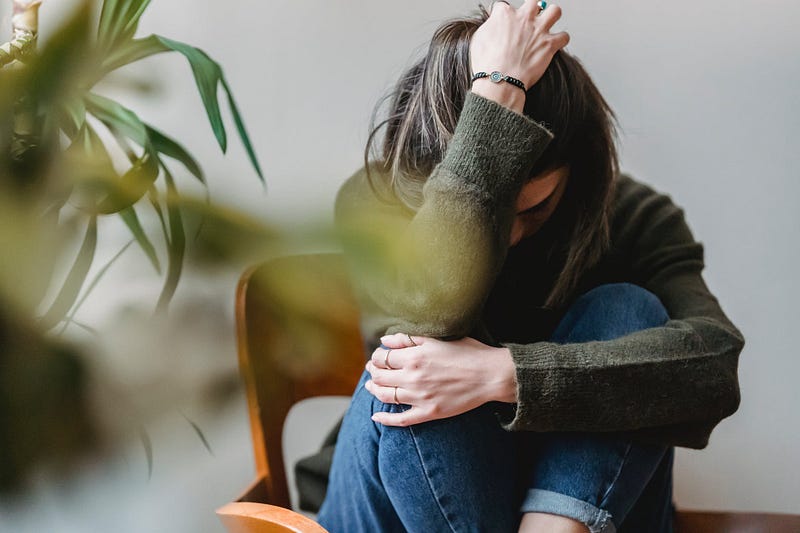
One hour. You have one hour to figure out how to defuse a bomb that could be disastrous.
There’s no one else but you. And you have to dismantle it. Which wire do you cut? The red? The blue? The yellow? The green?
Your heart is pumping as if it will jump out of your chest. Fear clouds your mind, making the situation worse. And even though you know panicking is the worst thing to do, it’s like a battering ram, barging in whether you like it or not.
That ticking time bomb? That sense of impending doom?
That’s what life with anxiety feels like.
And though others try to understand, they really can’t unless they’ve experienced it.
“Everyone’s anxious,” they say. “It’s just a part of life,” they say.
True. But multiply that by ten.
That’s the anxiety disorder over 40 million people and I live with every day.
Let me give you a look inside.
Anxiety exhausts you
Imagine you have a work project due next week.
What do most people do?
They resolve to work an hour or two a week and maybe some extra time on the weekend to get it done.
What does a person with anxiety do?
They stay up all night finishing it the first day they’re informed.
The baby’s running a low-grade fever.
What do most people do?
They give the infant Tylenol, assuming it’s a cold or maybe an ear infection.
What do people with anxiety do?
They set their alarm clock when they lie down to sleep, making sure that every two hours, they can check to make sure their child’s still breathing.
And that’s assuming they can sleep.
To people like me who suffer from anxiety, worst-case scenarios always feel like probabilities.
So, to make sure those probabilities don’t happen, we work to eliminate all the variables we can control.
Which means our bodies and minds never get a moment’s peace.
Loved ones try to tell us to sit down and relax. They try to reassure us that we’re overreacting and that everything will be alright.
So we listen, pretend we feel better, and then go about our disaster checklist in private, so the people who love us won’t know their words didn’t work.
And usually, we manage to hide our symptoms.
Most of us even have the ability to carry on a conversation and act normal when we’re feeling like we’re going into cardiac arrest.
And the reason we have these “superpowers” is that anxiety for us isn’t an episode. It’s isn’t a “once in a while experience.” Instead, it’s a way of life that we must adapt to in order to function.
Anxiety isolates you
For about three years at my job, I was known as the “arrogant teacher” or the “Little Miss Goody Two Shoes,” the woman too uppity to attend lunches or social events with her coworkers.
Even my friends rarely ask me to go on a “girl’s night out.” This is because they know the chances I’ll actually attend and not cancel out at the last minute are slim to none.
And I try, really try, to make myself go to these events. Believe it or not, I actually want to. But again — the “what-ifs” step in and take control.
For example, what if a panic attack comes on in front of all my friends or coworkers? What if I freak out and suddenly run out at an inappropriate moment? What if they see this happen and think I’m crazy?
Countless times, I’ve felt that debilitating wave of panic attack come on when having dinner with friends. And the ritual is always the same.
I make an excuse to go to the bathroom, and then sit on the toilet deep breathing, begging my heart to slow down and trying to wish the nausea away so I can come out and pretend nothing is wrong.
And because these types of attacks occur spontaneously for people like me, more often than not, it simply feels better to stay at home, curl up in our beds, and “ride it out.”
After all, our minds and bodies are already ravaged with anxiety, and socializing just ups the worry quotient.
So we remain alone because home is our safe place.
Anxiety controls you
You know that famous Nike slogan that says “Just do It”?
For people with anxiety, this “seize the day” method to success and happiness feels impossible.
Once again, it’s all about those “what-ifs.”
For example, let’s say a person with anxiety wants to leave their job for a better one that pays more money.
The moment they even start to consider this possibly prosperous move, a debilitating inner dialogue begins.
What happens if I leave and fail at the next job? What if they fire me, and I can’t get another job? What if my whole family suffers and my partner and I can’t pay the bills? What if we can’t pay the bills and …
Long story short?
They stay at their job, even if it makes them unhappy.
What people need to understand about anxiety is that fear often makes our choices, because sadly, it’s more powerful than our desire.
And the fear doesn’t just apply to financial or professional decisions. It also impacts relationships.
Let’s say a person suffering from anxiety is asked out by a crush.
The immediate response?
Elation.
Thirty seconds later, it’s kicked out by distress.
“What if I go and they don’t like me? What if I embarrass myself? What if they see one of my “episodes,” and it scares them off? What if they like me, and then I ruin things?
You can guess the outcome, right?
The date will never happen.
In an article by Women’s Health entitled “30 Women Get Real About What It’s Like to Live With Anxiety,” they use first-person accounts to describe how controlling this disorder can be.
One woman, named only as Kelsey, explains:
“So I battle with myself every day, over-analyzing thanks to anxiety, re-analyzing with logic in an effort to calm anxiety, over-analyze again thanks to anxiety, try a calming tactic in an effort to calm anxiety — and this goes on all day, every day.”
And anxiety sufferers run this hamster wheel anxiety ufferers run every day.
The bottom line:
Actress Busy Phillips told People magazine that she wears an “anxiety necklace.” She explains her reasons, stating,
“I’m proud to wear my anxiety around my neck for everyone to see. I work very hard daily to push through it and not let it get the best of my day.”
So if you have anxiety, don’t ever forget that you’re a warrior despite your illness.
And that’s something to be proud of.
And if you love, live, or work with people like us, please extend a little grace.
Living with a sixty-pound weight on your chest is not an easy job, and we’re doing our best.
If you enjoyed reading, you may also like


