
Why It’s Ok to Silence Our Phones To Power Up Our Minds
Granting Ourself Freedom to Disconnect Helps Us Reconnect
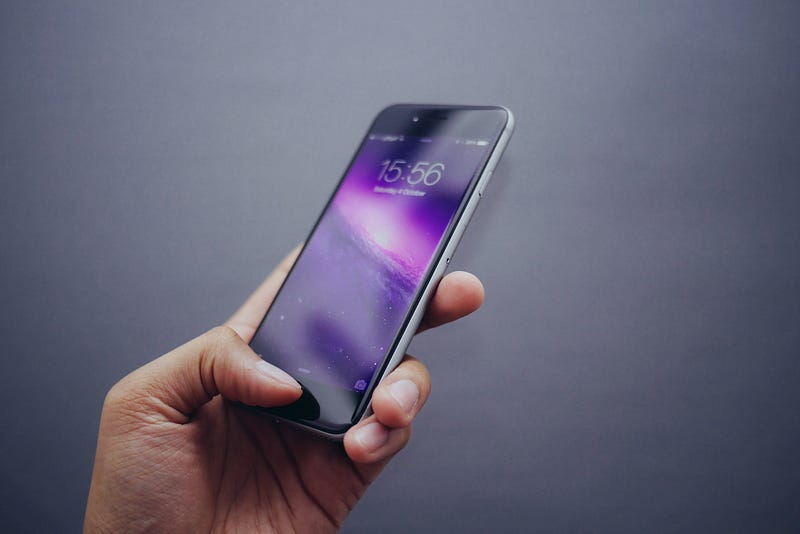
The pandemic ravaged the world’s economy and thrust our lives into crisis mode. Now, we find ourselves glued to our phones more than ever. Text messages, emails, and news alerts create a cacophony of pings, dings, beeps, and buzzes.
No one is immune to the viral effects of information overload.
We want to stay informed as we navigate the uncertainty of COVID-19 life, but the constant negativity stream triggers anxiety and pessimism creating a new pandemic of device fatigue afflicting people around the world.
While social media and real-time news updates help connect us to the world, sometimes what we need most is to disconnect.
The DO NOT DISTURB feature is now a life-saver.

Celebrate the silence
It is ok to be unreachable. The world will not end.
Sometimes, we need to disconnect and clear the cache. Our busy brains need a break.
Text messages can wait. Emails do not require an immediate response. Today’s business project is not mission-critical. Slacking off Slack alerts is acceptable. The latest tweets will still be there tomorrow, and updating Facebook is never that important.
What is important is clearing our minds of clutter and noise. We can not neglect self-care. If we do not protect ourselves, we are of no use to others.
Place a protective wall using the “do not disturb” feature. Reducing sounds and alerts helps us stay focused and on task. Granting ourselves the freedom to disconnect allows us to reconnect with our thoughts and emotions. Our fear of missing out will be replaced by an increase in productivity.
Our productivity improves when we manage our minds. When we try to do too much at once, we accomplish little.
I have to keep reminding my multitasking self of this fact.

I am guilty of multitasking
I am the weirdo who checks email while stopped at red lights and reads the news in line at the grocery store. I type on the computer and glance at alerts on my watch. I dictate emails on my phone while streaming music on Alexa. All done with the TV playing in the background.
Apparently, I am not alone. According to Inc’s poll, 49% of people read text messages while in the bathroom. I read this shocking stat the other day…while in the bathroom.
Recently, I was multitasking while reading articles about managing my children’s screen time.
The irony was not lost upon me.
Here is Why I Am Prioritizing Kid Time Over Screen Time
Emulate what we want to replicate
medium.com
Here are 6 practical steps to disconnect and increase productivity
- Protect your mornings: Set aside a time of the day to be alone and enjoy the quiet time. Read, relax, exercise, think. Make this time your own, and enjoy the life you have created. My sacred time is the morning.
2. Protect your nights: Putting the phone down at night is a challenge. There is always “one more thing” to do. Letting go is hard, but screentime stimulates the mind. It disrupts melatonin production and leads to poor sleep. Reserve the bedroom for sleeping and romance.
3. Use the “Do not disturb” feature: Yes, that little half-moon symbol on your home screen we have all been ignoring. If you have not met, let me introduce you to your new best friend. While at first, I felt a pang of technological guilt, I quickly learned something. I am not that important; the world survived, and I found peace.
4. Edit push notifications: Turn them all off or at least be intentional about it. Most of us “opt-in” on new app notifications. Then, Newton’s law of inertia prevents us from ever making a change. We can all spend a few minutes updating our app settings so we only see the notifications we actually need.
5. Block out strategic social media time: Pick a time to zombie-scroll and go for it. We all deserve some guilty pleasure. Scroll through Instagram cat photos to your heart’s content but surf with purpose.
6. Be intentional: Every minute matters. With work or play, our time is valuable and limited as we struggle through the elusive challenge of work-life balance.
My current goal is to stop the Pavlovian reflex of picking up my phone whenever I have a break. I am not there yet. Muscle memory is hard to change, but each day we take steps towards personal growth. Granting ourselves the freedom to disconnect is one important gift.


