
Never Let Criticism Hurt You
Take back control of your emotions

Your boss says, “you suck at your job.” Your mother-in-law points out your expanding waistline. Your business receives a new one-star online review. Your coach benches you because “you are too slow on the basketball court.” Critics are everywhere. They will always be there.
Being criticized hurts. It hurts because we are human. We experience pain when others point out our weaknesses and our faults. Often, our critics go for the jugular, attacking the areas where we are the most insecure. This augments the pain.
How do we manage omnipresent critics?
Choose how you receive detractors
We frame negative comments as either helpful or hurtful. When criticism is valuable, we call it constructive. We understand our boss, coach, spouse, or colleague has our best interests at heart. When criticism is hurtful, we cast off the detractor as a jerk. In both circumstances, our focus is on the person attacking us. We are reacting to the detractor.
In a growth mindset, we shift our attention inward
Reacting to the other person does not serve us. It gives power to the critic. But it is not the critic who triggers our feelings. Our interpretation of their words do. The thoughts in our head trigger our emotions. We can choose how we interpret criticism. Our thoughts determine whether these moments become constructive or destructive.
The easy path leads nowhere
Most of us take the easy way out, allowing criticism to be destructive. The negativity feeds our self-doubt. It empowers the voice inside our heads telling us we are not good enough. We get down on ourselves. Our self-confidence sinks. We become angry, depressed, resentful, or withdrawn. Inadvertently, we relinquish control to the critic, giving them strength, as they now control our emotional response.
The harder path leads to self-discovery
Our critics expose our blind spots. They open a window that we prefer to keep closed. We are exposed. Instead of slamming the window closed, muster the courage to stick our heads in and look around. Seeing ourselves from a different perspective, we get a glimpse at our blind spots. In these moments, criticism transforms into opportunity.
Listen to our critics
Elements of truth are often present when we allow ourselves to be vulnerable. When we listen and process the words of our critics, we find opportunities to learn. We can categorize criticism as true or untrue, and useful or useless. None of our attention should be waisted on that which is false or useless. All of our energy should be focused on what is true and useful.

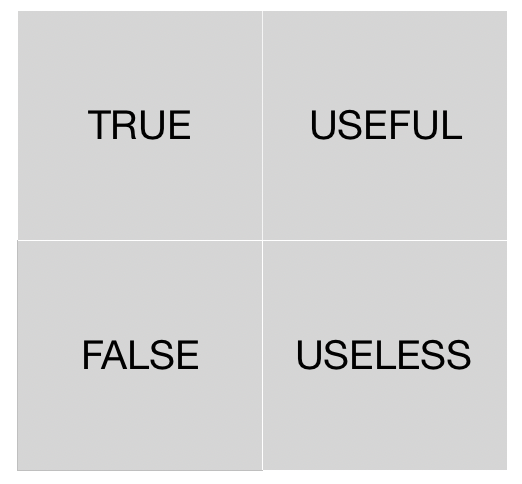
Criticism transformed
Ignore what is untrue. Expend no energy on criticism that is not useful, even if it is true. Spend your bandwidth on criticism that is true and useful to you in achieving your goals. Embracing the useful truth robs the critic’s power over your emotions. Find the truth. Embrace it. Ignore the rest.


