
Why is Universal Basic Income (UBI) Gaining Attention?
Benefits and Criticisms
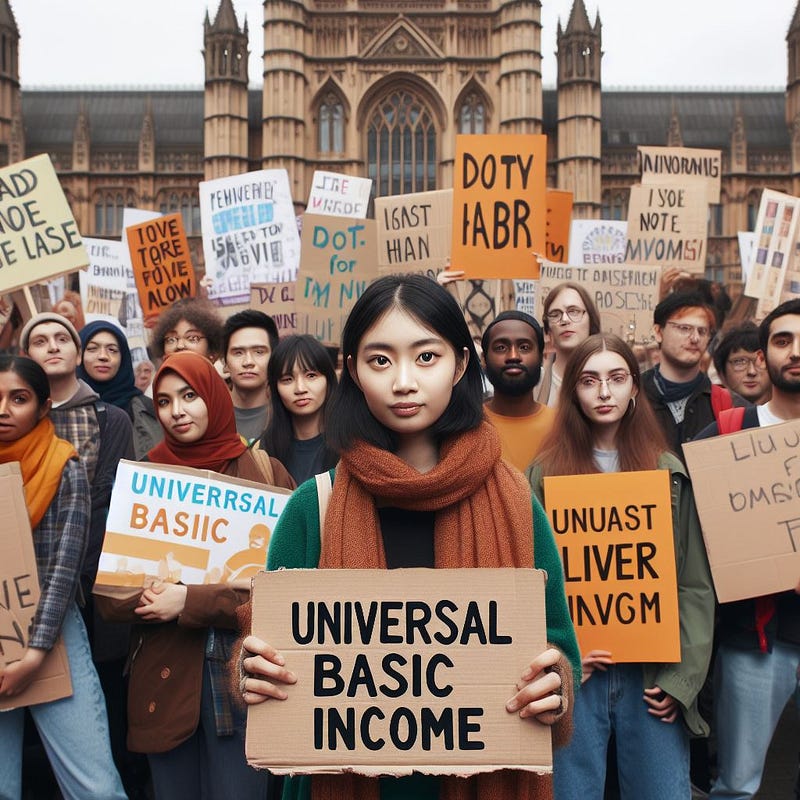
Basic Income, also known as Universal Basic Income (UBI), is a progressive concept that proposes a regular payment to every individual resident, regardless of their circumstances, without any means test or work requirement. The goal is to provide enough income for people to live a frugal but decent life, irrespective of additional earnings or employment status.
Why Basic Income is gaining attention?
- Caring Society: No one should be deprived of their basic needs due to circumstances of birth or life’s accidents. Basic Income ensures a safety net for all.
- Quality of Life: Everyone deserves control over the balance between paid work and other aspects that make life meaningful. Basic Income allows individuals to pursue interests beyond mere survival.
- Dynamic Economy: By supporting risk-taking entrepreneurs, eliminating poverty traps, and injecting spending power into neglected communities, Basic Income contributes to a more vibrant and equitable economy.
In essence, Basic Income seeks to strike a balance between economic security and personal freedom, fostering a society where everyone has the opportunity to thrive.
As of early 2022, no countries have fully implemented a truly universal basic income model. However, several countries have discussed and debated UBI models, and some have launched UBI-like programs specifically designed to aid the neediest individuals. Let’s see some notable examples:
- Iran: Iran has implemented a full universal basic income program, providing regular payments to all citizens regardless of their employment status or income.
- Spain: In response to the COVID-19 pandemic, Spain used the momentum to launch fully-fledged basic income pilots, demonstrating a commitment to exploring this social service model.
- Other Countries: Many governments and private organisations worldwide have conducted pilot programs to determine the practical cost and effectiveness of universal basic income. These experiments have taken place in countries such as Finland, Canada, the United States, and Brazil.
While the debate continues, the concept of basic income remains a powerful tool for addressing poverty, enhancing quality of life, and fostering economic stability.
Benefits of UBI
Universal Basic Income (UBI), offers several compelling benefits:
- Changing World of Work: Our economy is evolving, with more part-time, precarious, and self-employment opportunities. UBI provides a safety net, allowing people to explore entrepreneurship, education, or caregiving without fearing a complete loss of income. It eliminates unemployment traps, ensuring that individuals are better off when they take up employment.
- Improved Quality of Life: UBI empowers everyone to choose how they spend their time. Whether in paid work, caring, volunteering, or leisure activities, it enhances living standards and aligns with the goal of overall well-being.
- Environmental Benefits: Economic growth alone isn’t sufficient for social well-being and environmental goals. UBI promotes a society and economy that prioritises environmental protection. As automation and globalisation impact certain sectors, UBI allows flexibility for innovation without compromising well-being.
- Choice and Flexibility: Having a safety net enables flexibility and innovation. Individuals can explore new paths without fear of financial ruin. UBI fosters a society where everyone has the freedom to make choices that align with their aspirations.
- More Equal Societies: Evidence suggests that societies perform better across various metrics (health, crime rates, etc.) when there is less inequality. UBI contributes to a fairer distribution of resources and opportunities, creating a stronger social fabric.
UBI isn’t just about financial support; it empowers individuals, protects the environment, and builds a more equitable world.
What are some criticisms of Basic Income?
Certainly! Universal Basic Income (UBI) has garnered both support and criticism. Some of the key criticisms are:
- Philosophical Concerns:
Individualism: Critics argue that UBI is a radically individualistic concept that overlooks the role of households, families, and other institutions in income distribution. It fails to consider how people choose to live in a free society.
Dependency: Some worry that UBI might create dependency, discouraging work and self-reliance. The fear is that people may opt for a basic income without actively contributing to society.
2. Economic Implications:
Cost: Implementing UBI on a large scale can be expensive. Funding it through taxation or other means poses challenges.
Inflation: Critics suggest that injecting a significant amount of money into the economy could lead to inflation, affecting purchasing power.
Labour Market Disincentives: Concerns arise that UBI might reduce the incentive to work, especially for low-wage jobs.
3. Social and Political Effects:
Wealth Redistribution: Critics argue that UBI doesn’t address wealth inequality directly. It provides the same amount to everyone, regardless of their existing wealth.
Democratic Politics: Some believe that UBI could weaken democratic politics by shifting focus away from collective decision-making and public services.
Stigma: There’s concern that receiving a universal payment might carry a stigma, especially if it’s perceived as a handout rather than a right.
4. Implementation Challenges:
Logistics: Administering UBI efficiently and ensuring it reaches all eligible individuals can be complex.
Targeting: Critics argue that a universal approach might not effectively reach those who need it most. Targeted programs could be more efficient.
While UBI offers potential benefits, addressing these criticisms is essential for its successful implementation.