
How To Tell If Someone Is Truly Smart Or Just Average
The markers of true intelligence are far more nuanced than we often give credit for.
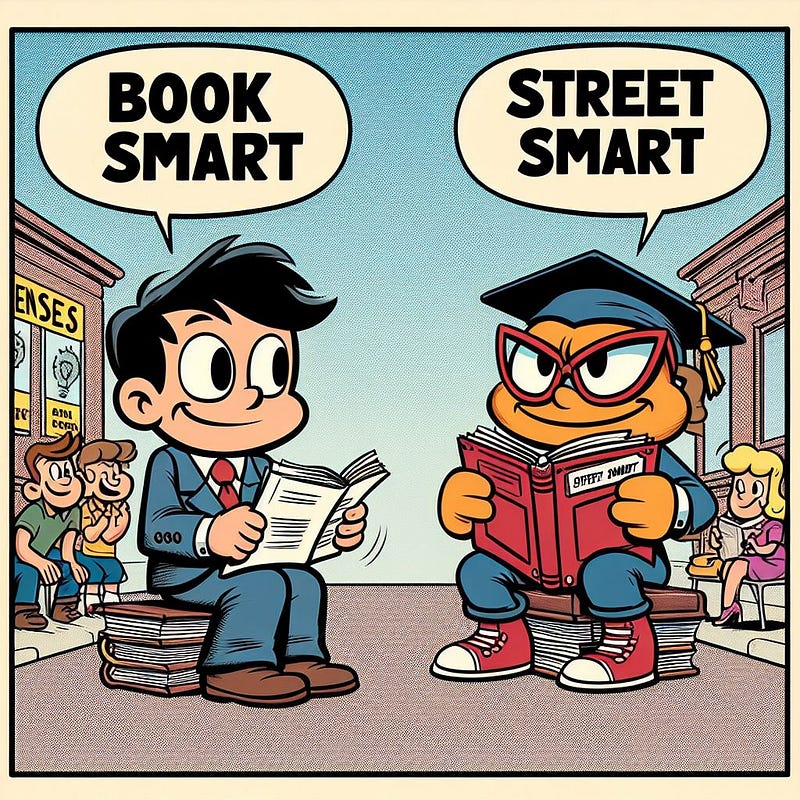
Ever been in a conversation and found yourself wondering, “Is this person genuinely sharp, or are they just skilled at sounding smart?” It’s a common daily puzzle in the social space. The world is filled with diverse intellects, so deciphering between true brilliance and the facade of intelligence can be as tricky as solving a Rubik’s Cube blindfolded.
So, what are the subtle cues and nuanced behaviours that distinguish the truly smart from the averagely clever? Forget about IQ tests and academic accolades; we’re using real-world indicators that separate those who are authentically sharp from those who’ve mastered the art of sounding intelligent. What are the tangible traits and behaviours that reveal the genuine brilliance lurking beneath the surface?
If you are curious about how to differentiate between truly smart people and those who are just average, in this article, I will share 7 ways to tell if someone is truly smart or just average. I will discuss each point and provide real-life examples to help you identify truly smart people.
- Curiosity: Smart people are curious and always eager to learn new things. They ask questions and seek answers. For example, Albert Einstein was known for his insatiable curiosity and his relentless pursuit of knowledge.
- Open-mindedness: Smart people are open-minded and willing to consider different perspectives. They are not afraid to change their minds when presented with new evidence. For instance, Charles Darwin was open-minded enough to revise his theory of evolution when new evidence emerged.
- Humility: Smart people are humble and recognise that they don’t know everything. They are willing to admit their mistakes and learn from them. For example, Mahatma Gandhi once said, “It is unwise to be too sure of one’s own wisdom. It is healthy to be reminded that the strongest might weaken and the wisest might err.”
- Empathy: Smart people are empathetic and can understand other people’s perspectives. They are good listeners and can put themselves in other people’s shoes. For instance, Oprah Winfrey is known for her ability to connect with people and understand their struggles.
- Creativity: Smart people are creative and can think outside the box. They can come up with new ideas and solutions to problems. For example, Steve Jobs was a creative genius who revolutionised the tech industry with his innovative products.
- Resilience: Smart people are resilient and can bounce back from failure. They don’t give up easily and are willing to try again. For instance, J.K. Rowling was rejected by multiple publishers before finally getting her first book published.
- Self-awareness: Smart people are self-aware and know their own strengths and weaknesses. They are honest with themselves and others. For example, Warren Buffett is known for his self-awareness and his ability to recognise his own limitations.
The markers of true intelligence are far more nuanced than we often give credit for. While the ability to articulate complex ideas is certainly a valuable skill, genuine brilliance goes beyond eloquence and extends into emotional intelligence, adaptability, and a humble eagerness to learn.
When you find yourself in the company of someone seemingly brilliant, look beyond the surface. Assess their willingness to listen, their ability to connect with diverse perspectives, and their continuous pursuit of knowledge. Intelligence is not just about what someone knows but how they handle what they don’t.
Smart people are curious, open-minded, empathetic, creative, resilient, self-aware, and humble. They are always eager to learn new things, willing to consider different perspectives, good listeners, and can think outside the box. They can bounce back from failure, recognise their own strengths and weaknesses, and admit their mistakes. In contrast, average people may lack these qualities and may not be able to connect with people or understand their struggles.