
Physics
Why is there an Arrow of Time? (# 14)
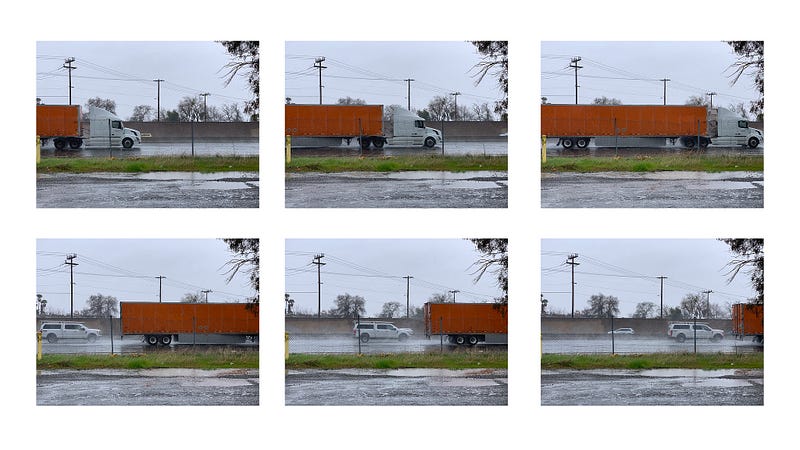
An earlier article proposed that a time-like dimension in Anti-de Sitter (AdS) space was created as a result of the topology of the AdS space, a Klein bottle. George Spencer-Brown argued in his Laws of Form that when a train re-enters a region which it has previously visited, the state of that region is both ‘Marked’ and ‘Unmarked’. This simultaneous existence of contradictory states can be mathematically resolved by the creation of a time-like dimension. In the topology of AdS space, Platonic solids are the equivalent of trains traveling along the surface of a Klein bottle. The creation of a fourth time-like dimension, however, does not necessarily imply that time only flows in one direction.
In this article, it will be argued that the arrow of time emerges from an Efimov effect that creates more complexity. In particular, this and the following articles suggest the emergence of an arrow of time helps explore what happens when consciousness becomes more complex.
Gödel’s Impossibility Theorems
Cosmologists believe our universe exists in a De-Sitter (DS) space, a space with positive curvature. According to Alfred Tarski, Elementary Euclidean Geometry is not a complete axiomatic system in DS space. The mathematician, Kurt Gödel, proved that when the axioms of a mathematical system are not complete, a complete explanation for the world is impossible; there are always at least two explanations i.e. one explanation is a limiting case of a larger explanation. Gödel’s Impossibility Theorems also imply there are truths that cannot be proved.
If our universe were in a DS space, a complete description of our universe would be impossible. Even if every feature of our universe could be explained, there would always be a different explanation that includes this explanation as a limiting case.
If an entity in an AdS space were to create a DS universe, where that DS universe teaches itself to describe itself, the process of self-description would lead to the creation of something new i.e. a more comprehensive description of a larger DS universe; something more complex. In brief, if an entity in AdS space were to create a DS universe, it would have created a process resulting in continuous increases in complexity. A possible caveat to this conclusion of continually increasing complexity is that a larger DS universe does not destroy its own ability to describe itself.
To reduce the risk of a self-destructive DS universe being created, the AdS entity might populate a DS universe with features that enhance the survival prospects of DS inhabitants. Our universe could be designed to test how potential inhabitants of a DS universe might behave. Our universe may be part of an AdS space with our universe being designed to seem like a DS universe.
A De-Sitter Universe
Physicists who have developed String Theory have suggested that a stable universe consistent with its mathematics has 10 dimensions. Three of these dimensions are space, a fourth is time and the rest are all curled up i.e. too small to see. In line with this mathematics, the suggestion in these articles is that the six curled-up dimensions are our usual five senses and a sixth sense, the ability to conceptualize.
The Efimov effect creates mathematical outcomes that can be viewed as ‘forces’ or ‘rules’ in a boundary. In brief, an Efimov effect can create an effect equivalent to increasing the number of dimensions but these dimensions are only appear in a boundary as curled up dimensions. The evidence that curled-up dimensions exist lies in the effect they have on events in a boundary.
The creation of six senses provides the dimensional infrastructure required for the creation of a stable DS universe. Qualia is a term used to describe the qualitative character of an experience e.g. what is it like to feel pain. Qualia are part of what has been described as the Hard Problem of Consciousness. Qualia associated with the six senses make the nature of the universe more complex. We cannot be sure that other people experience qualia in the same way i.e. what is it like to see red. This problem is similar to one of the conclusions of Godel’s Impossibility Theorems: it may be true that ‘red’ is the same for all of us but we cannot prove it.
One type of qualia that could have been created by an Efimov effect is our belief that we have experienced our past but the future has still to happen. This dichotomy between past and future is consistent with a subjective experience of why time appears to flow in one direction. More importantly, in a DS universe, the future will not be known with certainty because, according to Gödel, a DS universe can never be fully described mathematically. So creating the features of a DS universe in an AdS space would require the future to be unknown. One of the reasons for our universe to have an arrow of time is so that it approximates the appearance of a DS universe where the future is unknown.
Qualia
When the future is unknown, inhabitants of such a reality may experience emotions like fear of the future. A reality with an unknown future is a source of complexity. When an over-arching rule underlying the creation of a universe is ‘What can happen, does happen’, a universe where there is an arrow of time is a possibility to be explored. Our universe is an example of a rule-driven mathematical structure exploring different types of complexity.
The degree of complexity in our universe is enhanced by having attributes of additional curled-up dimensions being experienced subjectively i.e. the existence of qualia where experiences of those qualia cannot be conclusively shown to be exactly the same for everyone. We might dream of shapes and colors, but we know these shapes and colors are not real. In the same way, content in the boundary of an AdS space appears real but is in fact analogous to content in a dream. While witnesses of what happens in a boundary may seem to have the same perspective, these witnesses cannot be sure that their perspectives are identical. Content in a boundary may also be likened to icons on a computer screen; the icons are not synonymous with what they represent.
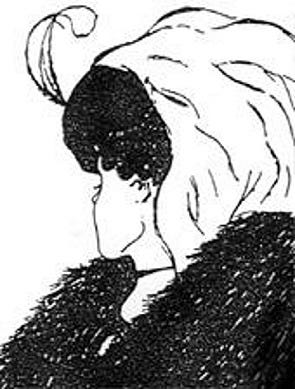
An entity witnessing events in a boundary could have an experience similar, but not identical, to view a virtual reality game. Like the image of a young girl/old woman/random lines, a witness can only see one of the images at a time. When a witness sees random lines, the witness is not ‘alive’. When the seen image is, say, a young girl, the witness identifies completely with the image i.e. the witness becomes ‘alive’ as the young girl; the witness cannot see anything else.

Five of the curled-up dimensions are our five senses.
- The sight includes the capacity to visualize as well as qualia such as color;
- Sound includes hearing as well as qualia such as a screech associated with a car breaking hard;
- Feeling includes physical sensations as well as qualia such as emotions and pain. Other qualia could be forms of telepathy e.g. feeling another person’s experience;
- Taste includes flavors like peppermint as well as qualia such as aesthetics and beauty;
- Smell includes odors as well as qualia such as a capacity to smell fear;
A sixth sense is associated with an ability to conceptualize, an ability to think. Qualia associated with this sixth sense include intuitive awareness of future possibilities. Stuart Kauffman has introduced the term ‘adjacent possible’ which has been described as:
… a kind of shadow future, hovering on the edges of the present state of things, a map of all the ways in which the present can reinvent itself…
A space-time simulating a DS universe could include rules that prevent the possibility of accurately predicting the future. Our universe could be designed with a limited number of possible endpoints but with the flexibility to have several different paths leading to those endpoints. Some inhabitants of our world may learn how to become skilled at developing good intuition about the future even when that future is unknown. Some paths are possible, some are not. While the rules of our universe may prevent perfect knowledge of the future, some people may still have better intuitive skills than others.
The question for this article is:
Do you think you can predict future outcomes better than random chance?
To view the headings of all the articles to be published in this series please click on https://readmedium.com/orbiting-stars-and-origin-of-our-universe-338906930f51
To obtain a copy of the book ‘Orbiting Stars’ which contains the first drafts of all these articles, please visit https://www.amazon.com