
Why iPhone May Soon be the Product of the Past
I remember reading a fable about a friendly giant.
When a huge war between Good vs Evil ensued, a friendly giant was compelled to take the Good side. After claiming numerous casualties with his warfare, the Giant got stuck by an arrow in his weakest spot —his Achilles Heel.
Be the biggest that you can, and fall on the enemies.
Realizing he was about to die, evil side started rejoicing. Armies on the Good side feared that their defeat was imminent.
At that moment, a wise man on the Good side shouted at the Giant: “Be the biggest that you can, and fall on the enemies.”
His twinkling eyes showered last respect on dying Giant’s sacrifice. The Giant simply followed the wise man’s command.
He turned into the biggest giant he could, and fell on the enemy armies.
The Good side won.
iPhone 12 May Not Ship With a Power Adaptor:
Apple has a history of making insignificant, illogical moves before taking a giant leap.
Rumor mill has strongly predicted that iPhone 12 is dumping the adaptor from the box that will ship the most awaited device of the year.
(There has been a conflicting rumor too — claiming that iPhone 12 is shipping with a 20W one. This article doesn’t rely on this fact alone.)
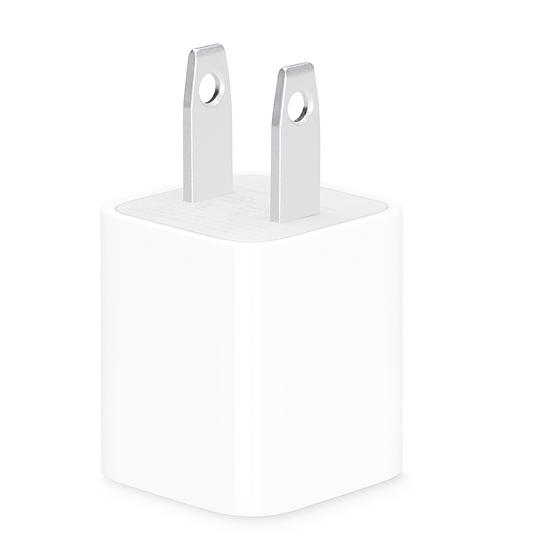
According to Kuo, a well-known Apple analyst, iPhone 12 may ship without power adaptor this year. As a result, iPhone 12 box will only contain USB-C charging cable.
The stated objective for the move is to reduce environmental impact — among other things. But the main objective is to cushion the production cost hike resulting from 5G-enabled device design, coupled with COVID affected supply chain delays.
To account for the increased production costs, Apple may also not ship EarPods that always ship as a given accessory.
Now, who has the audacity to believe that?
But It’s a Pattern:
Apple is known for making crucial things obsolete
Apple was much criticized for its decision to dump 3.5 mm headphone jack. Google did the same thing a year later for Pixel, and no one noticed.
The decision was simply in line with Apple’s aim to design sleeker device that allows more screen space, with screen aligning with the device edges. Headphone jack was mechanically unfit, and Apple saw an opportunity for to sell Lightning cable.
But that still doesn’t explain the reason behind dumping the 5W adaptor. And no, pricing isn’t the issue. The accessory costs $20. Even SE buyers wouldn’t be price sensitive enough to complain about $20 more pinned on the device price.
Apple is known for making crucial things obsolete. The list of things include Macs. I own a late 2012 mac mini which fortunately hasn’t been rendered obsolete as of Catalina. But every time Apple announces an OS upgrade, I hold my breath.
MacBook users haven’t been that lucky. Rumors also have it that its first-ever Retina MacBook, the mid-2012 MacBook Pro 15-inch, will be obsolete.
Apple does it quite often , and gets blamed for it. Sometimes it does it to genuinely innovate. Sometimes it does it to have better control over the hardware manufacturing process and supplier chain.
And all the times — for better profits.
Reason?
Apple’s strongest arm is iPhone. That, unfortunately, is also its biggest challenge.
Like that friendly, dying giant on the Good side.
iPhone Keeps Holding The Biggest Pie In Apple’s Revenue:
Despite investors disliking it, that has been the case.
Apple’s leadership is worried about its over-dependence on iPhone.
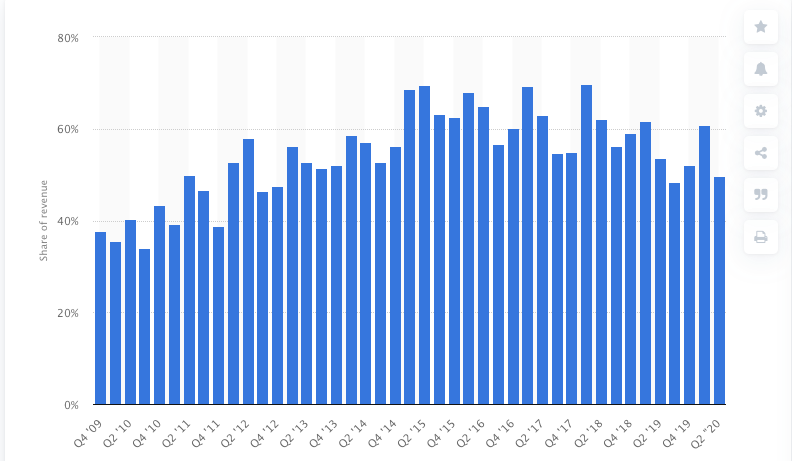
iPhone’s revenue share is falling gradually, though. In the last two years, it has fallen from 70% to approximately 60%.
At the same time, other avenues are slowly progressing too. Wearables is leading the way.
It has been part of Apple’s serious efforts to move away from iPhone to services (i.e. App store, Apple TV et al). IBM did something similar during 1990–2010.
Apple Watch has made incredible progress, too. In 2019, it outsold Swiss Watch market.
But what rarely anyone remembers is the fact that just before first Apple Watch was introduced in 2015, Apple came up with HealthKit app. At that time, it could sync data with other health-measurement devices. While Apple might already have the specimen in testing labs, its HealthKit objective might have been to observe what sensor industry comes up with, then use its trump card having seen the game.
Apple has a history of making insignificant, illogical moves before taking a giant leap.
Last year, Apple made yet more progress towards dismantling the iPhone dominance by announcing Apple TV+ — a much hailed transition from product-centric to service-centric company. The price point of $4.99 against established leaders like Netflix was to provide enough leverage to its Apple TV box.
Apple Silicon could lure more app developers in Apple’s ecosystem + attract PC users towards Mac for premium app experience.
This year, Apple unified its app hardware by dumping intel. Its new Apple Silicon powered mac will run iOS apps smoothly. This single move, if executed well, could lure more app developers in Apple’s ecosystem and attract PC users towards Mac for premium app experience.
All this seemingly insignificant yet agitating moves are geared towards profit. But the motivation for this kind of profit is less confidence, more fear.
Fear of the inevitable transition.
To combat this fear, Apple keeps dropping these subtle hints for its iPhone user base: Innovate your digital habits as we move towards a better, shared future.
Because there is a limit to how much iPhone (or any given device) can innovate.
iPhone Cannot Innovate More:
Innovation has died after Steve Jobs.
Some time ago, I wrote about how under Steve Jobs’ vision, Apple transformed the industry by leveraging App Store.
After Steve Jobs, there has been widespread opinion in mobile users’ community: Innovation has died after Steve Jobs.
This isn’t true. Steve Jobs might have seen it all, may have played dominant role in devising long-term product map, and Apple might just be following territory charted out by him.
In reality, it has been a constant race for diversification.
iPhone 12 supposedly dropping power adaptor is not a cost-cutting measure. It maybe a step in the constant journey to dismantle the things of its own making.
When Apple rose, Nokia fell, because it could not imagine a mobile device without a hardware keyboard.
To do that, one must be able to change users’ habits. How comfortable are you using a Wireless charger? If you take that, we will welcome you next year with a virtual screen that can come to life with a gesture.
When Apple rose, Nokia fell, because it could not fathom a mobile device without a hardware keyboard. When iPhone was introduced in 2007, along with its App Store arsenal, it was touted as a panacea to almost every problem on earth.
Almost 2 decades, Apple has witnessed a generation change. Having seen one-phone-that-does-everything, users have moved from smartphone-only solutions to smartphone-assisted ones (Peloten Bikes, Mirror). And they don’t necessarily belong to niche users.
AirPods may soon complement a sleek noise-cancelling microphone. Apple Watch is already handling calls. With its price tag, iPhone as a gaming device is a hard sell against XBox and VR et al. iPad is already a proven educational smart device. An iCamera wouldn’t hurt, unless Apple runs out of patents.
By dropping tiny little things like an adaptor or headphone jack, Apple is telling its customers:
- Get used to different accessories, for we are diversifying, and taking more control of our hardware
- Get used to changes in your iPhone experience. We may be unable to sustain depending on it alone for long, or we might just meet Nokia’s fate.
- We aren’t interested in selling curved glass cellphones and call it a smartphone innovation.
iPhone may survive a couple of years with tiny pieces of redesign.
But it really doesn’t need a redesign. It needs replacement. Maybe not in a couple of years. But not necessarily a decade.
Pulling It Off:
Overarching iPhone pricing, coupled with deprecating accessories, only forecasts single thing.
Dismantling your major product is an easy task for a disrupting startup. It maybe a one beer night decision for carefree cofounders. Suitable patent is all one needs.
For a company of Apple’s scale, the task is more than coming up with a new design. It requires realignment of significant workforce, along with intensely flexible coordination with supply chain.
The key driver for such a change can be a combination of factors: Smart workforce, flexible operations, and humble managers are the key ingredients that Apple cannot do without. If not, it may meet Nokia’s fate.
Revenue churn + happy investors is the X factor. Apple is at a place where it can afford to lose money on a tiny offering (Apple TV, for instance). Losing money on its flagship product will be loss of money + brand value.
iPhone is Apple’s status quo. Dumping the status quo requires courage for anyone. For Apple, it’s a risk.
That’s why, Apple must keep feeding and weaponizing its strongest warrior iPhone — despite knowing the fact that it has been wounded, and will die sooner or later.
Overarching pricing, coupled with deprecating accessories, only forecasts single thing.
That iPhone is about to die. Before it does so, Apple will audaciously extract the maximum it can yield to power its post-iPhone existence.
iPhone will most likely die like the friendly giant.