
Why I’m Happy To Be Overweight!
Before I was overweight, I was obese.
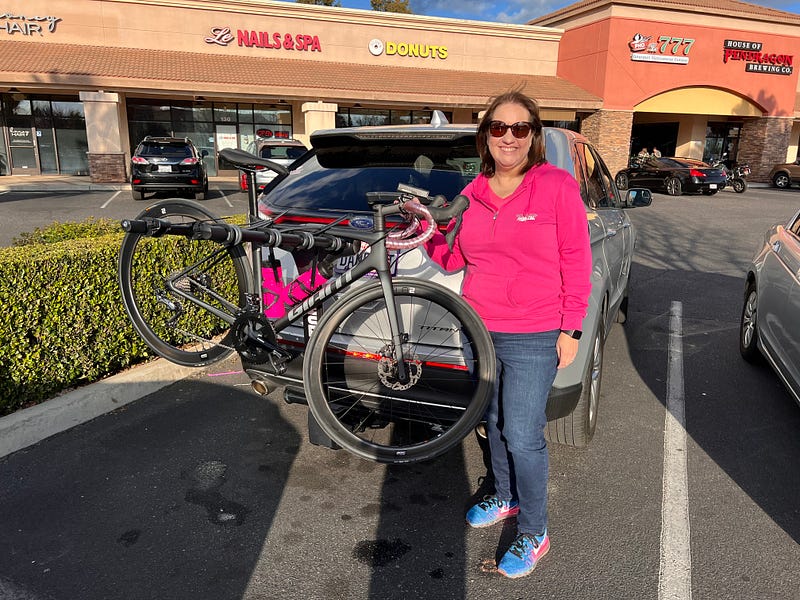
On March 1, 2022, I hit the 6-month mark on my weight loss journey after gastric sleeve surgery. I’ve reached many milestones, and I should hit 100 lbs lost in the next few weeks! I’m currently down 97.4 lbs, and it has been a tremendous change for me, but with a Body Mass Index (B.M.I.) of 29.5, I am still considered overweight.
Body Mass Index (B.M.I.)
Since the 19th century, governments and physicians have used B.M.I. to determine whether or not an individual is at risk for certain diseases. However, according to a recent Healthline article, B.M.I. is not necessarily the most accurate measure of someone’s health.
There are plenty of critics out there.
In an article in Scientific American, Get-Fit Guy Brock Armstrong uses the examples of famous athletes and Olympians categorized as obese using the B.M.I. measurement. Armstrong reports that this is because “a glob of muscle weighs about 18 percent more than the same size glob of fat.” In addition, Armstrong explains that B.M.I. may not be accurate in elderly individuals due to loss of muscle and bone mass.
A New York Times article by Alice Callahan asked Is B.M.I. a Scam? and found that many health professionals feel it is not a useful measure of individual health, and some did feel it was a scam.
The health professionals interviewed by Callahan noted that B.M.I. is useful for predicting certain diseases when looking at large groups of people. For example, Dr. Joann Manson of Harvard Medical School stated, “It is a very useful tool in epidemiologic research.”
Many health professionals pointed out to Callahan that the main problem with B.M.I. is that it doesn’t measure if the weight is coming from muscle, fat, or bones. This discrepancy is why an N.F.L. quarterback, such as Tom Brady, is considered obese according to his B.M.I.
According to the Harvard School of Public Health,
“BMI is not a perfect measure, because it does not directly assess body fat. Muscle and bone are denser than fat, so an athlete or muscular person may have a high BMI, yet not have too much fat. But most people are not athletes, and for most people, BMI is a very good gauge of their level of body fat.”
Obesity and me
I understand that B.M.I. is not the most accurate measure of health, but honestly, for me, it was not the only indication that my health was at risk. For example, I became easily winded when taking short walks or climbing stairs. I was never diabetic, but my glucose levels were rising. And I was diagnosed with a fatty liver.
As I’ve noted in the previous chronicles of my weight loss surgery and my progress 60 days post-op, I have struggled with my weight throughout my adult life. Growing up, I was always an average weight, and I never felt comfortable at a heavier weight.
I knew that the weight was affecting my health, but it took losing nearly 100 lbs. to realize everything I was missing out on. Even a simple task like tying my shoes was difficult.
Oh, the changes
My husband and I took our Covid-delayed honeymoon to Hawaii in early February. This trip was my first time flying since my surgery, and I was happy that I didn’t have to worry about whether or not the seat belt would fasten or be self-conscious that I might be imposing on someone else’s personal space. Thanks to a frequent flyer membership, the complimentary upgrade to first-class also made the flight better!
I planned quite a few activities, and I realized that some of them would have been difficult at my prior weight. For example, I would have been over the weight limit for ziplining, and parasailing might have been an issue. In addition, I would have struggled climbing Diamondhead.
I also felt more comfortable in a swimsuit, but I enjoyed my ability to do all of these fun activities the most!
After returning home, I took a week off and started an Associate Professional Clinical Counselor position at a new practice. I am working more hours than I was previously working. And, it’s a lot of work building up my caseload. But I have a lot more energy than I used to have, and that’s helping tremendously!
Bring on the joy
Cycling has brought me joy for years. But, after my husband Patrick died while riding his bike, I had mixed feelings about it, and it took me a while to even get back on my bike. However, I have to remember the bike did not kill him. And I know he would applaud any fitness activity.
My daughters recently bought new bikes. And then Bruce dropped my bike off for a tune-up and came home with a new (to him) bike. He checked with me to make sure I was okay with him cycling.
We went on several rides together as a family, and we are enjoying riding together!
One of the rides we took was a memorial ride for Paul Moore, a cyclist and the brother of a dear friend. Paul was also hit and killed while riding his bike, and Paul’s family has been very clear that he wouldn’t want anyone to stop cycling because of his death.
When I discovered that I was no longer “obese,” it meant as much to me as a number on the scale. I feel healthy, and I’m so happy I chose to have this surgery! I understand that there are many different opinions about weight loss surgery. If you consider it, be sure to discuss it with your doctor. For me, the surgery was very positive, and I believe it will add years to my life.
The benefits of the surgery were a reward by themselves. But after getting back on my bike and seeing all the other shiny new bikes in my house, I bought myself a new bike! I can’t wait for the adventures it will take me on!
If you enjoyed this story, please consider subscribing to Medium, it’s less than five dollars, and I will receive a portion of the cost.


