
Why I Will Never Run Again
And why I’m finally okay with it.
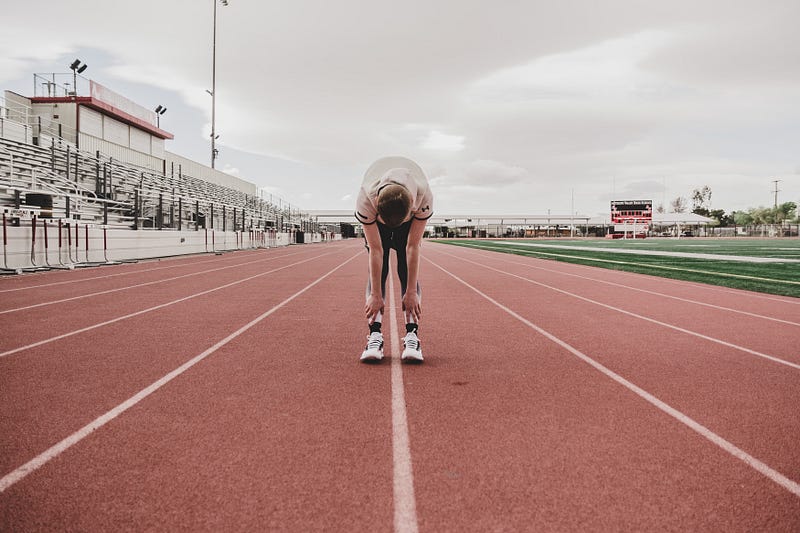
When I was a little girl, I remember once pausing when an adult asked me what I wanted to be when I grew up.
Well, I like swimming, I thought. So I guess Gold-Medal Olympic Swimmer?
But I also like horses a lot. So probably also a Gold-Medal Olympic Equestrian.
And I’m a pretty good writer and that’s my favorite subject in school, so award-winning novelist too.
Okay, there’s your answer: Double Gold Medalist in Olympic Swimming and Equestrian riding author of several famous novels.
Most adults have some similar memory of childhood grandiosity. As young children, it’s unfathomable to us that we won’t eventually be known by the rest of the world for our unique greatness.
But I’ve realized that growing up is partly about learning your insignificance in the world.
As we get older, we cross off the things that could have been possibilities in our lives. I’ve crossed off a whole bunch in the last 10–30 years:
- ̶O̶l̶y̶m̶p̶i̶c̶ ̶s̶w̶i̶m̶m̶e̶r̶
- ̶O̶l̶y̶m̶p̶i̶c̶ ̶e̶q̶u̶e̶s̶t̶r̶i̶a̶n̶
- S̶u̶p̶e̶r̶m̶o̶d̶e̶l̶ ̶
- A̶s̶t̶r̶o̶n̶a̶u̶t̶
- N̶a̶v̶y̶ ̶s̶e̶a̶l̶
- S̶u̶r̶g̶e̶o̶n̶
- P̶e̶r̶s̶o̶n̶ ̶w̶h̶o̶ ̶s̶p̶e̶a̶k̶s̶ ̶M̶a̶n̶d̶a̶r̶i̶n
- (I’m not quite ready to cross off famous novelist just yet)
But in the past year I’ve come to terms with crossing off another, less notable possibility from my life: running.
I will never run again. And I’m finally okay with it.
Now, I don’t mean I can’t physically run. If I was being chased by a hungry carnivore I could likely coordinate my legs into a pretty solid running gait.
But I’m talking about being a “runner.” The kind of person who laces up their sneakers to hit the pavement for a quick jog before work. The kind you see pacing around the reservoir in Central Park on a casual weekend afternoon.
I’ve always wanted to belong to this club of people with strong strides, their healthiness an aura around them.
The times I have been a part of this club felt glorious.
There was a time when I religiously followed the same routine on the treadmill four days a week. I would run a modest pace for 30 minutes, reading an old US Weekly magazine balanced on the rack in front of me, and I felt stupendous. I could feel my body getting stronger each time I ran.
Since then, I’ve stopped and started running routines more times than I can count.

But there has always been a catch: my right hip.
I not going to be a member of the “runner” club, but I am a reluctant member of the future hip replacement club. All the women on my mom’s side are in this exclusive club.
My mom’s mom: double hip replacement
My mom: double hip replacement
My mom’s first sister: double hip replacement
My mom’s second sister: single hip replacement (right side)
Next in line (after my mom’s second sister’s left hip): ME
My surgery is still unscheduled — I’ve probably got another 20 years before the cartilage in my hips completely deteriorates. Maybe by then human hips will be obsolete anyway and I’ll have nothing to worry about.
But until then, any running routine usually leads to a stark reminder that I am nowhere near invincible.
Every time that I start up a new running routine, I think that this time will be different. I do some extra stretches, buy the foam roller, or sign up for weekly physical therapy sessions to work on my gluteal imbalance.
I think I can somehow cheat my genetically predetermined future.
And yet like clockwork, several months into these new fitness routines, my right hip will quickly develop chronic pain. It isn’t unbearable, but it is uncomfortable enough to make even the thought of running cringe-worthy. It’s the kind of pain that makes my hip feel loose in the socket, like a wrong turn while walking could make the whole thing pop out.
These moments often lead to intense frustration. I will ice my hip, take some time off, and then hope that the next time will be different. And I’ll start the whole process again.
Until this year.
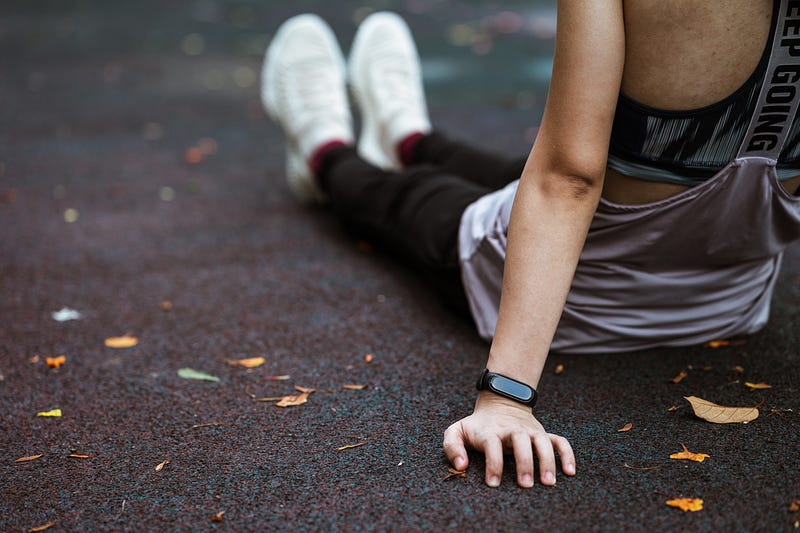
The last time this happened, I had started to run around my neighborhood a few evenings a week. It felt great at first, and then very quickly not so great.
But one night, as I painfully jogged home on my defective hip, I thought:
Enough. This time, I’m not doing this again.
Something about the pain in my right hip at that very moment in time convinced me that I was done with this endless process of injury and recovery. At this point in my life, it just wasn’t worth the hassle anymore.
So I haven’t run since, and I probably never will again.
It seems like such a trivial thing to come to terms with. I have plenty of other ways to exercise, and I am lucky to be healthy even without a running routine.
But this process has been a much-needed lesson in letting go. It is a closing of another opportunity, just as I am sure to experience many more times in my life.
And I’ve noticed something inspiring about this crossing off of possibilities as I get older. I don’t experience them as losses anymore.
In a way, they put me at ease.
In the same way that humans are wired to do better with limited rather than endless choice, I feel more at ease now with fewer life opportunities than I did when I thought I could become anything.
I don’t feel grief this time for giving up the idea that one day I will be a “runner.”
I’m fine with never running a marathon, or a half marathon, or even a turkey trot.
This time, adding something else to the list of things I’ll never be feels like moving a step closer to who I am.
More from Michelle A. Cmarik…


